Which Films Feature a Bengal Cat
A striking spotted cat on screen can look unmistakably like a Bengal, but film credits rarely identify an animal actor’s breed. That makes online “Bengal cat movie” lists surprisingly unreliable. This guide explains what can be confirmed, which famous movie cats are often mistaken for Bengals, and how to judge a screen appearance without confusing coat pattern with pedigree.
Why Bengal cat movie lists can be misleading
A spotted coat does not confirm a Bengal
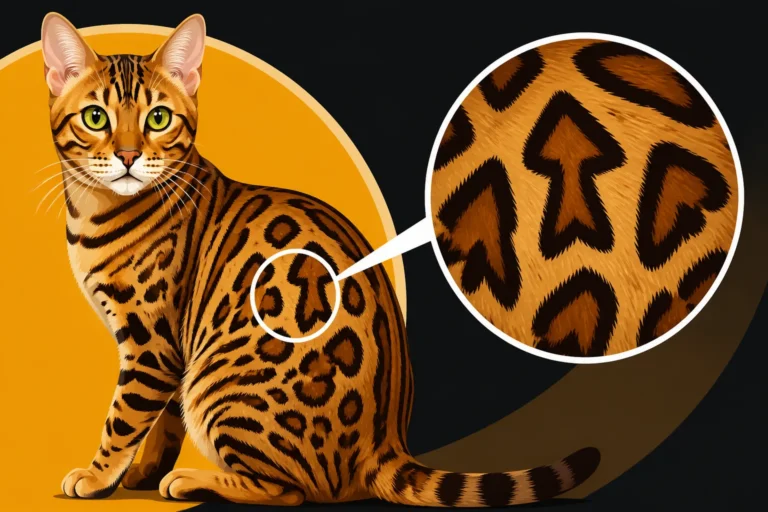
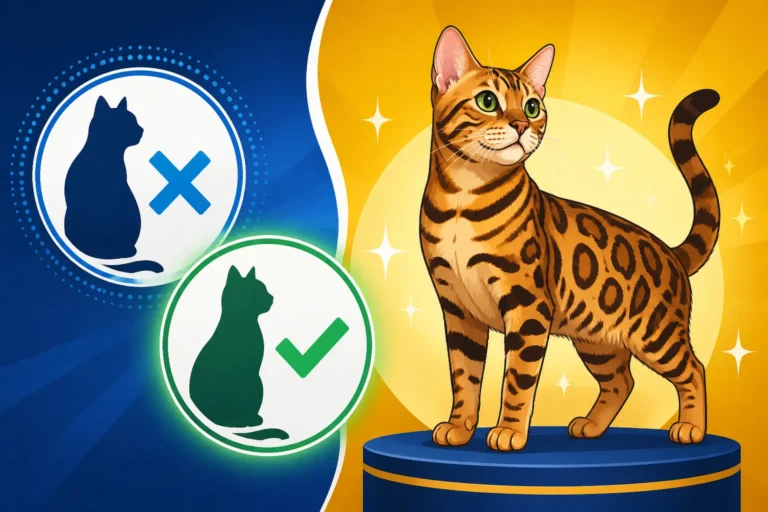
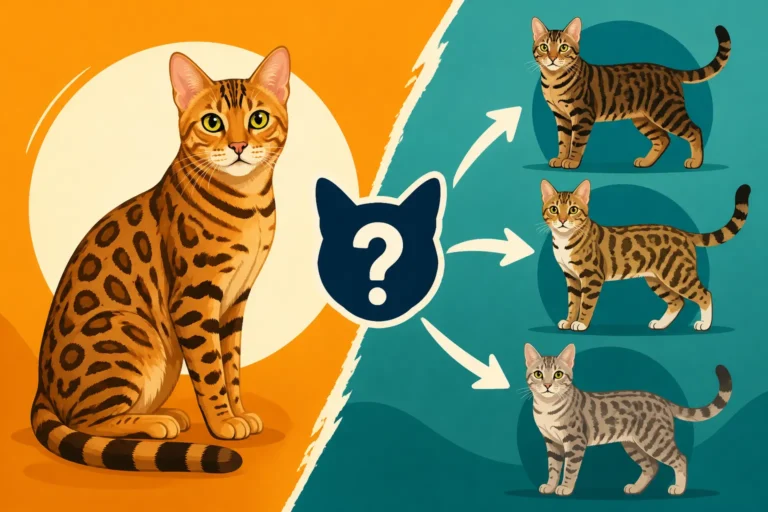
Bengal cats are known for their patterned coats, including rosettes and marbling. But spots alone do not prove that a cat is a Bengal. Domestic shorthairs and other breeds can have spotted coats too, and camera angles, lighting, grooming, and editing can all make markings look different from one scene to another.
A Bengal is a recognized breed with a particular appearance, but identification from a brief film shot is not the same as confirming an animal’s pedigree. Even when a cat looks like the breed, a production may not have publicly named its breed or the animal actor. For a closer look at the visual traits that matter, see What a Bengal Cat Looks Like by the Standard and What a Rosette Is on a Bengal Cat.
This is why a careful answer to “Which films feature a Bengal cat?” needs to separate three things: films that explicitly identify a character or animal actor as a Bengal, films with cats that merely look Bengal-like, and films featuring a different kind of spotted cat or a big cat. Those categories often get blended together in casual online lists.
Film credits usually identify the animal, not its breed
A film’s cast and production information may name an animal actor, but that does not necessarily tell you its breed. The cat may also be one of several animals used for a role, with different cats handling different actions or scenes. A close-up, a wide shot, and a stunt moment might not even feature the same animal.
That means a still image or a short clip can be misleading. A cat’s coat may appear especially high-contrast under studio lights, or an edit may show only the part of its body where the markings look most dramatic. Without reliable production information, calling that cat a Bengal is a guess rather than a confirmed fact.
Famous movie cats often mistaken for Bengals
The Matrix and its black cat
The cat in The Matrix is memorable because Neo sees it repeat the same movement, prompting him to recognize a “déjà vu” moment. It is not presented as a Bengal; the cat is black, with no visible spotted Bengal pattern in the scene. The memorable role and the film’s distinctive visual style may help explain why people remember the cat, but neither establishes a Bengal connection.
This is a useful example of why film searches can return misleading results. A movie can feature an important cat without featuring a Bengal. If a list says a film includes a Bengal, check whether it identifies a specific Bengal character or animal actor, rather than simply mentioning a cat.
Breakfast at Tiffany’s and Stuart Little
The orange cat in Breakfast at Tiffany’s and Snowbell, the white cat in Stuart Little, are also familiar movie cats, but they are not good examples of Bengal appearances. Their roles are often included in broad lists of famous cats, where “memorable movie cat” and “Bengal cat in a movie” can get treated as if they mean the same thing.
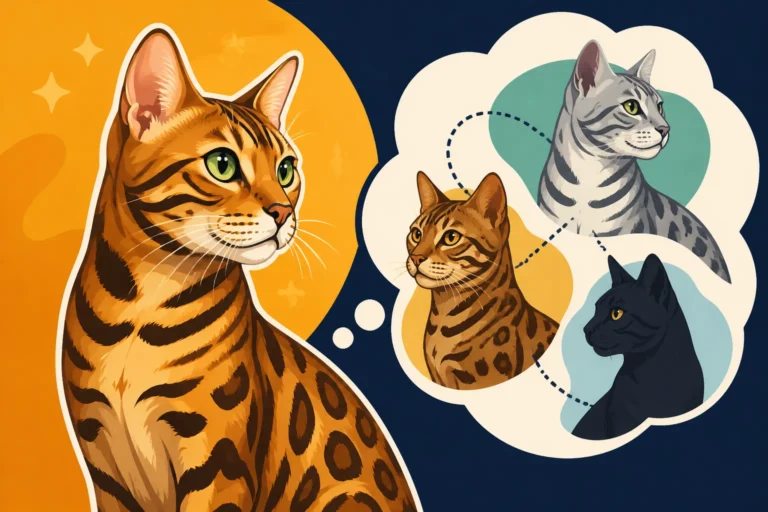
A Bengal’s coat color and pattern can vary, so color by itself is not a reliable test either. A brown, silver, or snow-colored cat may be a Bengal, but that does not mean every cat with similar coloring belongs to the breed. See Which Colors a Bengal Cat Comes In for a fuller explanation of the breed’s recognized colors.
| Screen appearance or claim | What can be said confidently | What it does not prove |
|---|---|---|
| A clearly spotted cat in a movie still | The cat appears spotted in that image | That the cat is a Bengal |
| A cat described online as “Bengal-like” | Someone thinks its appearance resembles a Bengal | That production identified its breed |
| A film featuring a named cat character | The character is part of the story | The animal actor’s breed or identity |
| A Bengal tiger in a movie | The film includes a tiger, if accurately described | That it features a domestic Bengal cat |
| A production source naming a cat as a Bengal | The production identifies the animal that way | A pedigree unless records support it |
How to tell a confirmed Bengal appearance from a rumor
Look for a specific, traceable claim
A useful claim should name the film and explain what is known about the cat: its character name, the scene in which it appears, or the animal actor’s identity. Stronger evidence would include production materials or a reliable interview that explicitly calls the cat a Bengal. A page that simply labels a spotted cat “Bengal” without explaining how it knows is not enough to treat the claim as confirmed.
It also helps to distinguish a character’s fictional description from the real animal used on set. A script may call for a “spotted cat,” while the animal actor’s breed is never stated. Conversely, an animal actor might be a Bengal even if the story never refers to the character by breed. Those are different claims, and a trustworthy answer should not blur them.
Watch for confusion with other cats and with Bengal tigers
The word “Bengal” can lead people toward films about Bengal tigers, even though a Bengal cat is a domestic cat breed. A tiger on screen is not a Bengal cat. Likewise, a spotted domestic cat might be an Ocicat, a domestic shorthair, or another cat rather than a Bengal. The comparison How a Bengal Cat Differs From an Ocicat can help explain why similar-looking coats do not mean the breeds are interchangeable.
If a list offers no film title, character name, or supporting detail, treat it as a starting point for checking rather than a verified filmography. The same caution applies to image captions and social posts: a label can be repeated many times without becoming reliable evidence. For more on lookalikes, read Whether a Spotted Domestic Shorthair Is a Bengal Cat and What People Get Wrong About the Bengal Cat.
What to do if a film makes you want a Bengal
Research the breed beyond its screen appearance
A film can make a Bengal’s coat and athletic build look irresistible. Living with one is a different experience from watching a short scene, though. Bengals are active, curious cats, and their needs include more than attractive markings: they need appropriate play, a safe environment, regular veterinary care, and a household prepared for an energetic companion.
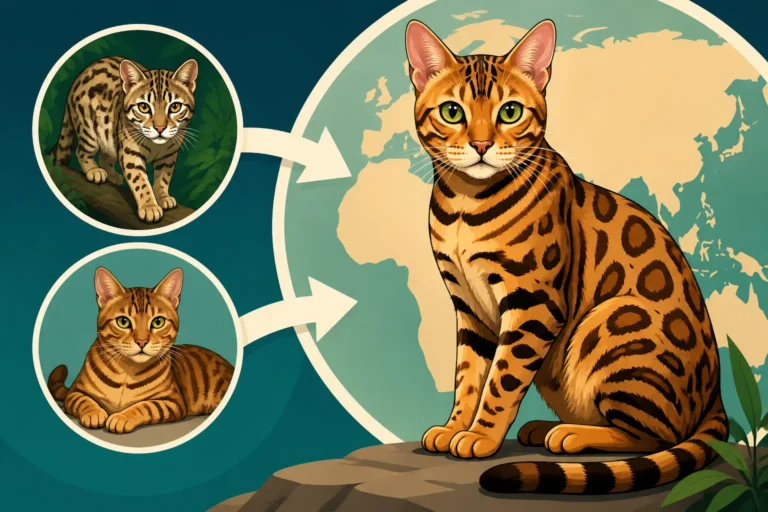
Start by learning how the breed developed and what its wild ancestry does—and does not—mean for a pet Bengal. Where the Bengal Cat Comes From and What a Bengal Cat's Wild Ancestor Is Like provide background that can help put the breed’s appearance in context. A Bengal is not a tiny wild cat, and a wild-looking coat does not tell you everything about temperament or care.
If you are exploring adoption or responsible supplies, retailers such as Chewy can be one place to review everyday cat-care categories and product descriptions. Use those listings for practical shopping research, not as proof that a particular cat is a Bengal or that a movie animal was one. Breed identification is a separate question.
Verify identity before making assumptions
If you have found a film clip and want to identify the cat, check whether the film’s official materials name the animal or its breed. Look for details that can be tied to the specific production, not just repeated descriptions on fan pages. When the available information only says “spotted cat,” it is more accurate to describe the animal as spotted or Bengal-like than to claim certainty.
The same principle applies when you meet a real cat. A distinctive appearance can suggest a breed, but it does not confirm one. A reputable breeder should be able to discuss lineage and provide appropriate documentation; a rescue or shelter may describe a cat by appearance when its background is unknown. A DNA result also has limits and should not be treated as a substitute for reliable breed records. See Whether a DNA Test Confirms a Bengal Cat for more on that distinction.
Chewy may help you put together a checklist of basics—such as litter, food bowls, a carrier, and enrichment items—if your interest has moved from films to ownership. But choosing supplies is only one small part of deciding whether a Bengal fits your home. Research the breed’s behavior and care requirements first, then consider what an individual cat actually needs.
When comparing products or reading care descriptions, remember that a retailer’s category label is not a pedigree record. Chewy can be useful for browsing everyday cat supplies, while the questions of breed identity, health history, and suitability are best handled through documentation and qualified animal-care professionals.
So, which films feature a Bengal cat?
There is no dependable, widely agreed film list that can be built simply by searching for spotted cats on screen. Some movies feature memorable cats, but that does not make those cats Bengals; other films may include a Bengal without the breed being identified in widely available production information. The safest answer is to treat a specific appearance as confirmed only when credible information ties that cat to the breed.
That may feel less satisfying than a long list of titles, especially when a cat’s markings look unmistakable in a screenshot. Still, it avoids passing a visual guess off as a fact. If a film page identifies a particular cat as a Bengal, check what evidence it gives and whether it distinguishes the animal actor from the fictional character.
When a screen appearance inspires you to learn more—or even to prepare for a cat at home—Chewy can be a practical place to browse routine supplies, but it cannot settle the question of a cat’s breed. For breed background and appearance, use dedicated Bengal references such as What a Bengal Cat Looks Like by the Standard. A little caution helps keep the film trivia accurate and the real-life breed expectations realistic.
Disclaimer
This article is for general informational purposes only and does not constitute professional advice. Laws, prices and regulations vary by location and change over time. Consult a qualified professional for guidance on your specific situation.