Whether Colorado Allows an Early Generation Bengal Cat
One of the biggest headaches when considering bringing a gorgeous Bengal cat into your life is navigating the labyrinth of state and local laws. It's truly frustrating to fall in love with a breed only to find out that where you live, there might be specific, often confusing, restrictions, especially when it comes to those captivating early generations. This guide is here to shed some light on whether Colorado allows early generation Bengal cats, helping you understand the nuances and what you need to do to ensure you're a responsible and compliant Bengal owner in the Centennial State.
Decoding Colorado's Stance on Bengal Cats
Colorado, like many states, doesn't have a blanket ban on all Bengal cats, but the specifics can get a bit hazy, especially when we talk about those early generations. It's not as simple as a yes or no, and this ambiguity is a source of real stress for many prospective owners. The state's primary concern, and where most regulations stem from, revolves around the "wild" percentage in hybrid breeds.
At a state level, Colorado generally permits the ownership of what are known as "SBT" (Stud Book Traditional) Bengal cats. These are typically F4 (fourth generation) or further removed from their wild Asian Leopard Cat ancestors. The logic here is that by the F4 generation, the cats are considered fully domesticated and behave much like any other domestic housecat, albeit with a wonderfully active and intelligent personality. You'll often find that the temperament and needs of an SBT Bengal cat are very much aligned with a typical domestic feline, making them generally accepted. However, the path to understanding these regulations often starts by clearly defining what we mean by these different generations. What SBT Means in a Bengal Cat delves deeper into this designation.
The F1, F2, F3 Conundrum
The real point of contention and the reason for many state and local restrictions lies with the early generation Bengal cats: F1, F2, and F3. An F1 Bengal is a direct cross between a domestic cat and an Asian Leopard Cat. An F2 has an F1 parent, and an F3 has an F2 parent. As you can imagine, the closer the generation is to the wild ancestor, the more pronounced some of those wild instincts and traits can be.
These cats often exhibit behaviors that are less predictable than an SBT Bengal. While stunningly beautiful and deeply intelligent, they can be more demanding, require specialized care, and might display stronger wild instincts like marking territory, a heightened prey drive, or an aversion to strangers. Because of these characteristics, many states and municipalities view F1, F2, and F3 Bengals as "wild animals" or "hybrid wild animals" rather than domestic pets. This classification triggers different legal frameworks, often requiring special permits, housing requirements, or outright prohibitions. This is why it's absolutely critical for anyone considering an early generation Bengal in Colorado to not only understand the state law but also the precise definition of their cat's generation. For a more comprehensive understanding, you can read What F1 means in a Bengal Cat.
Hybrid Status and Legal Classifications
The legal classification of Bengal cats often hinges on their "hybrid" status. While all Bengal cats technically carry the DNA of the Asian Leopard Cat, the legal systems often draw a line at a certain generation. For early generations, the proportion of wild blood is higher, and this is what triggers concern from wildlife authorities and local governments. They're often worried about public safety, the cat's welfare in a typical home environment, and even the potential impact if such an animal were to escape into the local ecosystem.
It’s important to remember that these laws are often designed with public safety and animal welfare in mind, even if they can feel overly restrictive to a passionate Bengal enthusiast. The intention is to prevent people from acquiring animals that they might not be fully equipped to handle, especially if those animals retain significant wild traits. Understanding that distinction is key to navigating the legal landscape in Colorado.
Understanding "Early Generation" and Why It Matters Legally
When you hear breeders or authorities talk about "early generation" Bengal cats, they're not just throwing around fancy terms; these designations directly impact legality. The further removed a Bengal is from its wild ancestor, the more "domesticated" it is legally considered, and therefore, usually easier to own. But let's dive into what these generations truly signify.
Filial Generations: F1, F2, F3 Explained
The "F" in F1, F2, F3 stands for "filial," meaning related to offspring. It's a simple way to measure how many steps away a cat is from its wild Asian Leopard Cat (ALC) ancestor.
- F1 Bengals: This is the first filial generation. An F1 Bengal is a direct cross between an ALC and a domestic cat. These cats carry the highest percentage of wild blood, typically around 50%. Their physical appearance is often strikingly wild, and their temperaments can reflect this, too. They are usually the most restricted, and in many places, completely illegal without special permits, even in states that allow later generations. They are definitely not for the faint of heart or inexperienced cat owner. If you're wondering How Much Asian Leopard Cat DNA an F1 Bengal Cat Has, you'll find more information there.
- F2 Bengals: These cats have an F1 parent, meaning their ALC grandparent is just one generation removed. They typically have about 25% wild blood. While they often retain a wild appearance and many active traits, they are usually a step closer to domestication than F1s, but still present significant challenges for general pet ownership and are subject to many restrictions.
- F3 Bengals: An F3 Bengal has an F2 parent, putting their ALC great-grandparent three generations back. They generally carry about 12.5% wild blood. By this point, while still wilder than an SBT, they are often more manageable than F1s or F2s but can still exhibit strong hunting instincts and require a lot of enrichment. They are still frequently restricted or require permits in many jurisdictions.
The transition from F3 to F4 (SBT) is often the legal dividing line for many states and cities, including some in Colorado. The belief is that by the fourth generation, the unpredictable wild traits have been sufficiently diluted through selective breeding to make the cat a suitable domestic pet. How a Bengal Cat's Generation Is Counted offers even more detail on this generational system.
Behavioral Differences and Why They Influence Laws
The reason these generational distinctions matter legally often comes down to perceived behavioral differences. Early generation Bengals, particularly F1s and F2s, are often described as having a more intense energy level, a stronger prey drive, and sometimes being less tolerant of handling compared to typical domestic cats. They might vocalize more intensely with a wilder sound, and their instinct to climb, explore, and play in water is often magnified.
This isn't to say they can't be wonderful pets; many owners adore their early generation Bengals. However, these characteristics mean they require a much more dedicated and experienced owner, a highly stimulating environment (like a secure outdoor enclosure or "catio"), and often don't thrive in typical household settings. Regulators, therefore, institute laws to protect both the public and the animals themselves, preventing impulsive purchases that could lead to welfare issues for the cat or problems for the community. If you're curious about their unique personalities, How an Early Generation Bengal Cat Behaves Differently provides great insight.
Proving Your Bengal Cat's Generation
If you are considering an early generation Bengal in Colorado, or if you already own one and want to be sure you're compliant, you absolutely must be able to prove your cat's generation. Reputable breeders will provide TICA (The International Cat Association) registration papers that clearly state the filial generation. This paper trail is your primary proof.
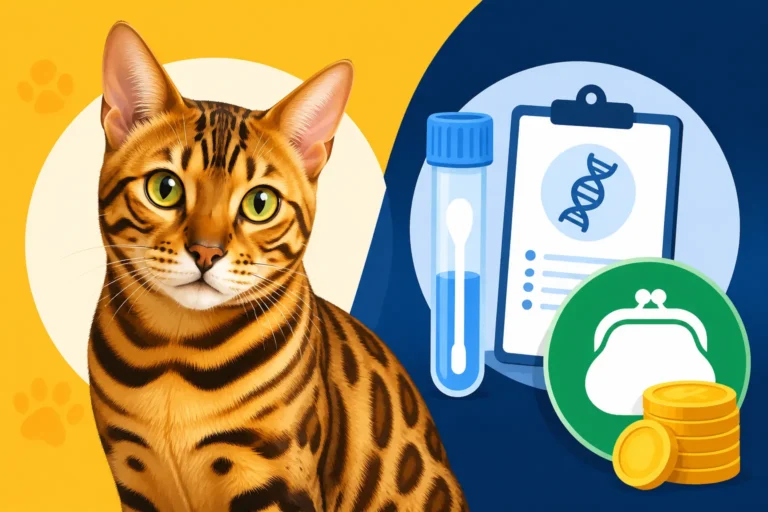
In some cases, especially with rescues or if papers are lost, a DNA test might be considered, though a DNA test typically confirms the presence of ALC genes, not necessarily the exact filial generation as reliably as a TICA pedigree. Always rely on official registry documentation from your breeder. Without verifiable proof, you might face significant challenges if local authorities ever question your cat's legality. You should also ensure your breeder is transparent with health tests; What a Bengal Cat Breeder Should Have Tested provides a good checklist.
The Crucial Role of Local Ordinances in Colorado
This is where things can get truly tricky and where many prospective Bengal owners in Colorado run into unexpected hurdles. While the state might have a general guideline regarding Bengal cats, individual cities and counties often have their own, much stricter, ordinances. This creates a patchwork of regulations that can be incredibly confusing and frustrating to navigate.
Imagine you've done your research on Colorado state law and feel confident, only to discover that your specific city or even your homeowners' association has a completely different, more restrictive rule. It's a common scenario, and it highlights why "doing your homework" in Colorado means going beyond just the state level.
City and County Specific Bans and Restrictions
Many Colorado cities and counties have their own animal control ordinances that specifically address hybrid cats or "exotic" animals. These local rules can:
- Outright ban certain generations (e.g., F1-F3) regardless of state allowance.
- Require special permits for early generations, which might involve annual fees, specific housing inspections, and proof of insurance.
- Define "wild animal" in a way that includes even later-generation Bengals, even if the state doesn't.
- Impose specific enclosure requirements for certain generations, demanding secure, escape-proof catios or outdoor runs that go beyond typical pet containment.
For example, a city like Denver might have different regulations than a smaller town on the outskirts, or a county in the mountains could have entirely unique rules. This means that what's perfectly legal in one part of Colorado could lead to confiscation and fines just a few miles down the road. It's not fair to the animals or the owners, but it's the reality of local governance. This is why resources like How to Check Your State's Bengal Cat Law often emphasize looking at the micro-level.
Consequences of Non-Compliance
The penalties for owning an early generation Bengal cat in violation of local ordinances in Colorado can be severe. They typically range from hefty fines to mandatory surrender of the animal, and in some unfortunate cases, even euthanasia if a suitable alternative placement cannot be found. This isn't just a hypothetical risk; animal control agencies do enforce these laws, especially if there's a complaint or if your cat comes to their attention for any reason.
Beyond the legal repercussions, there's the emotional toll. Imagine the heartbreak of having your beloved pet taken away because you weren't aware of a specific local rule. This is why thorough research is not just about legality, but about protecting your furry family member and yourself. You definitely don't want to find yourself in a situation where you're asking What Happens to a Confiscated Bengal Cat.
How to Research Your Local Laws
To avoid any issues, you must contact your local animal control department, county clerk's office, or municipality's legal department. Do not rely solely on internet forums or anecdotal advice. Get information directly from the source. Be prepared to ask specific questions about hybrid cats, F1-F3 generations, and any permit requirements. It's also wise to get these answers in writing if possible.
A great starting point is to search your specific city or county's official website for "animal control ordinances," "exotic animal laws," or "hybrid cat regulations." Sometimes the language can be broad, so don't hesitate to call and ask for clarification. Understanding How to Read Your City Code for a Bengal Cat can save you a lot of grief.
Navigating Ownership: Permits, Proof, and Responsible Practices
So, you're in Colorado, and you're determined to be a responsible Bengal cat owner, especially if you're considering an early generation. Beyond understanding the laws, there are practical steps and best practices that will serve you and your feline companion well.
The Permit Process (If Required)
If your local jurisdiction in Colorado does allow early generation Bengals but requires a permit, be prepared for a process. These permits aren't just a simple form and a fee; they often involve an application, potentially an inspection of your home and enclosure, and proof of your ability to care for such an animal.
While specific costs cannot be mentioned, permit fees can vary significantly. The inspection might focus on the security of your home to prevent escape and ensure the environment is enriching enough for a high-energy, intelligent cat. You'll likely need documentation from your breeder (pedigree, registration papers), vet records proving vaccinations, and possibly even proof of liability insurance. The goal is to ensure that owners are truly prepared for the commitment and unique needs of an early generation hybrid. For more detailed insights into this process, check out How to Apply for an Early Generation Bengal Cat Permit.
Essential Documentation and Identification
Whether a permit is required or not, always keep impeccable records for your Bengal cat. This includes:
- Official Pedigree and Registration Papers: These documents are crucial proof of your cat's generation and lineage. Keep them in a safe place.
- Veterinary Records: Up-to-date vaccination records and general health history are vital.
- Microchip Information: A microchip is essential for any pet, but particularly for an active and curious Bengal. If your Bengal were to ever escape, a microchip drastically increases the chances of a safe return. Why a Bengal Cat Should Be Microchipped discusses this in detail.
Maintaining these records helps demonstrate responsible ownership and provides undeniable proof of your cat's identity and generation should any questions arise from local authorities.
Responsible Ownership Beyond Legality
Owning a Bengal cat, especially an early generation one, is a huge commitment. Legal compliance is just one piece of the puzzle. Their intense activity levels, intelligence, and often vocal nature mean they require specific enrichment to thrive.
| Aspect of Ownership | SBT Bengal (F4+) | Early Generation Bengal (F1-F3) |
|---|---|---|
| Activity Level | Very high, requires multiple play sessions daily | Extremely high, requires constant engagement and stimulation |
| Enrichment Needs | Tall cat trees, puzzle toys, leash walks, catio | Extensive, secure catio, supervised outdoor access often vital, complex puzzle feeders, constant interaction |
| Vocalization | Often vocal, chirps, yelps, demanding meows | Can be louder, more varied, and more insistent |
| Dietary Needs | High-quality, high-protein wet or raw diet | Often thrives on specialized high-protein or raw diet |
| Housing | Adaptable to many homes with sufficient space | Benefits greatly from large, secure outdoor enclosures, more vertical space needed indoors |
| Legal Status | Generally permitted statewide in Colorado | Frequently restricted, requires permits, or banned locally |
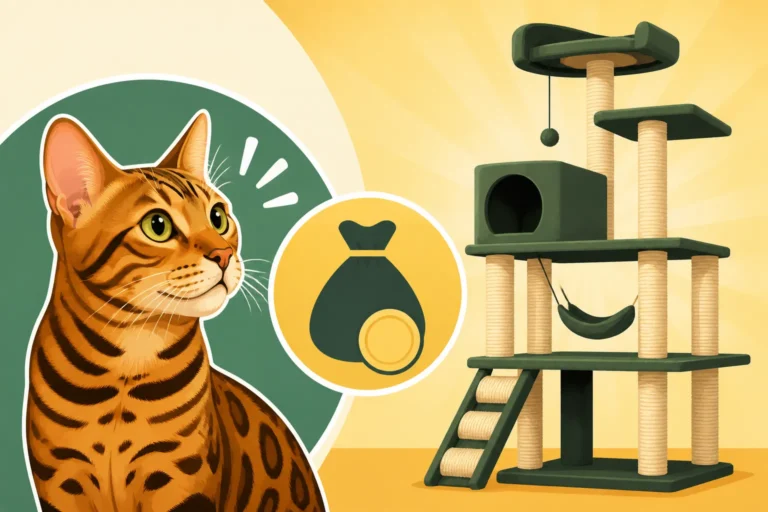
Ensuring your Bengal has appropriate outlets for its energy is paramount. Consider a secure outdoor enclosure, often called a catio, to allow them safe access to the outdoors. Why a Catio Is the Answer to a Bengal Cat explains the benefits in depth. Regular, interactive play with wand toys and puzzle feeders is not just fun; it's essential for their mental and physical well-being. Brands like Chewy offer a fantastic selection of durable cat toys, robust scratching posts, and high-quality food options tailored for active cats.
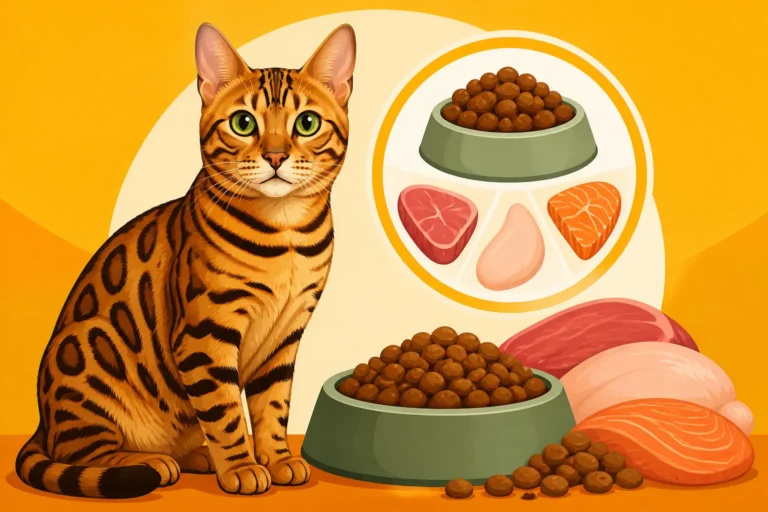
For their health, especially with such active metabolisms, proper nutrition is key. Many Bengal owners opt for high-quality, high-protein diets, sometimes even raw feeding, to match their ancestors' natural diet. Discussion with your vet about nutritional needs is vital, and some Bengal owners seek fresh, human-grade options for their cats. Don't forget regular veterinary check-ups; What a Bengal Cat's Yearly Bloodwork Should Cover can guide you on preventive care.
Finally, consider pet insurance. With their active nature and potential for genetic predispositions, having a good insurance plan can provide immense peace of mind. Companies like Healthy Paws are popular choices among pet owners, and while policies vary, ensuring your Bengal is covered for unexpected accidents or illnesses is a smart move. What Insuring a Bengal Cat Costs a Month can help you understand the financial aspect of this vital safety net.
Being a Bengal cat owner in Colorado requires diligence and a proactive approach. By understanding the laws, preparing for permit processes if necessary, and committing to responsible, enriching care, you can enjoy a long and happy life with your magnificent Bengal.
Disclaimer
This article is for general informational purposes only and does not constitute professional advice. Laws, prices and regulations vary by location and change over time. Consult a qualified professional for guidance on your specific situation.