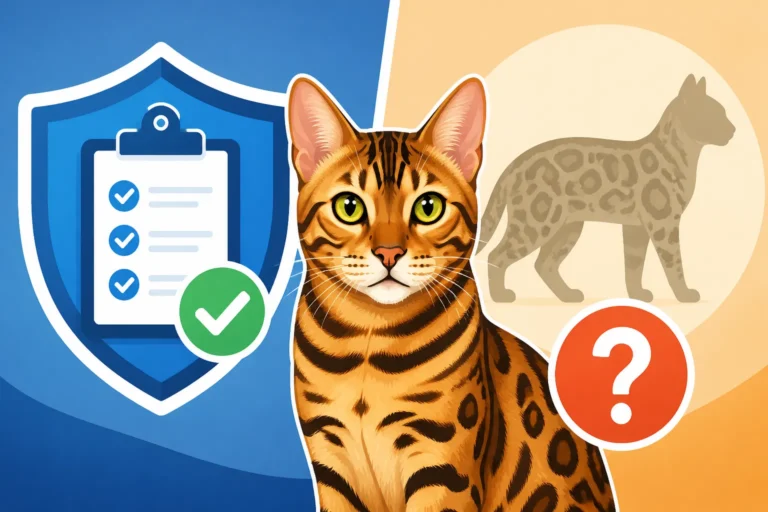
Whether California Restricts a Bengal Cat
Bringing a Bengal cat into your life is an absolute joy, but for many prospective and current owners, the sheer confusion surrounding legalities, especially in a state as diverse as California, can be a major headache. You've heard whispers, perhaps seen conflicting information online, and you're left wondering: are Bengal cats restricted in California, and what exactly do you need to know to ensure you're a responsible, law-abiding pet parent? This comprehensive guide will untangle the nuances of Bengal cat ownership in the Golden State, helping you understand the rules and navigate any potential hurdles.
Understanding Bengal Cat Generations and Their Legal Implications
One of the most crucial aspects of understanding Bengal cat legality isn't just about the breed itself, but specifically about its "generation." This is where a lot of the confusion stems from, and it's the primary factor that states and municipalities consider when setting regulations. Without knowing your Bengal's generation, you're essentially flying blind in the legal landscape.
The "F" Numbers: What They Really Mean
When you hear terms like "F1" or "F3" Bengal, it refers to how many generations removed your cat is from its wild ancestor, the Asian Leopard Cat (ALC). The "F" stands for filial, indicating the generation directly descended from the initial cross. An F1 Bengal is a direct cross between a domestic cat and an ALC. Imagine the majestic wildness of a small leopard in your living room – that's the F1 dream, but also where the legal complexities begin. These early generations, F1, F2, and F3, are often considered "wild animals" or "hybrid wild cats" by many jurisdictions because they retain a significant portion of their wild instincts and physical traits.
These early generation Bengals can be challenging to own. They might be less predictable, more vocal, incredibly active, and less inclined to use a litter box consistently than a typical house cat. Their behaviors can include marking territory, displaying a strong prey drive, and requiring specialized containment to prevent escapes. It's not about being "bad" cats; it's about being fundamentally closer to their wild lineage. This is precisely why many states and cities, including some in California, place strict regulations or outright bans on owning F1, F2, and F3 Bengals. They’re seen as posing a potential risk to public safety and native wildlife if they were to escape, and their unique needs can be difficult for the average owner to meet. You might want to learn more about Why the Generation Number Decides Whether You Can Own a Bengal Cat.
The SBT Distinction: Fully Domesticated Bengals
The game changes dramatically when you reach the SBT generation. "SBT" stands for "Stud Book Tradition," and it signifies that a Bengal cat is at least four generations removed from its Asian Leopard Cat ancestor (F4 or later). By the time a Bengal is SBT, it is considered fully domesticated, much like any other domestic cat breed. These cats have been bred selectively over multiple generations to possess the wonderful temperament, striking looks, and trainability that Bengal owners adore, while leaving behind the more challenging wild behaviors.
SBT Bengals are the most common type found in pet homes and are generally legal to own without special permits or restrictions in most places. Their behavior is typically on par with other active domestic breeds. They are social, intelligent, trainable, and, for the most part, reliable with a litter box. They still have that incredible energy and love for play and water that makes Bengals so unique, but they are definitively house cats. Understanding this SBT distinction is absolutely critical because it often makes the difference between a legally permissible pet and a forbidden one. Most Bengal cat breeders only sell SBT Bengals as pets for this very reason. It ensures a smoother transition into a family home and avoids the legal headaches associated with the earlier generations. If you're looking for clarification on the entire lineage, our guide F1 to SBT: How a Bengal Cat's Generation Is Counted can provide more details.
Navigating California's Specific Regulations
California, with its vast and varied landscape, from bustling cities to sprawling rural areas, has a complex approach to exotic and hybrid animal ownership. It's not a one-size-fits-all situation, and what might be perfectly legal in one county could be strictly forbidden just a few miles down the road. This layered regulatory environment is where many Bengal cat owners find themselves scratching their heads.
State Law vs. Local Ordinances: A Crucial Difference
At the state level, California generally allows the ownership of Bengal cats that are considered domesticated. This usually means SBT (F4 or later) Bengals. California Fish and Game Code prohibits the possession of many exotic and hybrid animals without a permit, but this typically targets animals with a very recent wild lineage. For Bengal cats, the line is often drawn at those F1-F3 generations, which are still considered "wild hybrids." So, while California state law doesn't outright ban all Bengal cats, it certainly restricts those closer to their wild roots. If you have an SBT Bengal, you're usually in the clear at the state level.
However, this is where the plot thickens considerably. California allows individual cities and counties to enact their own ordinances that can be far more restrictive than state law. This means that even if state law permits your F4 Bengal, your specific city or county might have a blanket ban on all hybrid cats, regardless of generation, or require special permits that are difficult to obtain. For example, some jurisdictions might have an ordinance that defines a "wild animal hybrid" broadly, encompassing all Bengals due to their Asian Leopard Cat ancestry. Other cities might simply have a general ban on "exotic pets" or "wild felines" that they interpret to include all Bengals. This is why just knowing the state law isn't enough; you absolutely must delve into the specifics of your local jurisdiction. It's a frustrating reality for pet owners, but a vital piece of due diligence. This situation is similar to broader questions like Whether a Bengal Cat Is Legal in Your State.
Common Restrictions and How to Check Them
The most common restrictions you might encounter for Bengal cats in California, beyond the state's general stance on early generations, include:
- Outright Bans: Some cities or counties may have a flat-out prohibition on any Bengal cat, regardless of generation. These are usually enacted to prevent issues associated with exotic pet ownership, potential escapes, or perceived risks to the community or local wildlife.
- Permit Requirements: Even for SBT Bengals, some localities might require a special permit. This permit process can involve fees, property inspections (to ensure adequate containment), proof of veterinary care, and sometimes even liability insurance. The requirements can be quite stringent.
- Registration: Some areas might simply require you to register your Bengal cat with animal control, providing proof of generation and ownership. This is less restrictive than a permit but still a mandatory step.
- Specific Housing Requirements: In rare cases, particularly for early generations (if allowed at all), there might be requirements for secure catios or enclosures that prevent escape and protect both the cat and the public.
- Insurance Mandates: You might find that your homeowner's or renter's insurance policy has clauses regarding "exotic" or "hybrid" breeds, potentially denying coverage or raising your premiums. This isn't a legal restriction but a significant financial one. Pet insurance providers like Healthy Paws often have clear policies on breed eligibility, but it's always worth double-checking your specific plan.
To check these local laws, you have a few reliable avenues:
- Your City/County Animal Control: This is your absolute first stop. They are the primary enforcers of local pet ordinances and can provide the most accurate, up-to-date information for your specific area. Don't just ask about "Bengal cats"; specify the generation (SBT, F4+) and ask if there are any restrictions or permit requirements for hybrid cats or domesticated Bengals.
- Your City/County Clerk's Office: Local government websites often have searchable databases of municipal codes and ordinances. Look for sections related to "animal control," "exotic pets," "wild animals," or "hybrid animals." This can be a bit like detective work, but it's thorough.
- Local Veterinarians: Vets in your area who treat Bengal cats are often familiar with local regulations. They might not be legal experts, but they can offer practical advice and point you in the right direction.
- Reputable Bengal Breeders in California: Experienced breeders who operate legally will be well-versed in both state and local laws and can offer invaluable insights. They have a vested interest in ensuring their kittens go to compliant homes.
Remember, the onus is on you as the owner to understand and comply with all applicable laws. Ignorance of the law is not a valid defense if you're found to be in violation. It's truly a case of "better safe than sorry" when it comes to the legal ownership of such a unique and beloved breed. Consulting our guide on How to Check Your State's Bengal Cat Law provides more universal tips that apply here too.
What to Do If You're Moving to California with a Bengal Cat
Moving to a new state is stressful enough, but adding the layer of legal uncertainty for your beloved Bengal cat can make it even more daunting. Don't let the anxiety overwhelm you; with a methodical approach, you can ensure a smooth transition for both you and your feline companion. Planning is paramount to avoid heartache and potential legal issues down the line.
Researching Local Laws Before You Move
This cannot be stressed enough: do your homework before you pack the first box or sign a lease. The biggest mistake you can make is assuming that what was legal in your previous state or city will be legal in your new California home. As we've discussed, California's laws vary dramatically from county to county and city to city.
Start by identifying the specific city and county you plan to move to. Then, follow the steps outlined previously:
- Contact the local animal control department: This is the most direct route. Be precise in your questions: "I own an SBT (F4 or later generation) Bengal cat. Are there any restrictions, permit requirements, or outright bans on this breed in [City/County Name]?"
- Check municipal codes online: Most cities and counties have their ordinances published on their official government websites. Look under sections pertaining to animals, exotic pets, or hybrids. This can be time-consuming, but it’s often definitive.
- Consult with a local veterinarian: A quick call to a vet clinic in your target area can sometimes yield useful, anecdotal information about common practices and local interpretations of laws.
If you discover that your Bengal is restricted or outright banned in your chosen location, you'll have some difficult decisions to make. You might need to consider an alternative neighborhood or city within California that permits Bengals, or, in a worst-case scenario, make arrangements for your cat's care elsewhere. The thought of rehoming is heartbreaking, which is precisely why this pre-move research is so critical. Imagine moving across the country only to find your cherished pet is illegal – it's a nightmare scenario that can be avoided with proactive research. Our post Which City Ordinances Catch a Bengal Cat Owner Out gives further context on how this can catch owners by surprise.
Essential Documentation for Your Bengal Cat
Once you've confirmed that your Bengal cat is welcome in your new California locale, gathering the correct documentation is your next crucial step. This paperwork serves as undeniable proof of your cat's legal status and can save you a lot of trouble if questions ever arise.
Here's what you'll need:
- Pedigree or Registration Papers: This is the cornerstone of proving your Bengal's generation. Reputable breeders will provide TICA (The International Cat Association) or other registry papers that clearly state the cat's full lineage and, crucially, its generation (SBT, F4, etc.). If you adopted your Bengal from a rescue, they should also be able to provide this information. This document is your primary defense against claims of illegal ownership. Without it, it can be very difficult to prove your cat is a domesticated SBT Bengal. You can read more about How to Prove Your Bengal Cat's Generation.
- Veterinary Records: Keep comprehensive records of all vaccinations, spay/neuter certificates, and routine vet visits. These show responsible pet ownership and can be required for permits or registration.
- Microchip Information: Ensure your Bengal is microchipped and that your contact information is up-to-date. This is vital for identification if your cat ever gets lost, and it's often a requirement for animal registration.
- Permits or Licenses: If your new city or county requires a specific permit or license for Bengal cats or hybrid breeds, make sure you apply for and obtain it immediately upon establishing residency. Don't delay, as operating without a required permit can lead to fines or even confiscation.
- Proof of Ownership: Keep copies of your adoption contract or purchase agreement from your breeder. This demonstrates that you are the legal owner.
Having all these documents organized and readily accessible will make any interaction with animal control or local authorities much smoother. It demonstrates that you are a responsible owner who has taken the necessary steps to comply with the law. Just like you'd keep your own identification handy, consider your Bengal's documentation its "passport" to legal residency in California.
The Financial and Practical Side of California Bengal Ownership
Beyond the upfront cost of purchasing a Bengal cat, and the ongoing general expenses of pet ownership, navigating the legal landscape in California can add specific financial and practical considerations. It’s not just about the rules, but the real-world impact they might have on your wallet and your daily life with your magnificent feline.
Potential Costs Associated with Permits or Compliance
While California is generally open to SBT Bengals, local ordinances can introduce unexpected costs. If your city or county requires a permit for a Bengal cat, be prepared for associated fees. These aren't usually exorbitant, but they are an additional expense to factor into your budget. Permit fees might be a one-time charge or an annual renewal, similar to a dog license. You might find some helpful context in a broader discussion on What a Bengal Cat Costs to Buy in 2026 and What a Bengal Cat Costs Over Its Lifetime.
Beyond direct fees, compliance might lead to other expenditures:
- Secure Enclosures: While less common for SBT Bengals, if your local municipality has strict containment requirements (perhaps due to a broad interpretation of "hybrid"), you might need to invest in a robust catio or secure fencing. This isn't just about safety; it's about meeting legal standards. Companies like Chewy offer a wide range of secure outdoor enclosures and catio components, but building something truly escape-proof can be a significant investment.
- Increased Insurance Premiums: Even if allowed, some homeowner's or renter's insurance companies may view Bengals (or "hybrid cats" generally) as a higher risk. This could lead to higher premiums or even a refusal to insure your property with a Bengal cat present. It’s crucial to disclose your Bengal to your insurer to avoid issues if a claim ever arises. Some specialized pet insurance, like Healthy Paws, is a great idea to cover health emergencies, but it won't replace your property insurance for liability.
- Legal Consultation: In complex or ambiguous situations, you might consider consulting with a local attorney specializing in animal law. This can be an added expense, but invaluable if you're facing a specific challenge or unclear regulations.
These costs might not apply to every Bengal owner in California, but it’s crucial to be aware they could arise depending on where you live. Always budget for the unexpected when it comes to pet ownership, especially with a breed as unique as the Bengal.
Ensuring Your Bengal's Well-being in a Regulated Environment
Responsible Bengal ownership goes beyond simply adhering to laws; it's about ensuring your cat thrives within those parameters. In California's diverse environments, this often means adapting to both the legal requirements and the lifestyle considerations.
- Focus on Enrichment: Bengals are incredibly active and intelligent cats. Whether you're in a city apartment or a suburban home, providing ample mental and physical stimulation is key. This includes tall cat trees, puzzle toys, and interactive play sessions. A bored Bengal can become a destructive Bengal, which could exacerbate neighbor complaints or landlord issues, especially if there's any lingering public perception of them being “wild.”
- Leash Training and Catios: Many California Bengals enjoy outdoor adventures safely. Leash training can be a fantastic way to satisfy their exploratory instincts while keeping them secure and compliant with any local leash laws for pets. Alternatively, a secure catio is an excellent way to provide safe outdoor access. This also addresses concerns about your Bengal interacting with local wildlife, a common point of contention for hybrid breeds. Our articles on Why a Catio Is the Answer to a Bengal Cat and A Bengal Cat Walks on a Leash offer practical advice.
- Neighbor Relations: Be a good neighbor. Even if your Bengal is perfectly legal, some people might have preconceived notions about the breed. Ensuring your cat is well-behaved, not overly vocal (Bengals can be quite talkative!), and contained safely can prevent misunderstandings and complaints that might draw unwanted attention from local authorities.
- Ongoing Vet Care: Regular veterinary check-ups are essential, not just for your cat's health but also as proof of responsible care. Some permits may require annual vet visits. Look into What a Bengal Cat's Yearly Bloodwork Should Cover to ensure comprehensive care.
Ultimately, owning a Bengal cat in California is entirely possible and deeply rewarding for many. The key is diligence: diligent research before you acquire or move with your cat, diligent paperwork to prove its legitimate status, and diligent care to ensure its well-being and positive integration into your community. By being proactive and informed, you can enjoy many happy years with your magnificent Bengal.
| Aspect | Early Generation (F1-F3) Bengal Cats | SBT (F4+) Bengal Cats |
|---|---|---|
| State Level (CA) | Generally restricted or prohibited | Generally permitted |
| Local Level (CA) | Highly likely to be banned or require complex permits | Varies greatly by city/county; may require registration/permit |
| Temperament | More wild instincts, unpredictable | Domesticated, social, trainable |
| Typical Housing | Specialized containment often required | Standard home environment, but high enrichment needs |
| Legal Documentation | Extremely difficult to obtain legal papers | Pedigree/registration crucial for proof of generation |
| Associated Costs | Higher insurance, specialized housing, legal fees | Possible permit fees, higher insurance premiums |
| Ease of Ownership | Very challenging, not for typical pet owners | Manageable for experienced cat owners |
Disclaimer
This article is for general informational purposes only and does not constitute professional advice. Laws, prices and regulations vary by location and change over time. Consult a qualified professional for guidance on your specific situation.