Why a Bengal Cat Is a Bad First Cat
You're thinking about welcoming a Bengal cat into your home, captivated by their stunning wild looks, those gorgeous rosettes, and that shimmering, glittery coat. It's easy to fall head over heels for their exotic charm, but it's crucial to understand that these magnificent creatures are not your average house cat. Many first-time cat owners, lured by their beauty, find themselves completely unprepared for the unique demands and incredible energy of a Bengal. This comprehensive guide will delve deep into why a Bengal cat is generally considered a challenging choice for someone new to cat ownership, helping you realistically assess if you're ready for the exhilarating, sometimes chaotic, yet ultimately rewarding Bengal life.
The Myth of the "Easy" Exotic Look
The first thing that draws almost everyone to a Bengal cat is their breathtaking appearance. They truly look like miniature wild leopards, an aesthetic that no other domestic breed can quite match. But this striking beauty comes directly from their wild heritage, and it's a heritage that permeates every aspect of their being, far beyond just their spots and stripes.
More Than Just a Pretty Face
When people gaze at a Bengal, they often envision a sleek, independent companion that might occasionally deign to accept a cuddle. They see the wild beauty and assume it's simply a decorative overlay on a standard house cat personality. Unfortunately, this couldn't be further from the truth. That magnificent coat, those piercing eyes, and that athletic build are all indicators of a cat bred to retain much of the vigor and instinct of its wild ancestor, the Asian Leopard Cat.
A Bengal isn't just a cat in a fancy costume; it's an intelligent, demanding, and highly active animal that requires far more engagement and understanding than a typical domestic shorthair. Their striking appearance is a promise of a certain temperament and energy level that, without proper preparation, can quickly overwhelm an unprepared owner. Many people envision a tranquil pet that will gracefully pose for Instagram photos, but the reality is often a cat scaling curtains, dismantling cabinets, or loudly protesting a lack of attention.
The Wild Ancestry You Can't Ignore
Every Bengal cat, no matter how many generations removed, carries the DNA of the Asian Leopard Cat (ALC). This isn't just a fun fact; it's the fundamental truth that defines the breed. The ALC is a small, solitary wild feline known for its agility, intelligence, and predatory prowess. These traits haven't been entirely bred out of the Bengal; rather, they've been somewhat refined and redirected.
For a first-time cat owner, this wild ancestry can manifest in unexpected ways. You might find your Bengal is exceptionally territorial, incredibly vocal, or possesses an uncanny ability to open doors and drawers. They have a strong prey drive, which means small, fast-moving objects (or even your feet under a blanket) are fair game. They are masters of their environment, constantly exploring, climbing, and investigating. This isn't naughtiness; it's instinct. Understanding that these behaviors stem from a deep-seated genetic blueprint, rather than a lack of training or affection, is critical, and it's something many new cat owners struggle to grasp. You can read more about What an Asian Leopard Cat Is Behind Every Bengal Cat.
Decoding the Filial Generations
When you hear terms like F1, F2, F3, and SBT (Stud Book Traditional), it refers to how many generations removed a Bengal is from its wild ancestor. An F1 Bengal is a direct cross between an ALC and a domestic cat, and subsequent numbers (F2, F3) indicate further generations. SBT Bengals are generally F4 and beyond, meaning they are at least four generations removed from the ALC and are considered fully domestic by most breed standards.
However, even an SBT Bengal, which is the most common pet generation, still retains significant traits from its wild heritage. Many first-time owners might assume that by choosing an SBT Bengal, they're getting a "normal" cat with pretty spots. While SBTs are certainly more domesticated than their early generation cousins, they are not the same as a tabby you might adopt from a shelter. They tend to be more active, vocal, and intelligent, with a stronger prey drive and a greater need for enrichment. A first-time owner often lacks the experience to differentiate these nuances and may be surprised by the intensity of even a well-socialized SBT Bengal.
Activity Levels That Will Run You Ragged
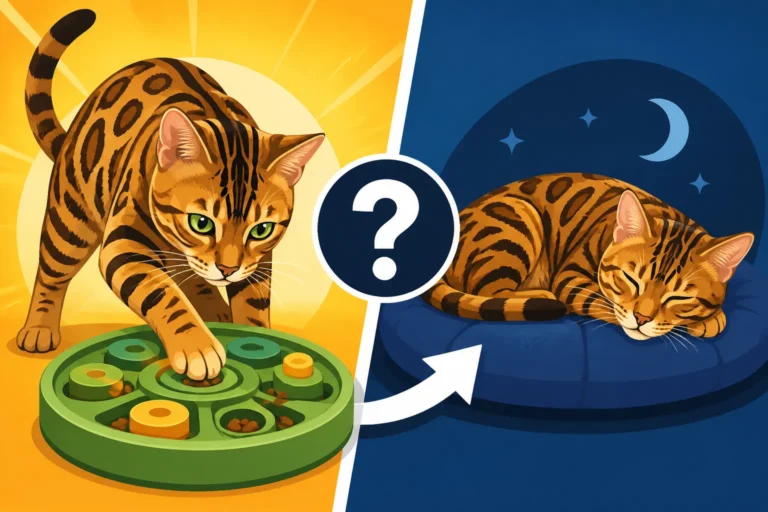
If your idea of a perfect cat is one that spends its days gracefully napping in sunbeams, occasionally rousing itself for a gentle purr and a brief play session, then a Bengal cat might not be your ideal companion. These cats are high-octane machines, designed for movement and exploration. Their activity levels are one of the biggest shocks for new owners.
The Perpetual Motion Machine
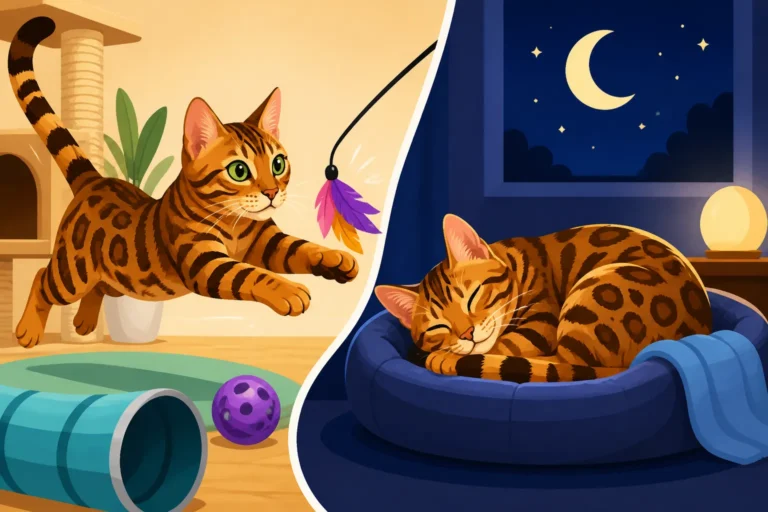
Imagine a kitten that never truly grows out of its boundless energy, but instead, channels that energy into more coordinated, powerful movements. That's a Bengal cat for you. They are often described as having an "endless battery" and it's not an exaggeration. They crave constant interaction and physical exertion. Without adequate outlets, this energy doesn't just dissipate; it redirects itself into behaviors that can be destructive or frustrating for an owner.
A Bengal might chase imaginary dust bunnies with the intensity of a predator, scale your curtains as if they were a tree, or dart through the house at warp speed for no apparent reason other than the sheer joy of movement. This isn't a cat that will be satisfied with a twenty-minute play session once a day. They need multiple, intense play sessions, often lasting much longer, and they expect you to be an active participant. If you're coming from a background of owning less active cats, this constant demand for engagement can be utterly exhausting. They are truly The Bengal Cat Is the Most Active Cat You Can Own.
Beyond a Simple Wand Toy
For many cats, a feather on a string or a crinkly ball is sufficient entertainment. For a Bengal, these might be a brief appetizer before they demand the main course. Their intelligence and stamina mean they quickly tire of repetitive, unchallenging play. You'll find yourself needing a vast arsenal of toys, rotating them frequently, and constantly inventing new games to keep their minds and bodies engaged.
Think more along the lines of interactive puzzle feeders that truly challenge their intellect, laser pointers (used responsibly to avoid frustration), and robust wand toys that can withstand vigorous hunting simulations. Many Bengal owners find themselves investing in cat wheels (like those from a brand you might find on Amazon) to help their cats burn off excess energy safely indoors. These aren't luxuries; for many Bengals, they are necessities to maintain their mental and physical well-being. A first-time owner might not realize the financial and time commitment involved in providing this level of sophisticated enrichment.
Night Owls and Early Birds
Another aspect of their high energy is their often-unconventional sleep schedule, particularly if their daytime needs aren't met. While many domestic cats adjust to their human's schedule, a bored or under-exercised Bengal might decide that 3 AM is the perfect time to explore the farthest reaches of your home, practice their vocalizations, or engage in a full-speed chase through the hallways.
This isn't maliciousness; it's simply a cat with unmet needs finding its own entertainment. For a first-time owner, being woken up repeatedly by a yowling cat or the sounds of something crashing downstairs can be incredibly disruptive and lead to frustration. Establishing a consistent routine of intense play before bedtime is crucial to ensuring a peaceful night's sleep for both you and your Bengal. Without experience, discerning the difference between a cat seeking attention and a cat genuinely needing to burn off steam can be difficult.
Intelligence That Turns Into Mischief
Bengal cats are incredibly intelligent, a trait inherited directly from their wild ancestors. While this makes them highly trainable and capable of learning complex tricks, it also means they are expert problem-solvers who can quickly outsmart typical household defenses. For a first-time owner, this intelligence can be a double-edged sword, leading to endless amusement but also unexpected challenges.
Problem Solvers, Not Lap Warmers
Unlike some more laid-back breeds that are content to simply observe the world from a comfortable perch, Bengals want to interact with it. They don't just see a closed cabinet door; they see a puzzle to be solved. They don't just see a faucet; they see a potential water source to manipulate. Their minds are constantly whirring, trying to understand how things work and how they can interact with them.
This means that traditional cat-proofing methods often fall short. What might deter a less intelligent cat for years could be solved by a Bengal in minutes. They learn by watching you, mimicking actions, and experimenting relentlessly. A first-time owner might expect a cat that needs minimal mental stimulation, but a Bengal demands it. Without engaging their clever minds, they will invent their own "games," which often involve exploring forbidden areas or manipulating household items.
The Art of the Great Escape (and opening everything)
One of the most common "Bengalisms" new owners discover is their uncanny ability to open things. Cabinets, drawers, lever-handled doors – you name it, they'll try to open it. This isn't just about curiosity; it's about their inherent ability to manipulate their environment. They've been known to figure out child-proof locks, unscrew lids, and even turn on faucets.
Imagine coming home to find every kitchen cabinet ajar, or your bathroom sink overflowing because your clever Bengal decided to experiment with the tap. These scenarios, while sometimes comical in retrospect, can be incredibly stressful and potentially damaging. For a first-time owner, the constant need to "Bengal-proof" your home can be overwhelming. It requires a level of vigilance and ingenuity that many simply aren't prepared for. You'll need to think like a Bengal, anticipating their next move before they make it.
Boredom Breeds Destruction
An intelligent cat, especially one with high energy, that isn't sufficiently stimulated quickly becomes a bored cat. And a bored Bengal is often a destructive Bengal. They don't mean to be; it's simply their way of seeking mental and physical engagement. If they don't have appropriate outlets, they'll create their own, often at the expense of your belongings.
This could manifest as scratching furniture (even if they have scratch posts), chewing on electrical cords, shredding toilet paper rolls, or systematically exploring every shelf and surface, often knocking things down in the process. For a first-time owner, distinguishing between normal cat behavior and boredom-induced destruction can be difficult. The impulse might be to punish the cat, but the true solution lies in increasing their enrichment and activity. Understanding What a Bored Bengal Cat Destroys is key to prevention. Without experience, it’s easy to get caught in a cycle of frustration rather than proactive solutions.
The Unique Demands of Bengal Cat Socialization
Bengal cats have a distinct way of relating to their human companions and other creatures. They aren't always the stereotypical lap cat, and their social dynamics can be a surprise for first-time owners expecting a more traditional feline relationship.
Bonding on Their Own Terms
While many Bengals are incredibly affectionate, they often show it in their own unique way. They might not be content to simply curl up on your lap for hours. Instead, their affection often comes through active participation in your life: following you from room to room, "helping" you with tasks, engaging in intense play sessions, or even jumping onto your shoulders. They thrive on interaction, but it's often more about shared activity than passive cuddling.
For a first-time owner, this can sometimes be perceived as aloofness or a lack of affection, when in reality, the Bengal is simply expressing its bond differently. It requires an owner who understands and appreciates this active form of companionship. They are deeply loyal and form strong attachments, but their emotional needs are tied to their need for stimulation and engagement. You need to understand What a Bengal Cat's Temperament Is Really Like to truly appreciate their unique bonding style.
Compatibility with Other Pets and Children
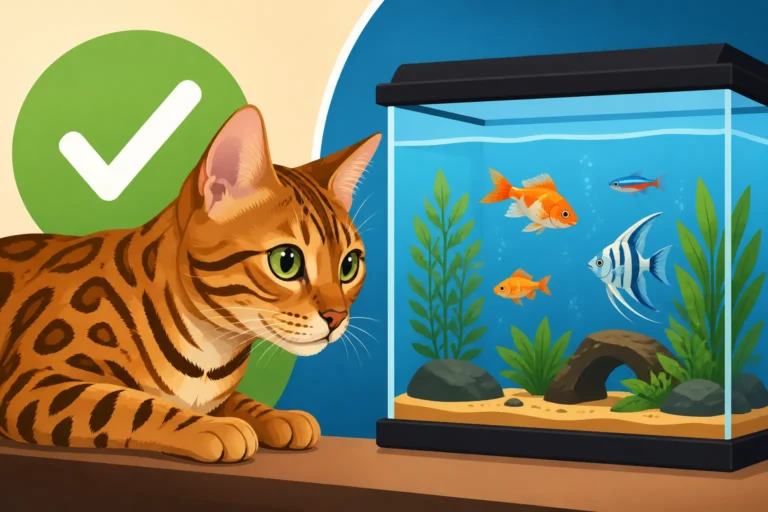
Introducing a Bengal to other pets or children requires careful consideration and a solid understanding of feline behavior, which first-time owners often lack. Due to their strong prey drive and high energy, Bengals can sometimes be too intense for very small, delicate pets like hamsters, birds, or even smaller, more timid cats. While many Bengals can coexist peacefully with dogs, especially if introduced correctly, their assertive personalities mean they often become the "alpha" of the household.
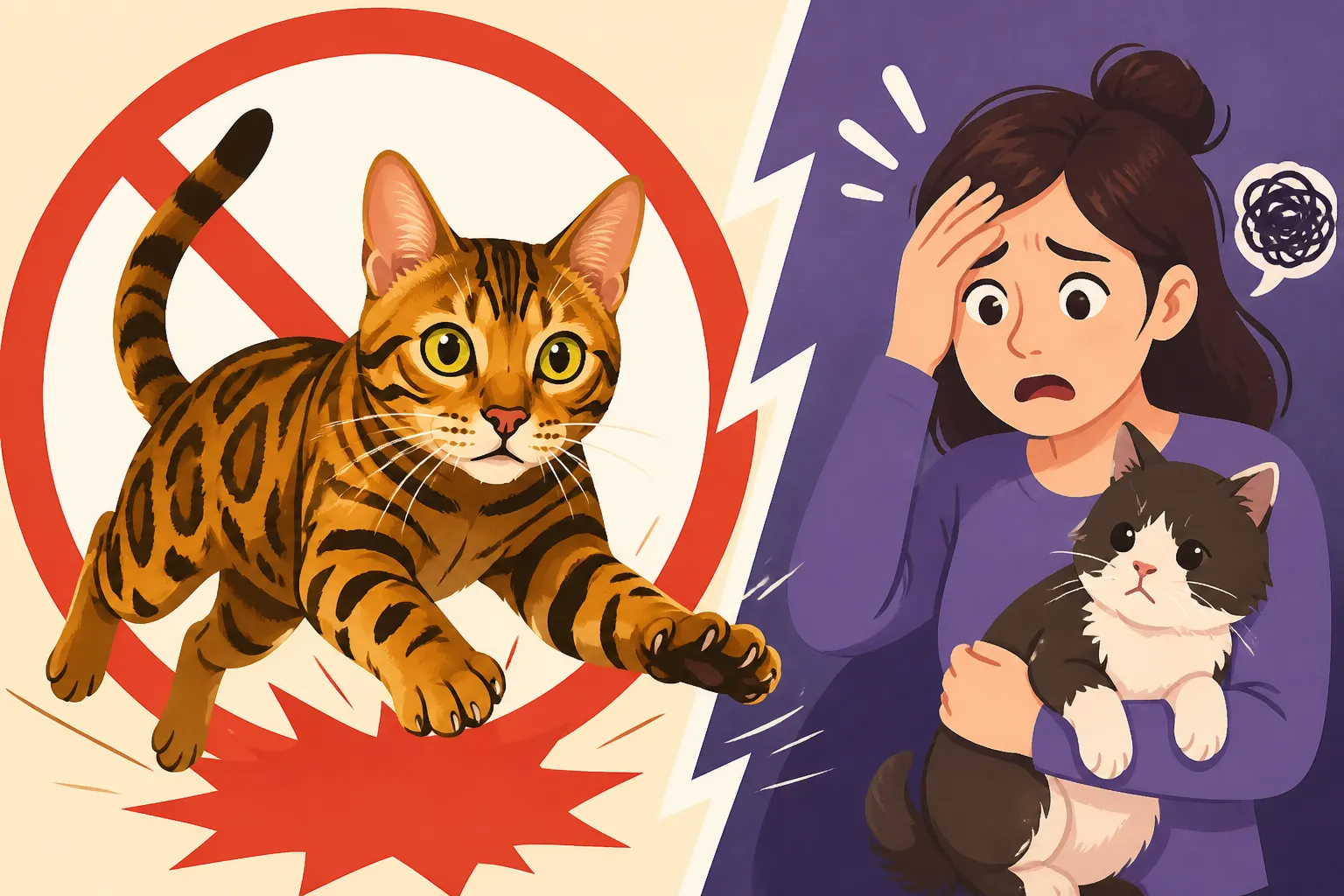
With children, supervision is always key. Bengals are generally good-natured but their playful intensity and powerful claws can inadvertently scratch or overwhelm a young child who isn't used to their vigor. They need owners who can teach both the cat and the child how to interact respectfully and safely. A first-time owner, unfamiliar with cat body language or proper introduction techniques, might inadvertently create a stressful or even dangerous situation. This is a cat that demands an experienced hand in managing its social interactions to ensure harmony in a multi-species or multi-human household.
The Loud and Proud Bengal Voice
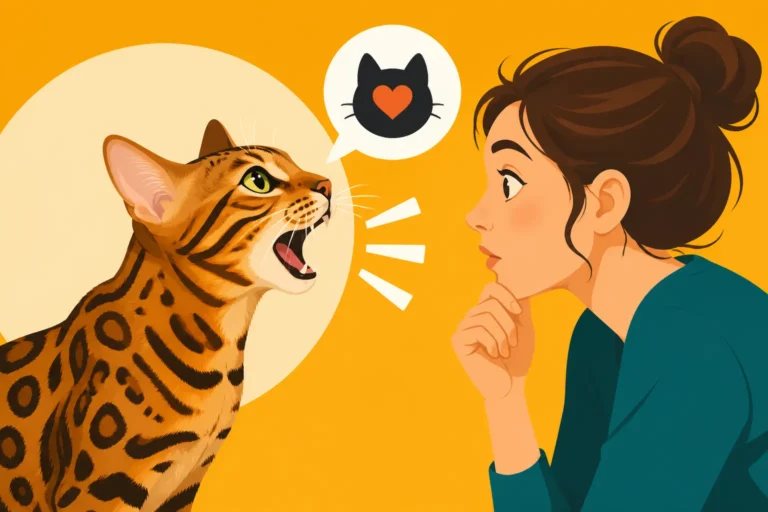
If you're accustomed to the occasional soft meow from a domestic shorthair, prepare yourself for a whole new vocal experience with a Bengal. These cats are known for their wide range of vocalizations, which can include chirps, growls, chattering, trills, and, most famously, a loud, demanding yowl. Their voices can often sound wilder and more insistent than that of other breeds.
This isn't just background noise; for a Bengal, vocalization is a primary form of communication, often used to express demands: "Feed me!" "Play with me!" "Let me out!" "You're ignoring me!" For a first-time owner, this constant vocal feedback can be startling and, at times, overwhelming. It takes patience to learn what each sound means and to respond appropriately without inadvertently reinforcing undesirable demanding behaviors. Understanding The Bengal Cat Voice Is a Demand, Not a Greeting is crucial, as misinterpreting their vocal cues can lead to frustration on both sides.
Environmental Enrichment Is Not Optional
When it comes to Bengal cats, "enrichment" isn't a buzzword; it's a foundational pillar of their care. You cannot simply provide a food bowl, a litter box, and a few toys and expect a well-adjusted Bengal. Their wild heritage demands an environment that stimulates their instincts and allows them to express natural behaviors. For a first-time owner, grasping the sheer scale of this need can be daunting.
Vertical Space is Prime Real Estate
One of the most critical aspects of Bengal enrichment is providing ample vertical space. These cats are natural climbers, surveyers of their domain, and performers of incredible acrobatic feats. They thrive on being high up, observing the world from above, and having multiple levels to ascend and descend. A single, flimsy cat tree simply won't cut it.
You'll need tall, sturdy cat trees, wall-mounted shelves, climbing poles, and perhaps even ceiling-height perches. Think of your home as a jungle gym designed for a highly athletic feline. Without these vertical opportunities, your Bengal will inevitably find its own climbing surfaces, which often include bookshelves, curtain rods, and even your refrigerator. This can lead to broken items, damaged furniture, and a frustrated cat. A first-time owner might underestimate this need, leading to a cat that feels confined and starts exhibiting unwanted behaviors due to a lack of appropriate climbing outlets.
The Allure of Water: More Than a Drinking Bowl
Another fascinating, and sometimes messy, trait of Bengals is their inherent love for water. Unlike many domestic cats that treat water with suspicion, Bengals are often captivated by it. This stems from their Asian Leopard Cat ancestors, who are known to be proficient swimmers and fishermen. Your Bengal might try to join you in the shower, play in the sink, bat at water in their bowl, or even try to "fish" objects out of a toilet.
For a first-time owner, this can be a shocking revelation. You might need to secure toilet lids, invest in heavy-duty, tip-proof water bowls, or even consider a dedicated pet water fountain (many good options are available on Amazon) to satisfy their curiosity. Some owners even provide shallow "splash pools" for their Bengals. While it's certainly endearing, the clean-up and prevention of potential water damage are ongoing considerations that add to the daily management of a Bengal.
Beyond the Indoors: Catios and Leash Training
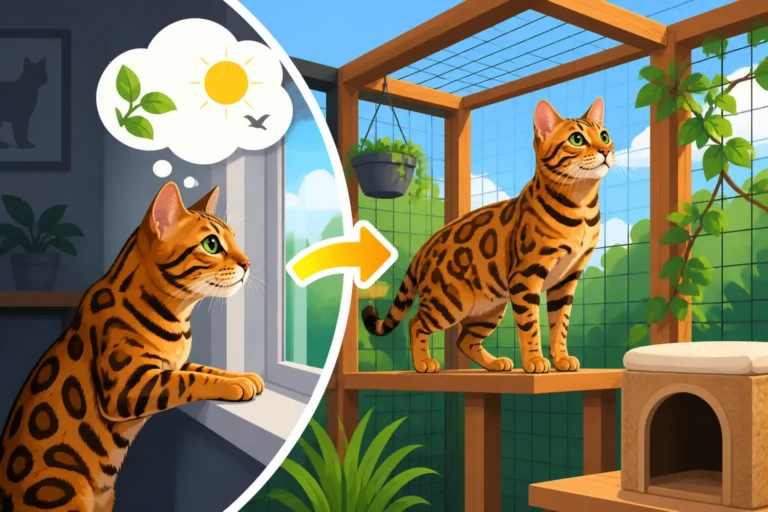
Keeping a Bengal cat exclusively indoors without any form of outdoor simulation is a challenge, especially for a first-time owner. Their intense curiosity and high energy often mean they crave sensory input from the outside world. This doesn't mean letting them roam free, which is incredibly dangerous for Bengals and local wildlife alike. Instead, responsible Bengal ownership often involves providing controlled outdoor access.
This is where catios (enclosed outdoor patios) and leash training come in. A well-designed catio offers a safe, stimulating outdoor environment where your Bengal can climb, observe nature, and soak up the sun without the risks of free-roaming. Alternatively, many Bengals can be successfully leash trained, allowing them to explore the outdoors with you on a harness and leash. Both options require significant upfront investment in time, money, and commitment. A first-time owner might not be prepared for the necessity of these specialized arrangements to meet their Bengal's unique needs. Understanding Why a Catio Is the Answer to a Bengal Cat and that A Bengal Cat Walks on a Leash are crucial insights.
Health and Dietary Considerations: Not Your Average Housecat
Beyond their engaging personalities and exotic looks, Bengal cats also come with specific health and dietary considerations that differ from many other domestic breeds. For a first-time cat owner, navigating these particular needs can add another layer of complexity.
Sensitive Stomachs and Dietary Needs
One of the most common complaints among Bengal owners, which often catches first-timers by surprise, is their propensity for sensitive stomachs and chronic diarrhea. While not every Bengal will experience this, a significant number do. Their digestive systems, still somewhat aligned with their wild ancestors, can react poorly to certain ingredients commonly found in commercial cat foods, particularly fillers like grains or certain proteins. You can read more about Chronic Diarrhea Is the Bengal Cat Complaint Nobody Warns About.
This often means careful attention to their diet, which might involve feeding a high-quality, high-protein diet, often grain-free, or even a raw diet (after thorough research and veterinary consultation). Finding the right food can sometimes involve extensive food trials, working with a vet, and a lot of patience. This level of dietary management is a far cry from simply picking up a bag of kibble at the grocery store, and the cost of specialized food can also be higher. For a new owner, the stress of dealing with persistent digestive issues can be significant. It's important to understand Feeding a Bengal Cat Four Generations From a Wild Ancestor to grasp the logic behind their dietary needs.
Genetic Health Concerns to Be Aware Of
Like many purebred cats, Bengals are predisposed to certain genetic health conditions. While responsible breeders will screen their breeding cats for these issues, awareness is still vital for any owner. Some of the more prominent concerns include:
- Hypertrophic Cardiomyopathy (HCM): This is a form of heart disease where the heart muscle thickens. It's a concern in many cat breeds, and Bengals are no exception. Regular cardiac screening (echocardiograms) by a veterinary cardiologist is often recommended. HCM Is What Kills Bengal Cats Early is a serious topic for any prospective Bengal owner to research.
- Progressive Retinal Atrophy (PRA-b): A genetic eye disease that can lead to blindness. There's a DNA test for this, and breeders should be screening for it. PRA-b Blinds a Bengal Cat by Two and There Is a DNA Test.
- Pyruvate Kinase Deficiency (PK Deficiency): Another genetic condition that affects red blood cells and can lead to anemia. Again, there's a DNA test available. Pyruvate Kinase Deficiency in a Bengal Cat.
For a first-time owner, understanding these potential health challenges and the importance of choosing a reputable breeder who performs all recommended health screenings is paramount. It requires diligence and a willingness to invest in preventative care and potentially specialized veterinary attention throughout the cat's life.
The Cost of Specialized Care
Bringing together all of these unique needs, it becomes clear that owning a Bengal cat can be more expensive than owning a typical domestic cat. The initial purchase price from a reputable breeder is usually higher due to the lineage, health testing, and care involved. Beyond that, the ongoing costs can also accumulate.
Consider the higher quality, often specialized food for their sensitive stomachs, the extensive array of durable toys and enrichment items (like cat wheels or complex puzzle feeders, perhaps from Amazon), the costs associated with building or buying a catio, and potentially more frequent or specialized veterinary care for genetic screenings or digestive issues. Even specialized pet insurance might be a consideration, and it's essential to research what specific conditions they cover for a hybrid breed. For a first-time owner, the financial commitment might be a significant surprise, leading to difficult choices if unforeseen costs arise.
| Feature | Typical Domestic Cat (e.g., DSH) | Bengal Cat |
|---|---|---|
| Activity Level | Moderate; enjoys naps, bursts of play. | High to extremely high; constant energy, requires intense play. |
| Vocalization | Varies, often soft meows; can be quiet. | Wide range, often loud, demanding; chirps, yowls, trills. |
| Intelligence | Moderate; learns routines, basic commands. | High; problem-solvers, learn quickly, can outsmart owners. |
| Social Needs | Varies; some lap cats, some more independent. | Active companionship; prefers interactive play to passive cuddling. |
| Grooming | Moderate brushing, especially for longhairs. | Minimal shedding, low grooming; coat feels like a pelt. |
| Water Fascination | Generally dislikes water; drinks from bowl. | Often loves water; plays in sinks, showers, fountains. |
| Enrichment Needs | Basic cat tree, toys, windows. | Extensive vertical space, puzzle toys, catio/leash walks often needed. |
| Dietary Sensitivity | Varies; usually tolerant of standard cat food. | Prone to sensitive stomachs, often needs high-protein, specialized diet. |
| Prey Drive | Moderate. | High; strong hunting instincts. |
| Destructive Potential | If bored, some scratching/chewing. | High if bored/understimulated; opening cabinets, climbing curtains. |
| Ideal First Cat? | Often yes, depending on individual temperament. | Generally no; requires experienced, dedicated ownership. |
The Commitment: More Than Just a Pet, It's a Lifestyle
Ultimately, deciding to bring a Bengal cat into your life isn't just about choosing a pet; it's about embracing a new lifestyle. The commitment required goes far beyond feeding and litter box duty, demanding a level of dedication that can be particularly challenging for a first-time cat owner.
Time, Patience, and Consistency
Owning a Bengal requires a significant investment of your time. This isn't a "set it and forget it" kind of pet. They thrive on routine, consistent interaction, and dedicated play sessions every single day. You need to be prepared to spend ample time engaging their minds and bodies, training them, and supervising their interactions with their environment.
Patience is also a virtue you'll need in spades. When your Bengal is scaling your bookshelves for the third time in an hour, or loudly demanding attention while you're on a crucial call, it's easy to get frustrated. An experienced owner understands that these behaviors stem from natural instincts and unmet needs, and responds with redirection and increased enrichment, rather than anger. For a first-timer, this can be a steep learning curve, requiring a shift in perspective about what cat ownership truly entails.
Understanding the Long-Term Investment
Bengal cats typically live for The Twelve to Sixteen Years a Bengal Cat Gets, sometimes even longer. This is a substantial long-term commitment. You're not just signing up for a few years of high energy; you're committing to over a decade of providing consistent stimulation, specialized care, and an adapted home environment. Their needs don't magically diminish with age, though their raw physical energy might mellow slightly. An aging Bengal will still be an intelligent, curious cat who needs engagement, even if it's less intense. Caring for an older Bengal brings its own considerations, which you can learn about in Caring for a Bengal Cat Past Ten.
For a first-time owner, envisioning and planning for such a long-term, demanding relationship can be difficult. Life changes – jobs, relationships, moves – all must be considered in light of a Bengal's specific requirements. They don't adapt easily to sudden changes or neglect, and finding appropriate care for them if you travel can also be more challenging than with a less demanding breed.
Are You Truly Ready for the Bengal Life?
Before you commit to a Bengal cat, take a deep, honest look at your lifestyle, your expectations, and your readiness to adapt. Do you have the time, energy, and financial resources to meet their extensive needs? Are you prepared for a cat that might scale your curtains, open your cabinets, and demand your attention with insistent vocalizations? Are you willing to embrace a cat that thrives on interaction and challenges, rather than one that prefers quiet solitude?
A Bengal cat is an incredibly rewarding companion for the right person – someone active, experienced, patient, and dedicated to providing a stimulating environment. They offer an unparalleled bond, endless entertainment, and the joy of living with a truly magnificent creature. However, if you're a first-time cat owner looking for an "easy" pet, the Bengal cat might prove to be too much of a challenge, leading to frustration for both you and the cat. It's not about whether Bengals are "good" or "bad" cats; it's about whether they are the right cat for you as a first-time owner.
Disclaimer
This article is for general informational purposes only and does not constitute professional advice. Laws, prices and regulations vary by location and change over time. Consult a qualified professional for guidance on your specific situation.