How Active a Bengal Cat Is
Many people fall head over heels for the striking good looks of a Bengal cat, envisioning a sleek, spotted companion gracefully lounging on the sofa. What they don't always fully grasp is the sheer, unadulterated energy packed into that magnificent, wild-looking package. This isn't just a playful housecat; this is a tiny, athletic dynamo that requires significant mental and physical stimulation every single day, and underestimating their activity needs can lead to a home that feels less like a sanctuary and more like a demolition zone. This comprehensive guide will delve deep into just how active a Bengal cat truly is, what that looks like in daily life, and how to successfully meet their formidable energy requirements to ensure a happy, well-adjusted feline friend.
The Core Truth: Bengal Cats Are High-Energy Athletes
Let's not sugarcoat it: Bengal cats are, without a doubt, one of the most active domestic cat breeds you can welcome into your home. Their energy isn't just a quirky trait; it's a fundamental aspect of their being, deeply rooted in their lineage. If you're looking for a lap cat that sleeps 20 hours a day, a Bengal might not be your ideal match. These felines are perpetual motion machines, constantly seeking engagement, exploration, and opportunities to unleash their inner wildcat.
Understanding Their Wild Ancestry's Influence
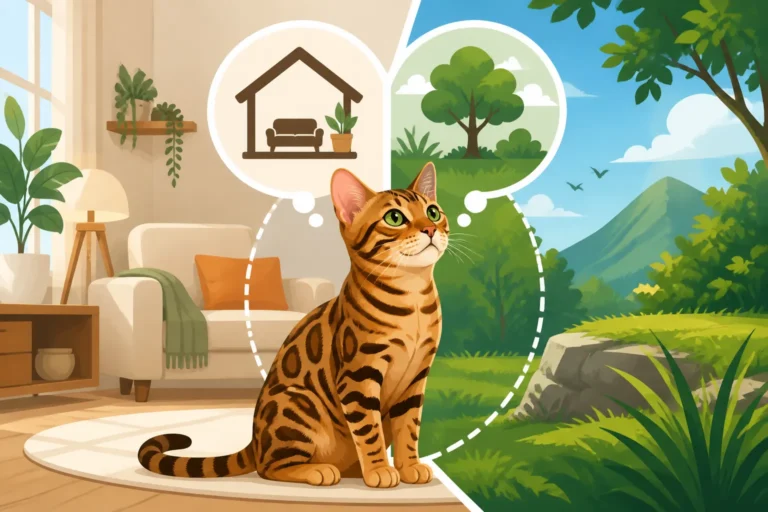
To truly appreciate the Bengal's boundless energy, you have to look at their ancestors. The Bengal cat is a hybrid breed, developed by crossing a domestic cat with the wild Asian Leopard Cat (ALC). This isn't just a distant relative in their family tree; the ALC's genetics are the very foundation of the Bengal breed, and with those genetics comes a profound instinct for activity. The Asian Leopard Cat is a small, solitary hunter, accustomed to vast territories and a life that demands constant alertness, agility, and a strong prey drive. They live by their wits, constantly moving, stalking, climbing, and exploring to find food and avoid predators.
When these traits were selectively bred into the domestic cat line, they weren't entirely diluted. What remained was a cat with an innate drive to move, investigate, and interact with its environment in a much more intense way than your average tabby. This wild heritage means they're not just playing; they're fulfilling hardwired behaviors that kept their ancestors alive. Understanding this helps you shift your perspective from expecting a typical housecat to appreciating the unique needs of this remarkable breed. If you're interested in learning more about their wild roots, you can explore What an Asian Leopard Cat Is Behind Every Bengal Cat.
More Than Just a "Playful" Cat
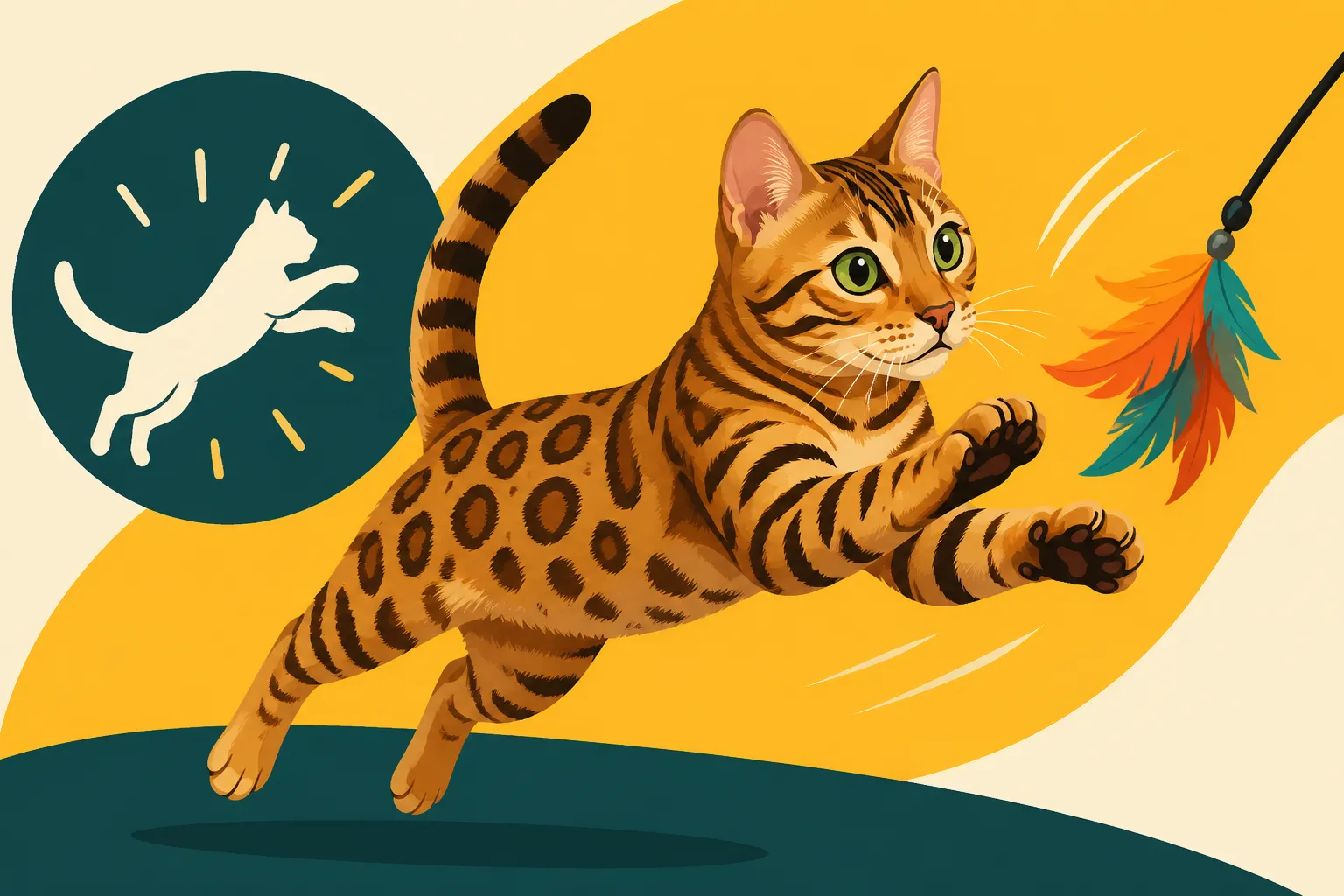
Every cat is playful, right? But the Bengal cat takes "playful" to an entirely different dimension. For a standard domestic cat, playtime might mean a few short bursts of chasing a toy mouse or batting at a feather wand, followed by a long nap. For a Bengal, play is a serious, often extended, endeavor that requires significant physical exertion and mental engagement. They don't just bat at a toy; they stalk it, pounce with incredible force, "kill" it, and often carry it off. They will often bring toys back for you to throw again, engaging in a game of fetch that rivals many dogs.
Their activity isn't limited to specific play sessions either. Bengals are often in a state of restless motion, pacing, observing, and looking for their next adventure. They'll climb curtains, scale bookcases, investigate every nook and cranny, and generally act as if the entire house is their personal jungle gym. Their minds are as active as their bodies, always strategizing, problem-solving, and figuring out how things work – or how to make them work in their favor. This constant drive to do something, anything, makes them incredibly engaging companions, but it also means that their energy must be consistently channeled. As many owners discover, The Bengal Cat Is the Most Active Cat You Can Own.
The Myth of "Calming Down" with Age
One common misconception among potential Bengal owners is the hope that their highly energetic kitten will eventually "calm down" and become a more sedate adult. While it's true that any cat's energy might mellow slightly as they move past their frantic kitten and adolescent phases, for a Bengal, this "calming down" is often relative. They don't magically transform into couch potatoes at age two or three. A ten-year-old Bengal can still be remarkably active, zipping around the house, scaling furniture, and demanding intense play sessions.
What you might notice is a shift in how they express their energy. A young Bengal kitten might have short, explosive bursts of pure chaos throughout the day, whereas an adult might have more structured, albeit still intense, play sessions and longer periods of focused observation or self-entertainment. They might sleep a bit more, but their waking hours remain filled with a need for engagement. Don't go into Bengal ownership expecting that the wild antics of kittenhood will vanish entirely; they simply evolve. If you're curious about when any slowing might occur, you can look into The Age a Bengal Cat Settles. But trust me, "settling" for a Bengal is still a whirlwind for most other cat breeds.
What a Bengal Cat's Activity Looks Like Day-to-Day
Living with a Bengal cat means adapting to a lifestyle that accommodates their constant need for stimulation. Their day-to-day activity isn't just about scheduled play; it permeates almost every aspect of their existence, from how they greet the morning to how they interact with their environment. It’s a full-time job for them, and often for you too!
The Dawn and Dusk Zoomies
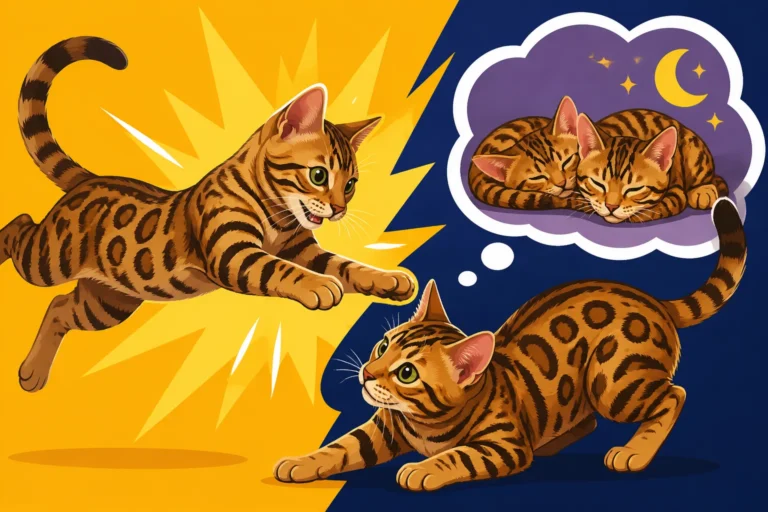
If you've ever owned a regular housecat, you're probably familiar with the occasional "zoomies" – those sudden, frantic bursts of energy where a cat tears through the house for no apparent reason. For a Bengal cat, these aren't occasional; they're a scheduled, almost ritualistic part of their day, often occurring with the rising and setting of the sun. These dawn and dusk zoomies are a direct echo of their wild ancestors' crepuscular hunting patterns. Asian Leopard Cats are most active during these twilight hours, and Bengals retain that ingrained biological clock.
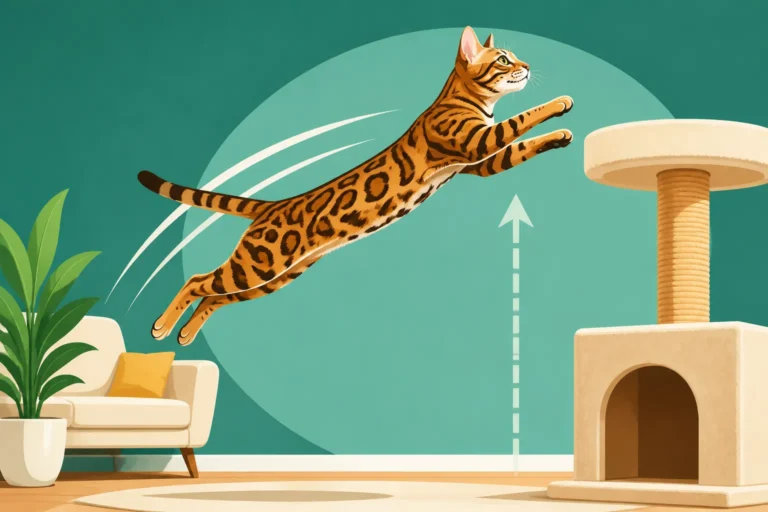
This means you can expect your Bengal to wake up with an urgent need to run, jump, and play as the first light hits the windows, or as evening descends. They might race from one end of the house to the other, scale the highest cat tree in a single bound, or vocalize loudly to demand attention and play. It's exhilarating to watch, but it also means your quiet mornings or peaceful evenings might be punctuated by a furry streak of lightning tearing through your living space. This is their prime hunting time, and they want to put those instincts to good use.
Constant Exploration and Investigation
A Bengal cat's mind is as active as its body, driven by an insatiable curiosity that turns every corner of your home into a potential adventure. They aren't content with just knowing a room; they want to understand it. This manifests as constant exploration and investigation. If there's a closed door, they'll try to open it. If there's a cabinet, they'll figure out how to get inside. Drawers are not safe, and even the refrigerator can become a target for their intelligent paws and persistent attempts.
They'll climb to the highest points they can reach, not just for a vantage point, but often because getting there is part of the challenge. New objects, no matter how mundane, will be thoroughly sniffed, nudged, batted, and perhaps even carried away. Leaving food on the counter is an open invitation for a Bengal to demonstrate their impressive counter-surfing skills. This means you’ll need to put in serious effort to secure your home, not just for their safety but for the integrity of your belongings. As many Bengal owners can attest, A Bengal Cat Opens Cabinets, Doors and Drawers, so be prepared to invest in child-proof locks.
Interactive Play is Non-Negotiable
While many cats are content with batting a toy around by themselves, a Bengal cat genuinely thrives on interactive play with their human companions. This isn't just a preference; it's a deep-seated need for mental stimulation and bonding that self-play often can't satisfy. They need you to be part of the hunt, the chase, and the capture. Wand toys are often a huge hit because they allow you to mimic prey movement, enticing your Bengal to stalk, pounce, and leap with impressive athleticism. Laser pointers can provide good exercise, but always end a session with a tangible toy they can "catch" to satisfy their prey drive.
Many Bengals love games of fetch, bringing toys back to you repeatedly, much like a dog. This is not just charming; it's a clear signal of their desire for engagement. Expect to dedicate significant portions of your day to these interactive sessions. We're talking multiple, energetic sessions, not just a five-minute flick of a feather. These sessions burn off physical energy and satisfy their intelligent minds. You'll find a fantastic array of durable wand toys, laser pointers, and puzzle feeders on Amazon that can stand up to a Bengal's robust play style. For a deeper dive into their play needs, consider reading How Many Hours a Day a Bengal Cat Plays.
The Consequences of Undermet Activity Needs
When a Bengal cat's formidable activity needs aren't adequately met, the consequences can range from frustrating to heartbreaking. They aren't going to quietly accept boredom; they will find ways to entertain themselves, and those ways are rarely aligned with human preferences for a calm, undamaged home. It's crucial to understand that these aren't "bad" behaviors; they are symptoms of an intelligent, high-energy animal whose fundamental needs are not being fulfilled.
Destructive Behaviors and Boredom
A bored Bengal cat is a destructive Bengal cat. Their energy has to go somewhere, and if it's not channeled into appropriate outlets, it will manifest as behaviors that can be incredibly challenging for owners. This can include incessant scratching of furniture, not just to sharpen claws, but often out of sheer frustration and a need to do something. They might chew on inappropriate items like electrical cords, plants, or household fabrics, which can be both damaging and dangerous.
Knocking objects off shelves and counters becomes a game, an experiment in gravity and a way to get attention. They might also engage in what feels like wanton destruction of their own toys, tearing them apart in an attempt to find greater stimulation. This isn't malice; it's a desperate cry for engagement. Imagine being full of energy and intelligence, with nothing to do all day – you'd probably start taking things apart too! If you've ever wondered about the chaos a bored Bengal can create, What a Bored Bengal Cat Destroys lays it out pretty clearly.
Behavioral Issues and Stress
Beyond property damage, a Bengal cat whose activity needs are consistently unmet can develop significant behavioral issues stemming from chronic stress and anxiety. These highly intelligent and sensitive creatures require mental stimulation to feel content. Without it, they can become deeply frustrated, leading to a range of undesirable actions. This might include excessive vocalization – loud, demanding meows, chirps, and even yowls that are not greetings but rather expressions of their distress and need for attention. They learn that making noise gets a reaction, even if that reaction is negative.
Litter box avoidance can also become an issue. A stressed Bengal might suddenly start eliminating outside the box, not because of a medical problem, but because their environment feels unsatisfactory or they're marking territory out of anxiety. They might become more prone to aggression, either towards other pets, or even towards their owners, particularly if they feel their attempts to communicate their needs are being ignored. This isn't typical aggression; it's often redirection or an outlet for pent-up energy and frustration, making them appear "mean" when they are simply unhappy. Prolonged periods of being left alone without adequate enrichment can lead to loneliness and a deeper sense of dissatisfaction, as discussed in How Long a Bengal Cat Copes Alone.
Physical and Mental Health Impacts
The impact of unmet activity needs isn't just behavioral; it has real physical and mental health consequences for your Bengal. While Bengal cats are naturally lean and muscular, a sedentary lifestyle can lead to weight gain, especially if their diet isn't adjusted to their lower activity levels. Obesity in cats, just like in humans, can lead to a host of health problems, including diabetes, joint issues, and a shortened lifespan. Their powerful musculature, which is one of their defining traits, can also diminish without proper use, leading to a less athletic, less healthy cat.
Mentally, chronic boredom and lack of stimulation can be akin to depression in humans. A Bengal cat thrives on challenge and engagement. Without it, they can become lethargic, withdrawn, and generally unhappy. This might manifest as excessive sleeping (not the happy, relaxed kind, but an escape from boredom), loss of interest in food, or a general dulling of their vibrant personality. Their cognitive abilities, which are a hallmark of the breed, can also suffer if not regularly exercised. A healthy Bengal is a busy Bengal, both physically and mentally.
Providing Adequate Outlets for Bengal Energy
The good news is that with forethought, creativity, and a genuine commitment, you absolutely can provide adequate outlets for your Bengal cat's extraordinary energy. It requires a different approach than owning a typical housecat, but the rewards of a happy, well-adjusted Bengal are immense. Think of it less as a chore and more as an exciting challenge to create an enriching environment for a truly special companion.
Structured Play Sessions are Key
While spontaneous play is great, structured play sessions are absolutely vital for a Bengal cat. These aren't just casual interactions; they should be intentional, consistent, and designed to mimic the hunting sequence: stalk, chase, pounce, kill, and consume. Aim for at least two to three intense, focused play sessions per day, each lasting around 15-30 minutes, depending on your cat's stamina and age. Using wand toys with various attachments (feathers, soft fabric "prey") is incredibly effective because you can control the movement, making it unpredictable and engaging.
Vary your toys and your approach. Don't always lead the "prey" in the same direction. Let your Bengal "win" often, allowing them to capture the toy and feel satisfied. After a successful hunt, offer a small, healthy treat to further complete the predatory cycle. This helps to reinforce positive behavior and provides a natural conclusion to the "hunt." Remember, it's about quality over quantity; a few highly engaging sessions are better than constant, half-hearted play. For more details on this, check out How Many Play Sessions a Bengal Cat Needs.
Vertical and Horizontal Enrichment
Bengal cats are natural climbers and explorers, so providing them with ample vertical and horizontal enrichment is non-negotiable. Think upwards! Tall cat trees, preferably floor-to-ceiling or multi-tiered, are essential. They need platforms to perch on, cubbies to hide in, and scratching surfaces to expend energy. Look for robust, stable cat trees; flimsy ones won't last a week with a determined Bengal. Many excellent options are available on Amazon that are designed for active, larger breeds.
Beyond cat trees, consider installing cat shelves or "cat highways" on your walls. These allow them to traverse your home from a high vantage point, satisfying their instinct to climb and observe their territory from above. Create pathways that lead to high points like the tops of cabinets or sturdy shelves. A cat wheel (like those from One Fast Cat or GoCatWheel) is another fantastic investment, providing an incredible outlet for their boundless running energy in a safe, indoor environment. These wheels allow them to run to their heart's content, burning off excess energy without needing vast outdoor spaces. Learn more about optimal climbing spaces by reading How Much Vertical Space a Bengal Cat Needs.
Outdoor Access (Safe and Controlled)
While many Bengal owners keep their cats strictly indoors for safety, it's undeniable that fresh air, sunshine, and new sensory experiences can be incredibly enriching for this breed. The key is safe and controlled outdoor access. Free-roaming outdoors is generally not recommended for Bengal cats due to their high prey drive, risk of theft, traffic accidents, and exposure to diseases or fights.
However, options abound for safe outdoor adventures. Leash training is a fantastic way to let your Bengal explore the backyard or go for walks in safe, quiet areas. Start young with a comfortable harness (there are many great ones on Amazon designed for cats) and make it a positive experience. Many Bengals take to leash walking surprisingly well, enjoying the novel sights and smells. Another excellent solution is a "catio" – a secure outdoor enclosure attached to your home. Catios provide a safe space for your Bengal to enjoy the outdoors, bask in the sun, watch birds, and breathe fresh air without any of the inherent dangers. They can be elaborate custom builds or simpler pre-made kits, allowing for varying levels of investment. A comprehensive guide like Why a Catio Is the Answer to a Bengal Cat can give you more ideas.
Integrating a High-Energy Bengal into Your Home Life
Bringing a Bengal cat into your home is an adventure, and successfully integrating their high energy into your daily routine requires preparation, patience, and a willingness to adapt. It's about creating a harmonious environment where both you and your dynamic feline friend can thrive.
Managing Expectations for Owners
The first and most crucial step is managing your own expectations. A Bengal cat is not a decorative accessory; they are a living, breathing, high-octane commitment. They will demand your time, your attention, and your resources. Expect a certain level of delightful chaos. Your home will likely be rearranged to accommodate climbing, and you'll become an expert at cat-proofing. You might find yourself scheduling your day around play sessions, much like you would for a dog.
This level of activity is why Bengal cats are often not recommended for first-time cat owners, or for those who lead very quiet, sedentary lives. They thrive with active individuals or families who are prepared to engage with them and provide consistent enrichment. If you understand and embrace their energetic nature, you'll find them to be incredibly rewarding, interactive, and endlessly entertaining companions. But go in with your eyes wide open about the sheer amount of energy and dedication required.
Compatibility with Other Pets and Children
Bengal cats, despite their wild appearance, can often thrive in multi-pet households and homes with children, provided the introductions are handled carefully and their energy needs are met. When it comes to other cats, a Bengal often does best with another cat that can match their energy levels and play style. A docile, timid cat might find a Bengal's relentless play attempts overwhelming or even aggressive. Another Bengal, or a similarly active breed, can be a great companion, helping to burn off excess energy and provide mental stimulation for each other.
With dogs, Bengals often get along wonderfully, especially if introduced thoughtfully. Their high activity levels and willingness to play can make them excellent companions for playful dogs. Supervision is always key, especially initially. With children, Bengals can be fantastic family pets, enjoying interactive play. However, young children must be taught how to interact respectfully with a cat, especially one as active and potentially rough-and-tumble as a Bengal. Their play can be intense, so teaching kids not to get caught up in the "hunt" (e.g., pulling on tails or teasing) is essential for mutual safety and respect. For detailed guidance on this, consider A Bengal Cat With Children, Dogs and Other Cats.
Creating a "Bengal-Proof" Environment
Given their innate curiosity and climbing prowess, creating a "Bengal-proof" environment is paramount for both their safety and the preservation of your sanity (and your belongings!). This means thinking like a Bengal: What can they climb? What can they open? What looks like a fun toy to knock over?
Start by securing anything valuable or fragile that's within their jumping or climbing reach. Shelves should be securely fastened to the wall, and breakables moved to closed cabinets or higher, inaccessible areas. Child-proof locks on cabinets and drawers are not just for toddlers; they are essential for preventing your Bengal from exploring places you'd rather they didn't. Some Bengal owners even use lever handle locks to prevent them from opening interior doors. Plants, especially toxic ones, should be removed or placed where they cannot be reached. Consider investing in a durable water fountain, as many Bengals love to play with running water, and a sturdy one will be less prone to being knocked over during their antics. You can find many strong and effective child locks and cat-specific water fountains on Amazon. For practical tips, look at How to Cat Proof Cabinets From a Bengal Cat.
| Aspect | Typical Housecat Activity | Bengal Cat Activity |
|---|---|---|
| Daily Play Sessions | 1-2 short bursts | 2-4 intense, longer sessions |
| Interactive Play Need | Appreciated, but not critical | Non-negotiable, deeply rooted |
| Climbing Instinct | Moderate, prefers high perches | Extreme, will scale anything |
| Curiosity/Exploration | Mild, familiar territory preferred | High, constantly seeking novelty |
| Prey Drive | Present, but easily satisfied | Very strong, requires frequent outlet |
| Energy Release Method | Napping, solo play | Running, jumping, "hunting," vocalizing |
| Response to Boredom | More sleeping, occasional mischief | Destructive behavior, vocal demands |
| Vocalization | Varied, often quiet | Frequent, varied, often demanding |
| Compatibility with Dog Play | Can be wary | Often enthusiastic, matches energy |
This table highlights the significant difference in activity levels and needs between a typical domestic cat and the dynamic Bengal cat, underscoring the commitment required to keep them happy and healthy.
Disclaimer
This article is for general informational purposes only and does not constitute professional advice. Laws, prices and regulations vary by location and change over time. Consult a qualified professional for guidance on your specific situation.