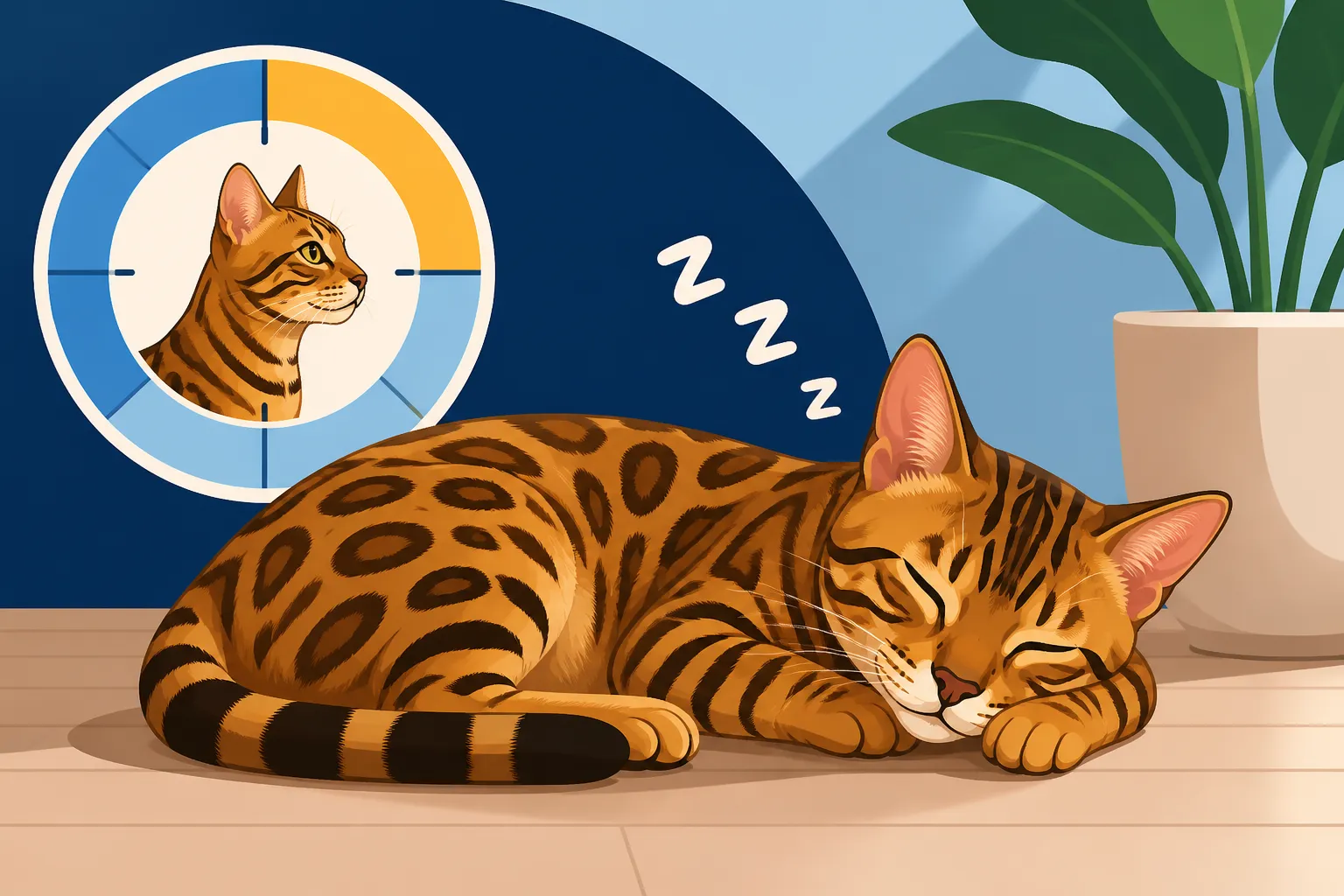
How Often a Bengal Cat Sleeps on the Floor
One of the most common questions I hear from new Bengal cat owners, or those just considering bringing one of these magnificent creatures into their lives, often revolves around their sleeping habits. You see, with their wild ancestry and boundless energy, many people picture Bengals constantly scaling heights or prowling around, rarely settling down. So, it's a perfectly valid worry to wonder, "How often does a Bengal cat actually sleep on the floor?" The truth is, while your Bengal might surprise you with their chosen napping spots, the floor often isn't their first choice for a deep, restful slumber, especially if you've provided them with enriching alternatives. This guide will dive deep into why your Bengal prefers certain spots, what makes them occasionally choose the floor, and how you can create the ultimate sleep sanctuary for your spotted companion.
Understanding the Bengal Cat's Instinctual Need for Vertical Space
If you've ever watched a nature documentary about wild cats, you've probably noticed a common theme: they love to be up high. Whether it's a leopard draped over a tree branch or a mountain lion surveying its territory from a rocky outcrop, elevation provides a sense of security and control. Your Bengal cat, despite generations of domestication, still carries these deeply ingrained instincts, and they play a massive role in where they choose to rest.
The Wild Ancestry and Elevated Perches
Let's face it, the Bengal cat isn't your average tabby. They carry the DNA of the Asian Leopard Cat, and that wild heritage isn't just in their stunning coat patterns. It's woven into their very behavior. Think about it: a small wild cat in a jungle environment needs every advantage it can get. Being up high allows them to spot prey from a distance, or more importantly, identify potential threats before they get too close. This isn't just about hunting; it's about survival. When they sleep, they are at their most vulnerable. Therefore, finding a safe, elevated spot becomes paramount. This is a huge part of What an Asian Leopard Cat Is Behind Every Bengal Cat, influencing everything from their athleticism to their preferred napping spots.
Your Bengal, even when curled up on your sofa, is subconsciously tapping into this ancient wisdom. They might look like a domestic cat, but their brain is still wired to appreciate a good vantage point. This instinct doesn't disappear just because they're safe indoors with a full food bowl. It simply translates into seeking out the highest cat tree, the top of a bookshelf, or even your refrigerator for a quick nap.
Why a High Vantage Point Offers Security
Beyond simply seeing what's coming, being elevated offers a unique sense of security. On the floor, a cat can feel exposed, easily approached from any direction. But when they're up high, their back is often to a wall, or they're in a more enclosed space, limiting the angles from which they can be surprised. This isn't necessarily about feeling unsafe in your home, but rather about a primal comfort. Imagine how vulnerable you might feel sleeping on an open floor in a crowded room versus being tucked snugly in your bed. It’s a similar feeling for your Bengal.
This need for security is especially true in multi-pet households or homes with active children. A Bengal might adore playing with the kids or another dog, but when it's time to truly rest and let their guard down, they'll instinctively seek out a place where they feel untouchable. A high perch gives them that psychological "safe zone" where they can fully relax without worrying about being stepped on, pounced on, or otherwise disturbed. This contributes to their overall well-being and helps them feel truly at ease in their environment.
The Energetic Lifestyle and Need for Retreats
Bengal cats are incredibly active creatures. They are known for their boundless energy, their love for play, and their impressive agility. After a vigorous play session, a long "hunt" through the house, or a good run on their cat wheel, they need to crash. But even in their downtime, their minds are often still active. This high-octane lifestyle means they need places where they can truly decompress and recharge.
A retreat, particularly an elevated one, allows them to observe their domain without being directly in the thick of things. It’s like having a control tower for your home. From up high, they can keep an eye on everything, yet still be removed enough to relax. This doesn't mean they'll never snooze on the floor, but it certainly means they'll gravitate towards spots that align with their energetic and watchful nature. Think about How Much Exercise a Bengal Cat Needs a Day – after all that activity, a strategic, elevated rest is key.
Common Sleeping Spots for a Bengal Cat Beyond the Floor
So, if not the floor, where do these majestic creatures prefer to catch their Z's? You might be surprised by the variety, but they almost always involve some form of elevation, enclosure, or strategic vantage point.
The Allure of Cat Trees and Wall Shelves
This is probably the most obvious, yet most important, answer. A tall, sturdy cat tree is an absolute non-negotiable for a Bengal cat owner. These aren't just for scratching; they are prime real estate for sleeping, playing, and surveying. Bengals love to climb, and they love to be high up. A multi-level cat tree with various perches, condos, and platforms caters perfectly to this need. They'll often choose the highest available platform for their deepest sleeps. If you're wondering Which Cat Tree a Bengal Cat Needs, aim for height, stability, and multiple levels.
Wall-mounted shelves and catwalks are another fantastic option. These create additional vertical territory that feels secure and out of the way. I've seen Bengals happily snooze on a narrow wall shelf, completely unbothered by the household commotion below. It’s an extension of their natural climbing instinct and provides unique napping opportunities. Creating these vertical pathways is also a great way to provide How Much Vertical Space a Bengal Cat Needs and can be a fun project if you're keen to How to Build Shelves for a Bengal Cat. You can find some amazing sturdy options for shelves and climbing posts on Amazon, specifically designed to handle a Bengal's impressive leaps and bounds.
Catios and Outdoor Perches
For those lucky Bengals with access to a catio, these enclosed outdoor spaces offer an incredible array of sleeping options. The fresh air, the sounds of birds, and the sensation of sunlight on their fur can make for incredibly inviting nap spots. Within a catio, Bengals will seek out high platforms, sunny ledges, or even enclosed boxes that mimic natural dens.
The appeal here is twofold: they get to experience the outdoors (which many Bengals crave due to their wild lineage) in a safe, secure environment, and they still benefit from elevated positions. A catio provides a rich sensory experience that can be deeply satisfying, making it a prime spot for rest. If you're considering one, remember that Why a Catio Is the Answer to a Bengal Cat goes beyond just fresh air; it's about providing a stimulating and safe extension of their territory.
Your Furniture as Prime Real Estate
While they love their dedicated cat furniture, your own home furnishings are often fair game for a Bengal seeking a cozy spot. This doesn't always mean the floor. They'll gravitate towards the backs of sofas, the tops of armchairs, or even the highest point of your bed. The key here is usually softness, warmth, and again, a slight elevation that allows them to observe.
Don't be surprised to find your Bengal draped over the back of a living room chair, surveying the room like a king on his throne. They're usually looking for somewhere soft yet stable, and often a place that puts them at eye level with you, or slightly above. They might even burrow under blankets on your bed, creating a warm, enclosed little den for themselves. These spots satisfy their need for comfort and security within their human family's space.
The Unexpected Cozy Nooks
Bengals are clever and resourceful, and they're not above finding the most unexpected places to curl up for a nap. This could be inside an open cupboard (especially if it's warm), in a laundry basket full of clean clothes, or even a sturdy shelf in your closet. They might squeeze themselves into a seemingly uncomfortable space simply because it offers a sense of enclosure and protection.
The key to these "nook" choices is often the feeling of being hidden or contained. It taps into that primal denning instinct, providing a sense of safety and undisturbed rest. Sometimes, it's about warmth, like a sunny spot on a rug near a window, or a cozy blanket piled just right. They might not be high up, but they offer other important elements of a secure resting place. For example, my Bengal, Raja, loves to sleep in an empty Amazon delivery box, no matter how small it seems. It's enclosed, it smells new, and it's his.
When and Why a Bengal Cat Might Choose the Floor
Now, to answer the core question: yes, your Bengal cat will sleep on the floor sometimes! But it’s usually for specific reasons, and often not for their deepest, most prolonged sleep.
Post-Exertion Cool Down
Imagine you've just run a marathon (or at least, your Bengal has just run several laps around the house at top speed, chased a laser pointer for twenty minutes, and then had a vigorous wrestling match with a toy mouse). After such intense activity, their body temperature rises. The cool, hard surface of a tile floor, a patch of linoleum, or even a section of exposed hardwood can feel incredibly refreshing.
In these moments, your Bengal isn't necessarily seeking a deep sleep, but rather a quick cool-down nap. They might stretch out full-length, belly-down on the cool surface, panting ever so slightly, and just zone out for a while. This is a purely physiological response to their high energy levels. It’s less about comfort and more about temperature regulation. These naps are often shorter and more like a recovery period before they're ready to spring back into action.
Seeking Comfort and Soft Surfaces
Sometimes, the floor is the softest or most comfortable option available, or at least a highly appealing one. If you have a plush rug, a thick bathmat, or even a designated cat bed placed on the floor, your Bengal might choose it. It’s not the height they’re after in these instances, but the tactile sensation and the warmth or softness.
My own Bengal, Luna, has a super soft, fluffy blanket that she will occasionally drag off the sofa onto a sunny patch of carpet for a mid-morning snooze. It's clearly about the irresistible comfort of the blanket combined with the warmth of the sun. The floor itself isn't the draw, but the luxurious softness on top of it. In these cases, it's about maximizing sensory pleasure.
Social Sleeping and Bonding Moments
Bengals, despite their wild looks, can be incredibly affectionate and social animals. They often want to be where you are. If you're spending a relaxed evening lounging on the floor, watching TV, or reading, your Bengal might join you. They might curl up right next to you, or even on your lap, if that’s where you’re seated. In these moments, the appeal isn't the floor itself, but the proximity to their beloved human.
This is a bonding behavior. They’re choosing to be near you, to share your space, and to feel connected. It’s a sign of trust and affection. So, if you find your Bengal napping beside you on the rug, take it as a compliment! It means they feel safe and loved enough to relax in your presence, even if it's not their usual high-perched lookout spot. This is a testament to What a Bengal Cat's Temperament Is Really Like – they're not just beautiful, they're often deeply attached.
Age, Health, and Accessibility Considerations
As Bengal cats age, their sleeping habits can change, and they might start to favor floor-level spots more frequently. Just like us, older cats can develop joint stiffness, arthritis, or other mobility issues that make jumping and climbing less appealing, or even painful. A Bengal cat that is The Age a Bengal Cat Is Considered Senior (typically around 10 years old) might find navigating multiple levels of a cat tree challenging.
If your senior Bengal suddenly starts sleeping exclusively on the floor, especially in easily accessible, warm spots, it’s worth a chat with your vet. It could be a subtle sign of discomfort. Making floor-level, soft beds readily available is crucial for older cats. You might also notice What Changes in a Bengal Cat After Ten, including a general slowing down, and this definitely includes their agility for climbing. Similarly, a Bengal recovering from an injury or illness might need easier-to-access sleeping spots while they heal.
Consider this comparison of common Bengal resting spots:
| Resting Spot Type | Typical Frequency for Deep Sleep | Primary Reasons for Choice | Considerations |
|---|---|---|---|
| High Cat Tree/Shelf | Very Frequent | Security, vantage point, instinct, exercise | Needs to be sturdy, tall, and accessible |
| Back of Sofa/Chair | Frequent | Comfort, warmth, observing household, proximity to owner | Can sometimes be less stable than a dedicated perch |
| Enclosed Nook/Box | Frequent | Security, denning instinct, warmth, privacy | May be temporary (e.g., a box) or a permanent feature |
| Catio Perch | Frequent (if available) | Outdoor stimulation, fresh air, security, vantage point | Requires a safe, well-designed outdoor enclosure |
| Owner's Bed | Frequent | Comfort, warmth, bonding, human proximity | Ensure safe access (steps for older cats) |
| The Floor (Cool) | Occasional | Post-exertion cool down, heat regulation | Often shorter naps, less deep sleep |
| The Floor (Soft/Warm) | Occasional | Comfort, sunbathing, social bonding with owner | Requires soft bedding or plush surfaces |
Maximizing Comfort and Vertical Options for Your Bengal
Understanding why your Bengal prefers certain sleeping spots is the first step. The next is to actively create an environment that caters to these needs, ensuring they have plenty of safe, comfortable, and stimulating places to rest – both high and low.
Investing in Quality Cat Furniture
When it comes to Bengals, "quality" isn't just a buzzword; it's a necessity. These cats are powerful, agile, and can exert a surprising amount of force when jumping, climbing, or even just stretching. A flimsy cat tree won't last long, and worse, it could be unsafe. Invest in the tallest, sturdiest cat tree your space and budget allow. Look for models with wide bases, thick posts, and multiple levels. The perches should be large enough for a Bengal (which can be a substantial cat – remember What a Bengal Cat Weighs) to stretch out comfortably. Brands that specialize in large cat trees are a good place to start, and you can find many highly-rated, durable options on Amazon.
Consider features like:
- Multiple platforms: Offer choice and variety.
- Enclosed condos or hammocks: Provide a sense of security and den-like comfort.
- Thick sisal scratching posts: Essential for claw health and a natural outlet.
- Washable covers or removable cushions: Makes cleaning easier, especially important if they're shedding (even if How Little a Bengal Cat Sheds for a Shorthair is true, they still do!).
Don't be afraid to splurge a little here. A good cat tree is an investment in your Bengal's physical and mental well-being, and it will likely last for years.
Creative DIY Vertical Solutions
If space is at a premium or you want to integrate vertical pathways more seamlessly into your home decor, DIY solutions can be fantastic. Wall-mounted shelves, cat ladders, and even strategically placed furniture can all contribute to your Bengal’s vertical domain.
- Floating Shelves: Install sturdy, wide shelves at varying heights, creating a staircase effect up a wall. Ensure they are securely mounted to studs and can support your Bengal's weight. You can add soft pads or carpet squares to the shelves for extra comfort and grip. This is an excellent way to add to How Much Vertical Space a Bengal Cat Needs.
- Bookcase Access: Create a pathway from the top of a bookcase to another high surface, or simply clear the top of a tall bookcase and add a soft bed. Bengals love being on top of things, and a well-placed bookcase can serve as an impromptu cat tower.
- Window Perches: These are fantastic for providing a view of the outside world, which is incredibly stimulating for Bengals. Look for sturdy, suction-cup mounted perches or window hammocks that can safely hold your cat's weight. Many great, robust models are available on Amazon.
- Cat Ladders/Ramps: If you have an older Bengal or one with mobility issues, ramps or ladders can help them access higher spots without painful jumping. These can be custom-made or purchased.
Remember, safety is paramount. Whatever you build or install, make sure it's stable and secure. Test it thoroughly before letting your Bengal loose on it.
Encouraging Exploration and Use of Elevated Spaces
Simply providing the furniture isn't always enough; you might need to encourage your Bengal to use it, especially if they're used to floor-level comfort.
- Treats and Toys: Place their favorite treats or toys on higher platforms to entice them to explore. Use a wand toy to lead them up the levels of a cat tree.
- Scent Familiarity: Rub a familiar blanket or a used toy on the new furniture to transfer their scent, making it feel more like "theirs."
- Positive Reinforcement: When they use a high perch, offer praise, gentle petting, or a small treat.
- Placement: Place cat trees and shelves near windows or in high-traffic areas where they can observe the family action. This satisfies their natural curiosity and desire to be involved (or at least, to watch).
- Variety: Offer a range of textures and enclosed versus open spaces. Some days they might want to be completely out in the open, other days they might prefer a cozy, dark hideaway.
By understanding their natural instincts and catering to their desire for height, security, and comfort, you can ensure your Bengal cat has a multitude of appealing places to sleep, often far above the floor, contributing to a happy, healthy, and well-rested life.
Disclaimer
This article is for general informational purposes only and does not constitute professional advice. Laws, prices and regulations vary by location and change over time. Consult a qualified professional for guidance on your specific situation.