Whether a Bengal Cat Scratches a Child
It’s a common, completely valid fear for any parent considering a Bengal cat: will this energetic, wild-looking creature scratch my child? The vibrant, playful nature of a Bengal is incredibly appealing, but their intense energy and strong instincts can understandably raise concerns, especially when small children are in the picture. This guide will walk you through the nuances of Bengal cat behavior, how they interact with the youngest members of your family, and, most importantly, provide actionable steps to ensure a safe, loving relationship for everyone.
Understanding the Bengal Cat's Instincts and Play Style
Bringing a Bengal cat into a home with children means understanding their unique genetic makeup and the behaviors that stem from their wild ancestry. These aren't your typical couch potatoes; Bengals are bundles of energy with a natural inclination for hunting, climbing, and exploring. This isn't inherently bad, but it means their play can be more intense than what you might expect from a domestic shorthair.
The Hunter Within: Natural Play Behaviors
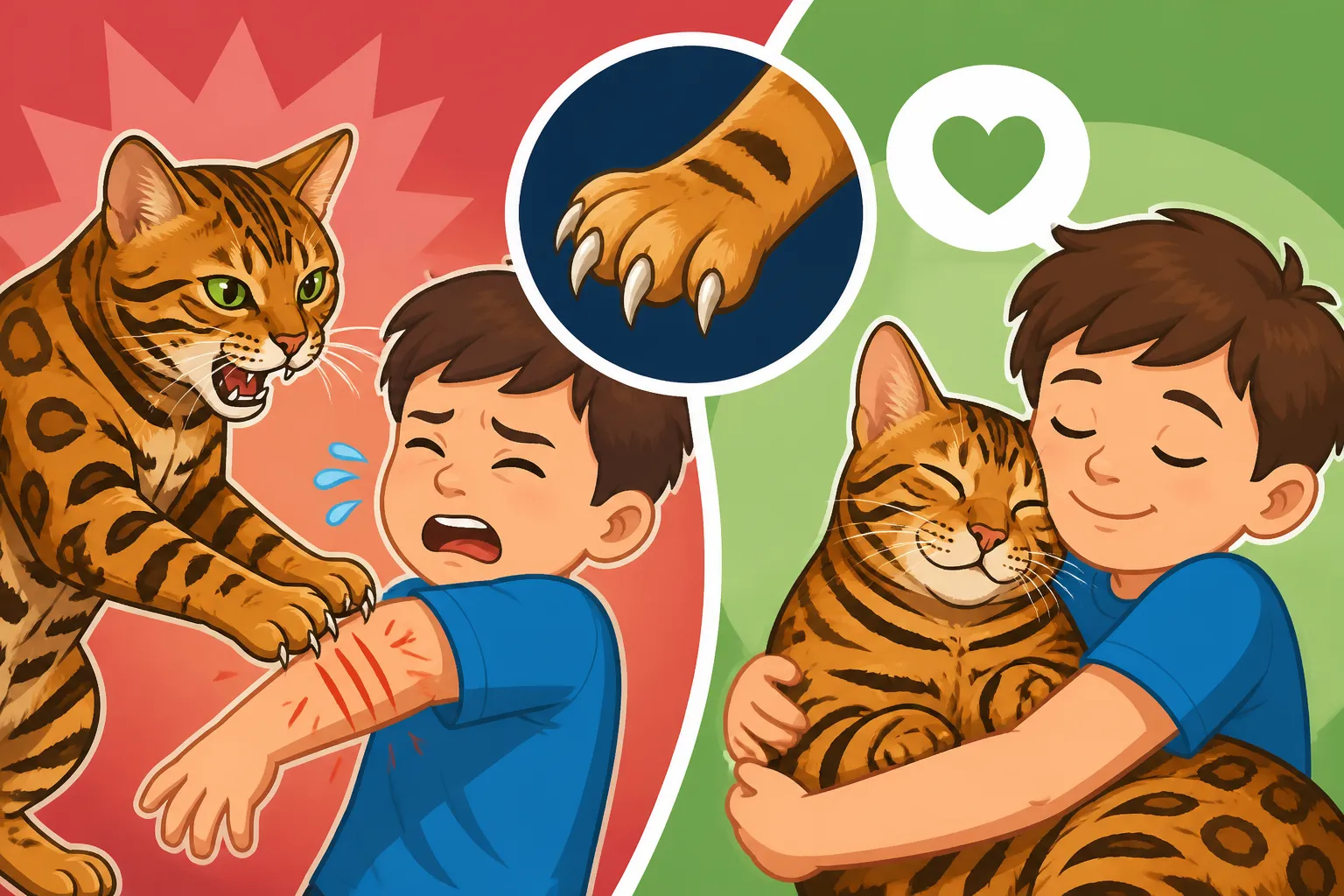
A Bengal cat carries the lineage of the Asian Leopard Cat, and with it comes a powerful prey drive and an instinct for physical, often rough-and-tumble, play. They love to stalk, pounce, chase, and bat at things, using their paws and claws as natural tools for interaction. When they play with you, they might bat at your hands or feet, and sometimes, those claws might come out. This isn't usually an act of aggression but a natural expression of their play style. For a cat, "play" often mimics hunting, and that includes the use of claws and teeth. The issue arises when a child, who is smaller and less resilient, becomes an unwitting "prey" item or target for this vigorous play. An innocent game of chase with a wiggling child can quickly escalate if the Bengal cat perceives it as an invitation to engage in a full-on hunting simulation, leading to unintended scratches.
It's crucial to distinguish between an intentional attack and an accidental scratch during exuberant play. Most Bengals are not inherently aggressive towards children, but their powerful pounces and swift movements can easily result in a scratch when boundaries aren't clear or supervision is lacking. Think of it like a puppy that nips during play – it’s not trying to hurt you, but its instincts are at work. The same goes for a Bengal, but with sharper tools. Ensuring your Bengal has plenty of appropriate outlets for this energy is paramount, which we'll discuss later. You can also learn more about What a Bengal Cat's Temperament Is Really Like.
How Bengal Energy Levels Impact Interactions
The sheer energy of a Bengal cat is something that genuinely catches many new owners by surprise. They are incredibly active creatures, often described as having endless stamina. This means they require a lot of stimulation and engagement. If a Bengal cat is bored or under-stimulated, that pent-up energy has to go somewhere, and it can manifest in destructive behaviors or overly rough play, which increases the risk of scratching. A child running through the house might inadvertently become an irresistible moving target for a bored Bengal looking for action.
Without adequate mental and physical enrichment, a Bengal might seek out interactions in ways that aren't ideal for a peaceful home, especially one with children. This isn't because they are "mean" but because they are driven by their instincts and need to burn off steam. Providing them with opportunities to climb, explore, and hunt in a safe, constructive manner is essential. This high energy is one of the reasons why many sources say Why a Bengal Cat Is a Bad First Cat for those unprepared for their needs. A Bengal needs more than just a bowl of food and a warm bed; they need to be engaged.
Creating a Safe Environment for Both Child and Cat
The key to preventing scratches and fostering a harmonious household lies in proactive management and thoughtful environmental setup. It’s about creating a structured space where both your Bengal and your child understand boundaries and have their needs met.
Providing Appropriate Outlets for Play
Since Bengals are so energetic, providing them with plenty of appropriate play outlets is critical to redirect their natural hunting instincts away from little hands and feet. This means investing in high-quality, durable toys that can withstand their vigor. Think wand toys with feathers or fuzzy attachments that mimic prey, puzzle feeders that challenge their minds, and a sturdy cat wheel for burning off excess energy. Items like these can often be found readily on Amazon, giving you a wide selection to choose from. Regular, interactive play sessions with an adult are non-negotiable. Aim for several dedicated playtimes throughout the day, ensuring your cat is tired out and satisfied.
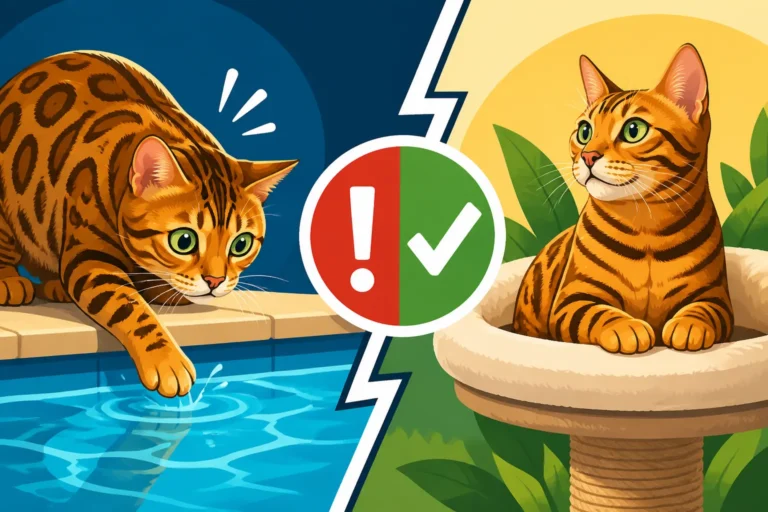
Furthermore, vertical space is a Bengal's best friend. Tall cat trees, wall-mounted shelves, and perches allow them to climb, observe their "territory" from above, and escape to a safe zone if they feel overwhelmed or just need a break from the hustle and bustle of a child. This can significantly reduce the likelihood of them lashing out if cornered or startled. A busy Bengal with plenty of legitimate places to climb and hunt is less likely to view a running child as their primary form of entertainment. You can get more ideas from How Much Enrichment a Bengal Cat Actually Needs.
Establishing No-Go Zones and Safe Havens
Just as you wouldn't let a child climb on every piece of furniture, you need to establish clear "no-go" zones for your Bengal cat, especially around young children during certain activities. This might mean using baby gates or closing doors to specific rooms when supervision isn't possible, or during a child's mealtime to prevent counter-surfing or opportunistic "food theft" that could lead to a swat. Conversely, your Bengal also needs its own safe havens – places where it can retreat and feel completely undisturbed by children. This could be a high perch, a cat tree in a quiet room, or even a covered cat bed. Teaching children that when the cat is in its "safe spot," it is off-limits, is just as important as teaching the cat not to scratch.
A visual boundary, like a blanket or a designated cat bed, can signal to both the cat and the child that this is the cat's private space. Respecting these boundaries helps the Bengal feel secure and reduces stress, making them less likely to react defensively with claws. Remember, a cornered or stressed cat is much more likely to resort to scratching, even if it's purely out of fear.
| Factor | Impact on Scratching Risk | Action to Take |
|---|---|---|
| Boredom/Lack of Exercise | High | Provide multiple daily play sessions, puzzle toys, cat wheel, vertical climbing structures. Check Amazon for innovative cat enrichment tools. |
| Unsupervised Interaction | High | Always supervise interactions between young children and your Bengal. Intervene immediately if play becomes too rough or the cat shows signs of stress. |
| Lack of Cat Retreats | Moderate | Ensure your Bengal has high perches, quiet rooms, or covered beds where it can escape children and feel safe. Teach children to respect these spaces. |
| Child Teasing/Rough Play | High | Educate children on gentle interaction. Teach them what behaviors upset the cat (e.g., pulling tail, chasing, grabbing) and can provoke a defensive scratch. |
| Untrimmed Claws | High | Trim your Bengal's claws regularly (weekly if needed). Provide plenty of appropriate scratching posts (sisal, cardboard, tall posts). Get a good set of clippers on Amazon. |
| High Stress in Home | Moderate | Identify and minimize stressors for your cat (e.g., loud noises, sudden changes). A stressed cat is more likely to be reactive. |
Teaching Respectful Interaction: For Children and Cats Alike
Preventing scratches isn't just about managing the cat; it's equally about teaching your children how to interact respectfully and safely. This requires patience, consistency, and a clear understanding that both parties need guidance.
Educating Children on Safe Cat Interaction
Children, especially toddlers, don't instinctively know how to interact gently with animals. It's our job as parents to teach them. Start early, modeling calm and gentle touches. Show them how to stroke the cat softly, avoiding sensitive areas like the belly or tail. Emphasize that cats are not toys to be grabbed, squeezed, or chased. Explain that a cat might scratch if it feels hurt, scared, or annoyed. Use simple, consistent language. For example, "Gentle hands," or "Pat, don't pull." It's also vital to teach children to recognize a cat's body language. If the cat's tail is twitching rapidly, ears are flattened, or it's trying to get away, these are all signals that it's uncomfortable and needs space. Teach children to back off when they see these signs.
One of the most important lessons is to never allow a child to corner a cat. A Bengal, like any cat, will feel threatened if trapped and may lash out defensively. Encourage children to let the cat come to them, rather than initiating an unwanted interaction. This builds trust and respect. You can find more helpful insights on How a Bengal Cat Behaves With a Toddler.
Supervising and Redirecting Play
Close supervision is absolutely non-negotiable, especially with young children and highly energetic breeds like Bengals. Never leave a child unattended with a Bengal cat, particularly when they are very young or still learning boundaries. When you are present, actively supervise their interactions. If you see play escalating beyond acceptable limits—whether it's the child getting too rough or the cat getting too "hunt-y"—intervene immediately and calmly.
Redirect rough play from the cat by using a wand toy or another appropriate toy. If your Bengal is batting at a child's feet, immediately grab a wand toy and engage them in a vigorous play session away from the child. This teaches the cat what is acceptable to play with. Similarly, if a child is being too rough, gently remove them from the situation and calmly explain why their actions are not okay. Consistency is key here. Every time you redirect, you are reinforcing the desired behavior for both the cat and the child.
Managing Claws and Scratching Behavior
A Bengal cat's claws grow quickly and are incredibly sharp, making regular claw trimming an absolute necessity. Aim for weekly or bi-weekly trims to keep them blunted and reduce the impact of any accidental scratches. Start this routine when your Bengal is a kitten so they become accustomed to it. If you're unsure how to trim cat claws safely, ask your vet or a professional groomer for a demonstration. Good quality cat nail clippers are essential and can be found on Amazon or at any pet store.
Beyond trimming, providing ample, appropriate scratching surfaces is vital. Bengals need sturdy, tall scratching posts (at least 3 feet high) that allow them to stretch their entire body while scratching. Sisal rope or corrugated cardboard scratchers are usually big hits. Having multiple scratching posts in various rooms, especially near furniture you want to protect, gives your cat acceptable alternatives to your sofa or, heaven forbid, a child's arm. Learn more about Which Scratching Post a Bengal Cat Needs and How to Protect Furniture From a Bengal Cat. When you see your Bengal using a scratching post, offer praise and maybe even a treat to reinforce that positive behavior.
When to Seek Help: Recognizing Persistent Issues
Sometimes, despite your best efforts, challenges persist. It's important to recognize when a behavior problem is beyond typical kitten exuberance and might require professional intervention.
Identifying Concerning Behaviors
While occasional accidental scratches during play can happen, persistent, intentional scratching, or any sign of aggression towards a child, is a red flag. This includes behaviors like:
- Stalking and pouncing: If your Bengal consistently stalks a child and pounces on them, even after redirection, it could indicate a deep-seated prey drive directed at the child.
- Hissing or growling: These are clear warnings that your cat is feeling threatened or extremely agitated. If a Bengal hisses or growls at a child, it means the cat is very uncomfortable.
- Swatting with claws out: While a playful swat might happen, an aggressive swat, especially if unprovoked or without clear preceding play, is a problem.
- Blocking retreat: If the cat prevents the child from moving away, it's a sign of territorial aggression or an attempt to control the interaction.
Any time you observe these concerning behaviors, especially if they are repetitive or escalating, it's crucial to address them immediately. Don't assume the cat will "grow out of it" or that it's "just being a Bengal." While their play can be intense, true aggression is something else entirely.
Consulting with a Veterinarian or Cat Behaviorist
If you're struggling with persistent scratching or aggressive behavior towards your child, your first step should always be a visit to your veterinarian. They can rule out any underlying medical issues that might be causing pain or discomfort, which can often lead to irritability and aggression in cats. Sometimes, a cat acting out is simply a cat in pain. The vet can also ensure your cat is otherwise healthy, covering aspects like How Often a Bengal Cat Needs a Wellness Exam.
If no medical cause is found, your vet might recommend consulting a certified feline behaviorist. These professionals specialize in understanding cat behavior and can help you identify the root cause of the problem, whether it's anxiety, territorial issues, insufficient enrichment, or improper socialization. A behaviorist can develop a tailored plan that includes environmental modifications, behavior modification techniques, and sometimes, even medication to help manage the issue. They can guide you through positive reinforcement strategies for both your cat and your child, fostering a safer, more predictable home environment for everyone. Seeking help early can prevent the problem from becoming ingrained and ensure your Bengal cat can happily coexist with your children.
Disclaimer
This article is for general informational purposes only and does not constitute professional advice. Laws, prices and regulations vary by location and change over time. Consult a qualified professional for guidance on your specific situation.