What PRA-b Does to a Bengal Cat’s Sight
Discovering that your beautiful, active Bengal cat might be losing their sight can be an incredibly upsetting and confusing experience. It’s heartbreaking to imagine your adventurous companion struggling to navigate their world, especially when it’s due to a condition you might not have even heard of. This comprehensive guide is here to shed light on Progressive Retinal Atrophy, Bengal type (PRA-b), detailing exactly what this genetic disease does to your Bengal’s vision, how it progresses, and most importantly, how you can support them every step of the way.
Understanding PRA-b in Bengal Cats
Progressive Retinal Atrophy, or PRA, is a general term for a group of inherited eye disorders that lead to the degeneration of the retina, ultimately causing blindness. For Bengal cats, there’s a specific type called PRA-b, and it's something every Bengal owner or prospective owner should understand. It's a cruel condition because it slowly steals their ability to see, often without obvious signs until it's quite advanced.
The Genetics Behind PRA-b
At its core, PRA-b in Bengal cats is a genetic lottery that unfortunately, some kittens lose. The "b" in PRA-b specifically refers to the mutation found in the Bengal breed, distinguishing it from other types of PRA found in different cat breeds. This condition is inherited in an autosomal recessive pattern. What this means in plain English is that a kitten only develops PRA-b if it inherits two copies of the defective gene – one from each parent.
If a cat inherits only one copy of the defective gene and one normal copy, it becomes a "carrier." A carrier cat won't develop PRA-b themselves and will have perfect vision throughout their lives. This is where the frustration really sets in for breeders and owners: a cat can be a carrier, look completely healthy, and still pass on the gene. If two carriers are bred together, there's a 25% chance with each kitten that it will inherit two copies of the defective gene and become "affected," meaning it will develop PRA-b. There's also a 50% chance it will be a carrier, and a 25% chance it will be clear.
The specific gene responsible for PRA-b in Bengal cats has been identified, which has been a monumental step forward for responsible breeding. It's truly a Bengal-specific issue, meaning that if you have a different breed, even one that looks similar, this particular genetic test won't apply. Knowing the precise gene allows for accurate DNA testing, which is our best weapon against this condition. For more on the specifics, you can read about Which Gene Causes PRA-b in a Bengal Cat. It’s also fascinating to learn Why PRA-b Is Specific to the Bengal Cat and not found in other breeds.
The Role of the Retina
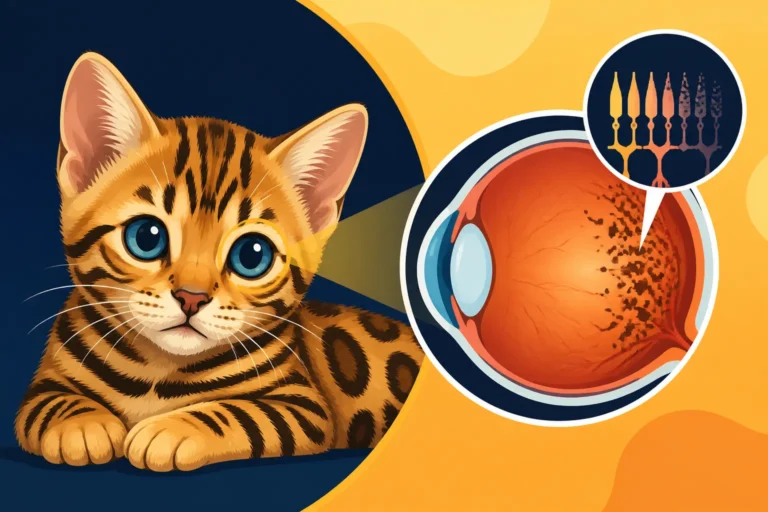
To truly grasp what PRA-b does, we need to talk a little about the retina. Think of the retina as the film in a camera or the sensor in a digital one. It’s a thin layer of tissue at the back of the eye that contains millions of light-sensitive cells called photoreceptors. There are two main types: rods and cones.
Rods are responsible for vision in low light conditions – essentially, night vision and detecting movement. Cones, on the other hand, are crucial for seeing in bright light, perceiving color, and sharp, detailed vision. When light hits these cells, they convert it into electrical signals that are sent to the brain, which then interprets them as images. It’s a truly intricate system, and when it starts to break down, the impact is profound.
In a Bengal cat with PRA-b, these vital photoreceptor cells, both rods and cones, begin to degenerate and die off over time. Initially, it’s usually the rods that are affected first, which explains why the earliest symptom is often a loss of night vision. As the disease progresses, the cones also begin to degenerate, leading to a more generalized loss of vision even in daylight. This slow, relentless destruction of the retina's ability to capture and transmit light is what ultimately leads to complete blindness.
The Insidious Progression of Vision Loss
One of the most frustrating aspects of PRA-b is how sneaky it is. Cats, being incredibly adaptable predators, are masters at hiding vulnerabilities, especially when it comes to their senses. They compensate for vision loss with their other keen senses – hearing, smell, and whiskers – making it incredibly difficult for owners to spot the problem in its early stages. You might not even realize something is wrong until your Bengal is already quite impaired.
Early Signs and Night Blindness
The journey of vision loss with PRA-b almost always begins with what’s known as nyctalopia, or night blindness. This is because, as mentioned, the rod photoreceptors, which are responsible for low-light vision, are usually the first to succumb to degeneration. Your Bengal might start showing subtle changes that are easy to dismiss as just them being clumsy or playful.
For instance, imagine your usually agile Bengal, who loves to zoom through the house after dark, suddenly hesitating at the top of the stairs when the lights are low, or bumping into furniture that's always been there. Perhaps they used to play vigorously with a laser pointer in the evening, but now they seem to miss it more often or can't follow it as well. These are classic, albeit subtle, indicators that their night vision is failing. Many owners report their cats becoming more clingy or wary in dim lighting, preferring to stay in well-lit areas. For more details, you can explore Signs a Bengal Cat Kitten Is Losing Night Vision. The degeneration in a Bengal cat kitten's retina can start surprisingly early, often before they're even a year old. To understand this timeline better, check out How Early a Bengal Cat Kitten's Retina Starts to Degenerate.
Daytime Vision Impairment and Full Blindness
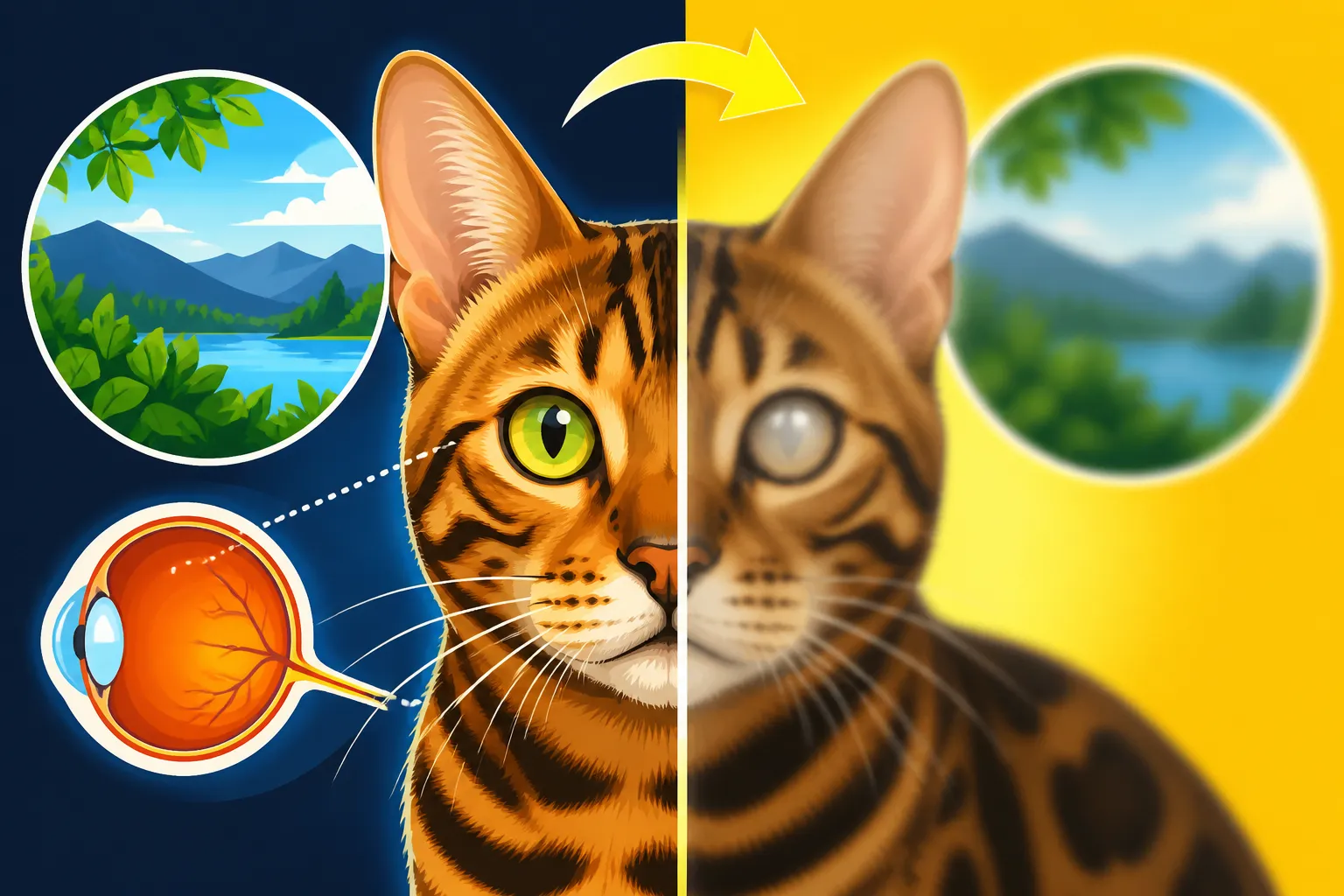
As PRA-b progresses, the degeneration doesn't stop at the rods; it eventually starts affecting the cone cells as well. This is when you begin to notice daytime vision impairment, and the changes become much more pronounced and difficult to ignore. Your Bengal might start to miss toys they're chasing even in bright light, or they might become hesitant to jump down from heights they once navigated with ease. Their pupils might appear permanently dilated, even in bright light, because their eyes are trying to let in as much light as possible to compensate for the degenerating retina. This can also give their eyes a somewhat "glassy" or reflective appearance.
They might also start relying more heavily on their other senses, twitching their ears more frequently to catch sounds, or sniffing around new objects more intently before approaching. The progression can feel agonizingly slow to watch, but it is relentless. Eventually, as the degeneration continues, complete blindness will occur. The age at which a Bengal cat becomes fully blind from PRA-b can vary, but typically falls within a certain range, depending on the individual cat and the severity of the genetic expression. Understanding The Age a Bengal Cat Is Fully Blind From PRA-b can help you prepare emotionally and practically for this stage. It’s a hard truth to face, but knowing what to expect can empower you to provide the best care possible.
Diagnosing PRA-b and the Importance of Testing
When you start noticing these subtle or not-so-subtle changes in your Bengal's vision, your heart sinks. The next natural step is to get answers. Diagnosing PRA-b involves both a thorough veterinary examination and often, specific genetic testing.
Veterinary Diagnosis
If you suspect your Bengal cat is having vision issues, your first stop should always be your veterinarian. They will perform a comprehensive eye examination, which can include looking at the back of the eye with an ophthalmoscope. During this exam, a vet might notice changes to the retina, such as thinning or increased reflectivity (tapetal hyperreflectivity), and potentially a reduction in the size of the blood vessels in the retina. These are physical indicators of retinal degeneration.
For a definitive diagnosis of retinal function loss, your vet might recommend an electroretinography (ERG). This specialized test measures the electrical responses of the light-sensitive cells in the retina. It’s a non-invasive procedure, but it often requires sedation and is typically performed by a veterinary ophthalmologist, a specialist in animal eye care. An ERG can detect abnormal retinal function long before physical changes are visible to the naked eye or even through a standard ophthalmoscopic exam. So, while a routine eye exam can raise suspicion, it often doesn't give the full picture. You might wonder Whether an Eye Exam Finds PRA-b in a Bengal Cat, and while it can hint at the problem, specialized tests are usually needed for confirmation.
The DNA Test and Its Implications
This is where modern veterinary science truly shines and offers a path forward. Thanks to genetic research, a specific DNA test is available for PRA-b in Bengal cats. This test can accurately identify whether a cat is clear, a carrier, or affected by the PRA-b mutation. It’s a simple, non-invasive test, usually performed using a cheek swab collected by your vet or even by you at home, then sent to a specialized lab. Curious about the process? Learn How the Bengal Cat PRA-b DNA Test Works and Which Lab Runs the Bengal Cat PRA-b Test.
The implications of this test, especially for breeders, are enormous. Responsible Bengal breeders routinely test all their breeding cats for PRA-b to ensure they are not inadvertently producing affected kittens. A breeder committed to the health of the breed will only breed "clear" cats, or if they choose to use a "carrier" cat for specific desired traits, they will only breed that carrier with a "clear" cat. This ensures that no kitten will ever receive two copies of the defective gene and therefore, no kitten will ever develop PRA-b. It's crucial for prospective buyers to know Whether a Bengal Cat Breeder Must Show a Bengal Cat's PRA-b Result – and reputable breeders absolutely should.
For pet owners, while a pet Bengal cat won't be bred, knowing their PRA-b status can still be valuable. If you've adopted a rescue Bengal or are experiencing early symptoms, testing can confirm the diagnosis, allowing you to prepare and manage the condition proactively. You might even wonder Whether a Pet Bengal Cat Needs PRA-b Testing, and while not strictly necessary for every pet, it can offer peace of mind or crucial information.
Here’s a quick summary of how PRA-b inheritance works:
| Parent 1 Status | Parent 2 Status | Offspring Possibilities (Each Kitten) | Risk of Affected (Blind) Kittens |
|---|---|---|---|
| Clear | Clear | 100% Clear | 0% |
| Clear | Carrier | 50% Clear, 50% Carrier | 0% |
| Clear | Affected | 100% Carrier | 0% |
| Carrier | Carrier | 25% Clear, 50% Carrier, 25% Affected | 25% |
| Carrier | Affected | 50% Carrier, 50% Affected | 50% |
| Affected | Affected | 100% Affected | 100% |
This table clearly illustrates why breeding two carriers together is a significant risk, as it’s the only scenario where a kitten has a chance of becoming affected by PRA-b from "carrier" parents. This is why it’s so important to prevent that pairing; you can learn more about Whether Two PRA-b Carrier Bengal Cats Should Be Bred and understand How Two Carriers Produce a Blind Bengal Cat.
Living with a PRA-b Affected Bengal Cat
Discovering your Bengal has PRA-b and is losing their sight is a tough pill to swallow. It's natural to feel a mix of sadness, fear, and even guilt. But I'm here to tell you that a blind Bengal cat can still live a wonderfully full and happy life with the right support and adaptations. Their other senses are incredibly sharp, and with your help, they can navigate their world with confidence.
Adapting Your Home Environment
The absolute golden rule for living with a vision-impaired or blind Bengal is consistency. Once your cat loses their sight, their internal map of your home becomes paramount. Avoid rearranging furniture, especially large items like sofas, tables, or their litter box and feeding stations. Every move you make creates a new obstacle course for them.
Think about creating a sensory roadmap for them. For instance, place a unique textured mat, like a sisal rug or a rubber mat, in front of their food and water bowls or their litter box. This gives them a consistent tactile cue that "this is where my resources are." For areas you want them to avoid, you could use a different texture or a scent that signals caution. Always ensure pathways are clear of clutter. Consider baby gates or closed doors to block off dangerous areas like staircases initially, until they've fully mapped out their safe zones. How to Rearrange a Home for a Blind Bengal Cat can offer even more practical tips. And for one of their most crucial needs, knowing How a Blind Bengal Cat Finds the Litter Box is key to preventing accidents.
It’s about making their environment predictable and safe. Imagine if you suddenly couldn't see; you'd appreciate knowing exactly where everything important was and not having to guess. Your Bengal feels the same way.
Maintaining Quality of Life and Enrichment
The biggest fear owners have is that a blind cat won't have a good quality of life. This simply isn't true for most cats, especially adaptable Bengals. Their strong instincts mean they'll rely heavily on their hearing, smell, and whiskers. Your job is to engage these senses.
- Sound-based toys: Balls with bells inside, crinkle toys, or even toys you can gently toss and call out to help them locate.
- Scent enrichment: Offer catnip-filled toys, or hide treats with strong smells around a designated safe room, letting them "hunt" by scent.
- Tactile play: Many Bengals still love to wrestle and bat at toys held by you. Wand toys are fantastic for engaging their hearing and letting them bat at something they can feel.
- Consistent routine: Feed them at the same time, in the same place. Play sessions should also be regular. This predictability builds their confidence and reduces anxiety.
Can a blind Bengal still climb? Absolutely! They might need some help and more deliberate pathways. Consider cat trees with sturdy, wide platforms and ramps instead of narrow ledges. Keep their favorite climbing spots consistent. As for outdoor activities, Whether a Blind Bengal Cat Can Still Be Leash Walked is a resounding yes! Many blind Bengals continue to enjoy outdoor adventures on a harness and leash in a safe, familiar environment like a quiet backyard. They love to feel the sun, smell new scents, and hear the sounds of nature. Just be extra vigilant about safety. If you're concerned about them being alone, Whether a Blind Bengal Cat Needs a Companion is a valid question, and often, a calm, friendly companion can offer comfort and even act as a "guide." Ultimately, with patience and love, Whether a Bengal Cat With PRA-b Lives a Normal Life is entirely possible.
Financial and Emotional Support
Caring for any pet with a chronic condition can take an emotional toll. It's okay to feel overwhelmed, sad, or frustrated at times. Connect with online forums or local support groups for owners of blind pets; sharing experiences can be incredibly validating and helpful.
Financially, while PRA-b itself has no treatment (you can't "cure" the blindness), there can be costs associated with diagnosis, specialized vet visits (like a veterinary ophthalmologist for the ERG), and potentially adapting your home with specific toys or safety measures. This is where having pet insurance can make a real difference. Companies like Healthy Paws offer comprehensive coverage that can help offset unexpected veterinary bills, including those for diagnostic tests or any secondary issues that might arise. Knowing that a portion of the costs for managing your Bengal's health could be covered can significantly ease the financial burden, allowing you to focus on providing the best quality of life. Healthy Paws, for example, is known for its strong coverage for accidents and illnesses, which can include the journey of diagnosing and managing conditions like PRA-b.
Breeding Responsibly to Eradicate PRA-b
The ultimate goal for the Bengal cat community is to eradicate PRA-b. This isn't just about managing the condition once it appears, but preventing it from happening in the first place. Responsible breeding practices are the cornerstone of this effort.
Ethical Breeding Practices
For breeders, the message is clear: genetic testing is non-negotiable. Every Bengal cat used for breeding should be DNA tested for PRA-b. The results inform mating decisions to ensure no affected kittens are born. As shown in our table, breeding two PRA-b carriers together means a 25% chance of affected offspring. This is an avoidable tragedy. Ethical breeders will never knowingly pair two carriers. Instead, a carrier should only be bred to a clear cat. This pairing will still produce carriers (50% chance), but never an affected cat. By doing this, breeders can slowly work to remove the carrier gene from their lines while preserving other valuable traits. This continuous screening and careful selection are vital for the long-term health of the Bengal breed.
What Prospective Owners Should Ask
As a prospective Bengal cat owner, you have a crucial role to play in supporting ethical breeding and, by extension, the health of the breed. Don't be shy about asking questions, and be prepared to review documentation.
When you contact a breeder, always ask for proof of PRA-b DNA testing for both the mother and father of the kitten you are interested in. A reputable breeder will be transparent and happy to provide copies of these test certificates from a certified veterinary laboratory. They should also be able to explain the results clearly. If a breeder is evasive or says they don't test for PRA-b, consider that a major red flag. This also applies to other important health screenings for Bengal cats, such as for HCM. A good breeder will often also discuss things like pet insurance options early on, perhaps even recommending providers like Healthy Paws, to demonstrate their commitment to the lifetime well-being of their kittens. They want you to be prepared for any eventuality, health-wise. Look for a breeder who is registered with reputable associations like TICA (The International Cat Association) and who prioritizes the health and well-being of their cats above all else. Your diligence as a buyer directly impacts the future health of the Bengal breed.
Disclaimer
This article is intended for informational purposes only and does not constitute veterinary advice. Always consult with a qualified veterinarian for any health concerns or before making any decisions about your pet's care.