Where Bengal Cat Law Is Set, the State or the City
One of the most perplexing challenges Bengal cat hopefuls face is figuring out the labyrinthine legalities of owning these magnificent creatures. You fall in love with their wild looks and playful personalities, but then you hear whispers of bans and restrictions, leaving you wondering if your dream cat is even allowed in your home. This guide is here to untangle that confusion, clearly explaining whether state or city laws typically dictate Bengal cat ownership, and how you can definitively find the answers you need to welcome one responsibly.
The Layered Legal Landscape of Bengal Cat Ownership
It’s completely understandable to feel overwhelmed when researching the legality of Bengal cat ownership. It's rarely a straightforward "yes" or "no" answer for everyone across an entire country. The truth is, pet ownership laws, especially concerning breeds with wild ancestry like Bengals, are often a complex patchwork, sewn together by different levels of government, each with its own jurisdiction and priorities. This creates a fascinating, albeit frustrating, legal landscape that requires careful navigation.
Federal vs. State vs. Local Laws
When we talk about laws governing pets, particularly those considered "exotic" or "hybrid," it's important to understand the hierarchy of legislation. On a federal level, the United States government generally doesn't get into the nitty-gritty of individual pet breed ownership for domestic animals, though they might regulate interstate commerce for certain wildlife or endangered species. However, as you move down to the state and then the local level, the laws become far more specific and impactful for a Bengal owner.
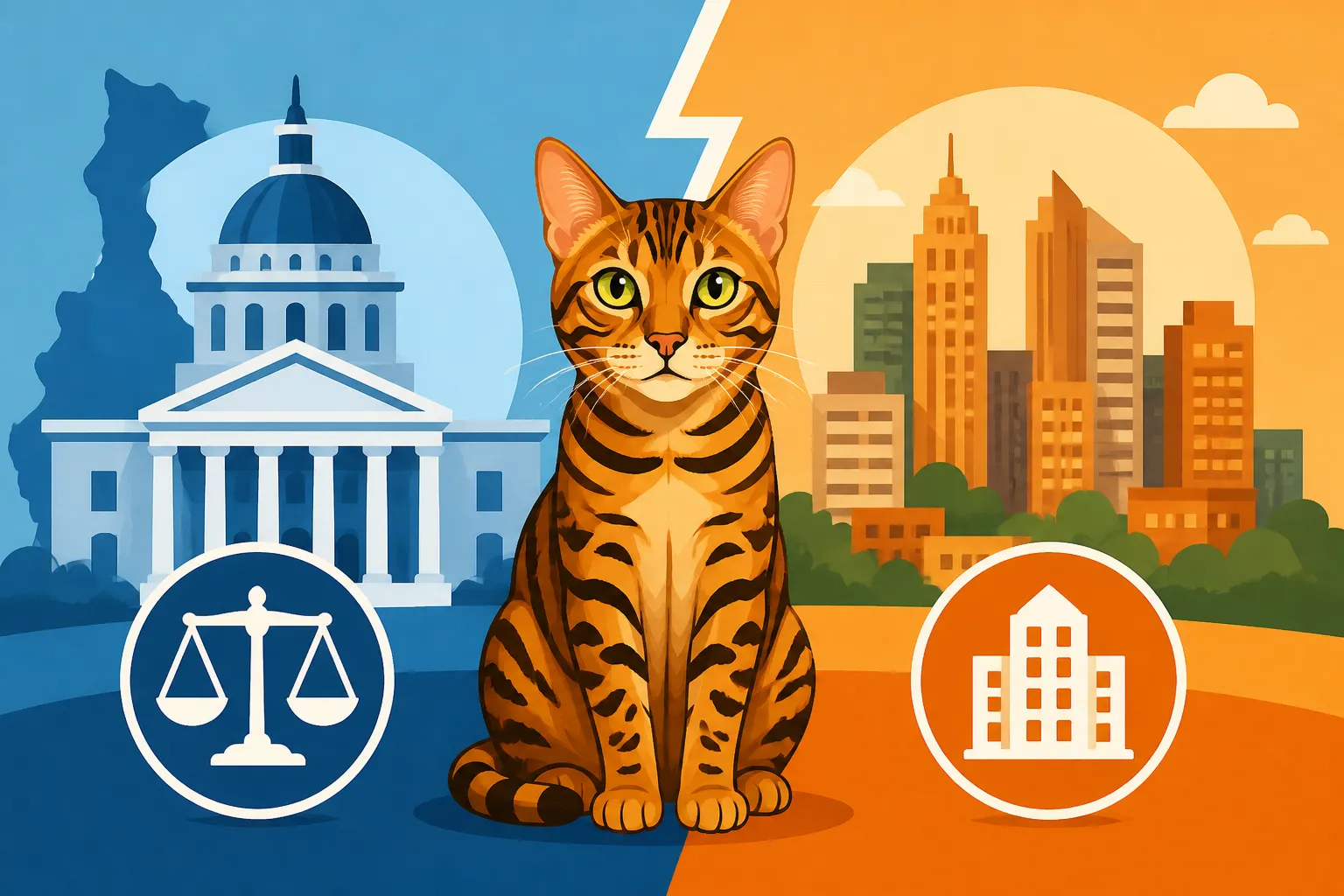
State laws often set a foundational baseline. They might declare certain species outright illegal within their borders, or they might define what constitutes a "domestic" animal versus a "wild" or "hybrid" animal, often using generation numbers (F1, F2, SBT, etc.) as key differentiators. These state-level definitions and restrictions serve as the overarching framework. However, states often grant cities, counties, and municipalities the power to create their own ordinances, as long as these local rules don't directly contradict the state law. More often than not, local laws add to state regulations, making them stricter rather than more lenient.
Why the Confusion Exists
The main reason for all this head-scratching confusion is precisely this layered approach. You might live in a state that permits a particular Bengal cat generation, let’s say an F4 or an SBT, only to discover that your specific city or county has a bylaw that prohibits all hybrid cats, regardless of generation. Or perhaps your state has no explicit ban, but your city requires a special permit for any cat with "wild lineage," which might or might not include Bengals, depending on their local interpretation. This discrepancy can catch even the most diligent future pet parent off guard.
It's not just about bans, either. Local ordinances can dictate everything from enclosure requirements to licensing fees, and even specific veterinary care mandates for what they consider "exotic" pets. This means that a seemingly simple question like "Can I own a Bengal cat?" requires looking beyond just one government level. It truly validates the frustration many prospective owners feel; it’s not always straightforward, and an innocent oversight can lead to serious consequences.
When State Law Takes Precedence
While local laws certainly have their bite, state legislation often lays the ultimate groundwork for Bengal cat ownership. If a state has a clear, sweeping ban or a strict definition that includes or excludes certain generations, that ruling will override any more permissive local ordinance. It’s the highest common denominator within that state's borders.
Outright Bans and Strict Generation Limits
Some states take a very firm stance on hybrid cats, issuing outright bans that leave no room for local interpretation. For instance, you’ll find that Hawaii Bans Every Bengal Cat, Whatever the Generation. In such a state, no city or county can legally permit Bengal cat ownership because the state law explicitly forbids it. This makes your research simpler in one sense – if your state bans them, the answer is a definitive no.
Other states might not implement a complete ban but impose strict generation limits. They might declare that only Bengals of a certain generation, often F4 or later (SBT), are considered domestic enough for general ownership. Earlier generations, like F1, F2, or F3, are typically much closer to their wild Asian Leopard Cat ancestors and are thus often classified as wild animals, requiring special permits or being prohibited entirely. Understanding What an F Number on a Bengal Cat Means Legally is crucial here, as it directly impacts your ability to own one based on state-level definitions. If a state says "no F1-F3 Bengals," no city within that state can say otherwise.
Permits and Licensing Requirements
Beyond outright bans or generation restrictions, state laws can also dictate broader regulatory requirements for hybrid animals. This might involve mandatory state-level permits, special registration with state wildlife or agricultural departments, or even specific insurance policies. These are often in place to ensure public safety, animal welfare, and to prevent the illegal trade of exotic animals.
Even if a state broadly allows a certain generation of Bengal, it might require a permit that details your housing conditions, emergency plans, and even veterinary contacts. These permits are typically issued by a state agency and serve as a formal acknowledgment of your responsibility in owning a regulated animal. Failing to acquire such a permit, even if your specific cat generation is otherwise permitted, can lead to fines, confiscation, and other legal penalties. For instance, some states require permits for any cat deemed "partially wild," a classification that can include specific Bengal generations. Checking How to Check Your State's Bengal Cat Law should always be your first step.
The Power of Local Ordinances
Even if your state gives the green light for Bengal cat ownership, your journey isn’t over. Cities and counties wield significant power to add their own layers of regulation, which can often be more restrictive than state law. This is where many prospective Bengal owners encounter unexpected roadblocks, making diligent local research absolutely paramount.
City-Specific Bans and Additional Restrictions
It’s a scenario that often catches people by surprise: a state permits a certain type of pet, but a specific city within that state outlaws it completely. This is very much the case for Bengal cats in certain metropolitan areas. Take New York City Bans the Bengal Cat the State Allows. While New York State allows Bengal cats of certain generations, New York City has its own ordinance that prohibits all hybrid cats. This is a classic example of a local law making ownership impossible, even if the state itself is more lenient.
Local ordinances aren't just about outright bans, though. They can impose additional restrictions that make ownership challenging or costly. For example, a city might require specific enclosure standards for a hybrid cat – perhaps demanding a secure outdoor catio of a certain size, or requiring that the cat be microchipped and registered annually with local animal control. These rules are put in place to address local concerns about public safety, potential escapes, or perceived threats to local wildlife, regardless of the state's broader stance.
Practical Implications for Owners
The practical implications of these layered laws are significant. If you live in an area where local ordinances are stricter, you must abide by the local rules. The city or county law enforcement and animal control will be the ones enforcing regulations on a day-to-day basis, not the state police or a distant state agency. This means that a Bengal cat legal under state law could still be confiscated if it violates a local ordinance.
Consider the hypothetical situation where you move. You might have legally owned an F3 Bengal in a state that permitted it, only to discover your new city or county has a complete ban or restricts ownership to only SBT generations. Suddenly, your beloved pet could become illegal, putting you in a terrible predicament. This underscores the critical need to research thoroughly before bringing a Bengal cat home, and certainly before moving with one. What Happens If You Move With an Illegal Bengal Cat can be a devastating reality for unprepared owners. This also applies to securing appropriate pet insurance; companies like Healthy Paws might require proof of legal ownership to cover certain breeds, and if your pet is illegal locally, it could invalidate your policy.
Navigating the Legal Maze: How to Find the Truth
Given the complexity, knowing how to find accurate information is just as important as knowing what the laws might be. Don't rely on hearsay or forum chatter. Go straight to the source. It requires a bit of detective work, but it’s absolutely essential for responsible Bengal cat ownership.
Starting with Your State Department of Wildlife or Agriculture
Your first port of call should always be your state’s relevant department. This is typically the State Department of Wildlife, Fish and Game, or the Department of Agriculture. These agencies are usually responsible for regulating exotic animals, hybrid species, and sometimes even domestic livestock, and they will have the definitive answers on state-level bans, generation restrictions, and state-wide permitting requirements.
Look for their official websites and navigate to sections on "exotic pets," "hybrid animals," or "wildlife ownership." You might find detailed lists of prohibited species or specific regulations for hybrids. Sometimes, they'll have a FAQ section or downloadable documents outlining the laws. If the website isn't clear, don't hesitate to call their general information line. Be prepared to specify that you are asking about Bengal cats and, if applicable, a specific generation (e.g., F1, F2, F3, F4, SBT), as this distinction is often key to their legal classification.
Delving into City and County Ordinances
Once you've clarified your state's position, it's time to dig into your local laws. This means checking the ordinances for your specific city, town, and county. These local rules are usually enforced by your local animal control department, police, or health department.
The best way to do this is to visit your city or county clerk's office website. Most municipalities now have their complete municipal code or city ordinances published online. Search for terms like "hybrid cat," "exotic animal," "Bengal," "wild animals," or "pet regulations." You're looking for any specific mention of hybrid cats or species with wild lineage. If you can't find it online, or the language is ambiguous, the next step is to call your local animal control or municipal clerk's office directly. They are the authorities who will be enforcing these laws and can provide clarification. It's often the most direct way to get an answer on How to Read Your City Code for a Bengal Cat and ensure you're not missing a critical local detail.
Consulting with Experts
After doing your due diligence with official government sources, it can be beneficial to consult with experts who deal with these situations regularly. A reputable Bengal cat breeder in your area should be knowledgeable about local laws and regulations. They often have to navigate these rules themselves for their cattery and sales, and can be an invaluable source of practical information. When looking for a kitten, asking Which Questions to Ask a Bengal Cat Breeder should always include inquiries about the legality of the breed in your specific location.
Your local veterinarian might also have a general awareness of pet ownership laws, especially regarding common restrictions. While they aren't legal experts, they can sometimes point you in the right direction or share common pitfalls they've seen other clients encounter. For very complex or ambiguous situations, particularly if you are considering an early-generation Bengal or if you encounter conflicting information, consulting with an attorney specializing in animal law is advisable. This ensures you receive legally sound advice specific to your situation.
Here's a quick overview of how jurisdiction typically functions:
| Jurisdiction Level | Typical Scope of Bengal Cat Law | Enforcement Agency | Key Questions to Ask |
|---|---|---|---|
| State | Outright bans, generation limits, state-wide permits, broad definitions of "exotic/hybrid." | State Department of Wildlife/Agriculture | Is the Bengal cat, or its specific generation (e.g., F1, SBT), legal in this state? Are there state permits required? |
| City/County | Local bans (can be stricter than state), specific enclosure rules, local licensing/registration, nuisance ordinances. | Local Animal Control, City/County Clerk | Is the Bengal cat legal in this city/county? Are there local permits, registrations, or specific housing requirements? |
Ultimately, the responsibility rests with the prospective owner to ensure compliance with all applicable laws. Ignorance of the law is never an excuse, and a Bengal cat is a significant commitment that includes navigating its unique legal status.
Disclaimer
This article is for general informational purposes only and does not constitute professional advice. Laws, prices and regulations vary by location and change over time. Consult a qualified professional for guidance on your specific situation.