Which Bengal Cat Pattern Holds Value Best
It's easy to get swept away by the sheer beauty and exotic charm of a Bengal cat, especially when you start looking at their incredible coat patterns. Many prospective owners find themselves wondering not just which pattern they like best, but also which one is considered the most "valuable" or desirable in the market. This can feel like a really tricky question because "value" isn't just about the initial price tag; it's a complex mix of rarity, demand, breed standard, and ultimately, the joy a healthy cat brings into your home. This guide will walk you through the nuances of Bengal cat patterns and what factors truly influence their perceived market value.
Decoding the Bengal Cat's Iconic Patterns
The Bengal cat is renowned for its wild, untamed appearance, and much of that comes down to its stunning coat patterns. Unlike your average housecat, Bengals boast patterns directly inherited from their Asian Leopard Cat ancestors, making them truly unique. Understanding these patterns is key to grasping what influences their "value."
Rosettes: The Crown Jewels of the Bengal Coat
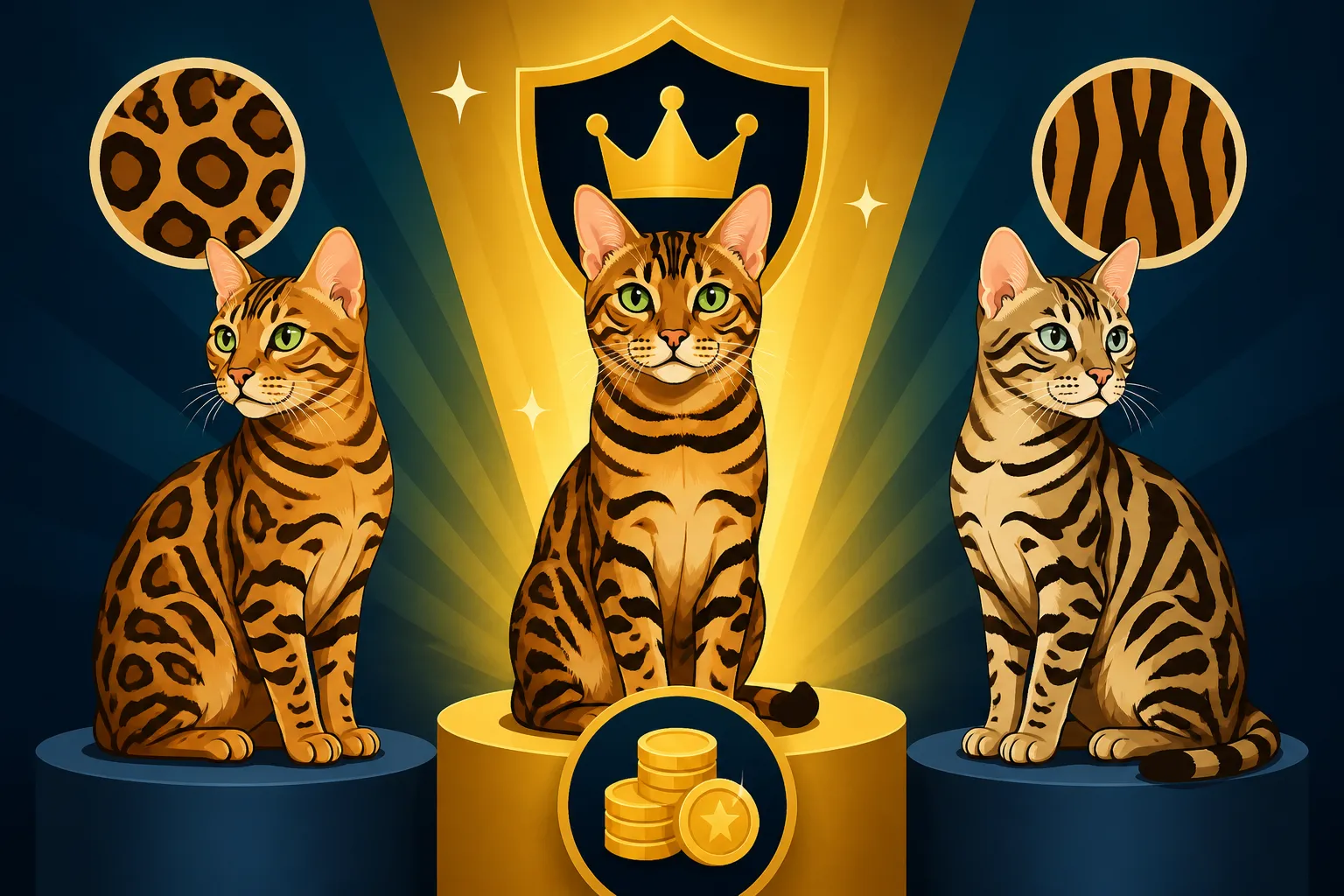
When people picture a Bengal cat, often what comes to mind are those striking rosettes – the spots that have a darker outline or center, reminiscent of a leopard. These are truly the most sought-after and, generally speaking, the most "valuable" patterns in the Bengal world. But not all rosettes are created equal!
There's a whole spectrum of rosetting that breeders work tirelessly to achieve. You have the arrowhead rosettes, which are pointy and directional, often seen as a mark of a wilder look. Then there are paw print rosettes, which resemble tiny paw prints clustered together. But the real show-stoppers, the ones that often command the highest interest and price, are the donut rosettes and clouded rosettes. Donut rosettes have a distinct, darker outline with a lighter center, creating a stark, almost three-dimensional effect. Clouded rosettes take this a step further, with large, often elongated, outlined spots that appear to flow across the body, much like a jaguar's markings. The clearer and more defined these rosettes are, especially the donut and clouded types, the higher their demand and, consequently, their perceived value in the breeding and show world. A Bengal with perfectly symmetrical, highly contrasted donut rosettes, for instance, is often considered a prime example of the breed standard.
Marbled: The Artistic Swirls
While rosettes get a lot of attention, the marbled pattern on a Bengal cat is equally beautiful and distinct, offering a completely different aesthetic. Instead of distinct spots, marbled Bengals feature swirling, horizontal patterns that resemble marble or intricate tie-dye. This pattern creates a stunning, flowing look across the cat's coat, almost like painted strokes.
Within the marbled pattern, there are variations. A "horizontal flow" marble pattern is generally preferred, where the swirls stretch and flow horizontally, accentuating the cat's long, lithe body. "Sheet marble," where the pattern is more dense and less directional, can also be quite striking. Historically, rosettes have been more popular and thus often carry a higher price tag due to their direct resemblance to wild leopard markings. However, a truly exceptional marbled Bengal, with high contrast and a beautiful horizontal flow, can be incredibly rare and admired. While a marbled Bengal might not always reach the same top-tier prices as a perfectly rosetted one, its unique artistry is undeniable and holds significant value for those who appreciate this particular aesthetic. It’s a matter of personal preference, but it’s important to understand that the demand for rosettes generally outweighs that for marbled patterns in the broader market.
Spotted: The Classic Wild Look
Before the development of defined rosettes, the foundational Bengal pattern was the classic single spot, much like a cheetah's markings. These are solid, individual spots without the outlining or shading that defines a rosette. While still undeniably wild and beautiful, a "single spotted" Bengal typically falls lower on the perceived "value" scale compared to their rosetted counterparts.
This doesn't mean they're any less magnificent or make less wonderful pets. In fact, many people prefer the clean, bold look of a well-defined single spot. However, in the context of breed standards and market demand, especially for show or breeding quality cats, the complexity and distinctiveness of rosettes tend to command higher prices. A well-laid out spotted pattern with good contrast is still highly desirable, but the rarity and challenge of achieving those perfect donut or clouded rosettes often places them in a different pricing tier. It's a reminder that "value" can be subjective and is heavily influenced by what the current breed standard and general buyer preferences dictate.
Beyond the Pattern: Other Influencers of "Value"
While the pattern is a huge draw, it's really just one piece of the puzzle when determining a Bengal cat's market value. Several other critical factors play a significant role, often impacting the price even more than the specific pattern.
Color and Contrast: The Allure of Exotics
The base color of a Bengal cat, combined with the contrast of its markings, profoundly influences its aesthetic appeal and, therefore, its market value. The most common and generally most popular is the Brown Bengal, which can range from a warm golden hue to a deep, rich reddish-brown. Within brown Bengals, high contrast between the dark markings and the lighter background is highly prized. The clearer the distinction, the more "pop" the pattern has, and the more valuable the cat is perceived to be.
Beyond brown, you have the stunning Snow Bengals, which come in Seal Lynx Point, Seal Mink, and Seal Sepia. These cats have a lighter, often cream or ivory base coat with various shades of brown or black markings. The Seal Lynx Point always has striking blue eyes, which adds to its allure. Silver Bengals, with their silvery-white base coat and dark markings, also hold significant appeal. Then there are the more unusual and highly sought-after colors like Charcoal Bengals, which often feature a darker, almost smoky coat with intense black markings, sometimes accompanied by a distinctive "Zorro mask" on their face. The presence of "glitter"—a shimmering, iridescent quality to the fur—is also a highly valued trait across all colors. This unique genetic trait makes the coat sparkle in the light, further enhancing the cat's exotic appearance. What the Glitter Gene Does to a Bengal Cat delves deeper into this fascinating characteristic. A cat with excellent pattern and exceptional color and contrast will always fetch a higher price.
Generation and Pedigree: Wild Appeal vs. Predictability
The generation number of a Bengal cat, often denoted by F1, F2, F3, or SBT, is a massive factor in determining its value. This number indicates how many generations removed the cat is from its wild Asian Leopard Cat ancestor. F1 to SBT: How a Bengal Cat's Generation Is Counted explains this in detail.
- F1 and F2 Bengals (first and second generation removed from the wild) are often significantly more expensive. They are closest to their wild ancestors, exhibiting very pronounced wild traits, both in appearance and sometimes in temperament. They often require special permits and care, and typically, only F1 females are fertile. Due to their "wilder" nature and legal restrictions in many areas, they are less commonly sold as household pets.
- F3 Bengals are a bridge generation, still carrying a strong wild appearance but often more manageable for experienced owners.
- SBT Bengals (Stud Book Traditional, usually F4 and beyond) are considered fully domestic. These are the most common Bengals sold as pets and are typically the generation that can be shown in cat registries like TICA. Their price reflects their pet-friendliness and predictable temperament, while still retaining that stunning wild look. The closer the wild blood, the higher the initial cost, often reflecting the challenges and rarity of breeding these earlier generations. A strong pedigree, tracing back to champion lines or respected foundation cats, also adds significant value, showcasing careful breeding and adherence to the breed standard.
Health Testing and Breeder Reputation: The True Investment
This is perhaps the most crucial "value" factor that many prospective owners unfortunately overlook when focusing solely on pattern or price. The health of a Bengal cat, and the reputation of the breeder who produced it, are paramount. A reputable breeder invests heavily in health testing their breeding cats to minimize the risk of inherited diseases common in the breed.
These tests include screening for:
- Progressive Retinal Atrophy (PRA-b): A genetic condition that can lead to blindness. PRA-b Blinds a Bengal Cat by Two and There Is a DNA Test
- Pyruvate Kinase Deficiency (PK Deficiency): Another genetic disorder that causes a form of anemia. What PK Deficiency Does to a Bengal Cat
- Hypertrophic Cardiomyopathy (HCM): A heart condition that affects many cat breeds, including Bengals, diagnosed via echocardiogram (heart scan). HCM Is What Kills Bengal Cats Early
A breeder who regularly performs these tests, provides clear documentation of results, and offers a health guarantee is offering immense value, even if their kittens cost a bit more upfront. This investment can save you thousands in potential veterinary bills and heartbreak down the line. A breeder's reputation, their involvement in breed clubs, their transparency, and their willingness to answer questions are all indicators of a valuable, well-bred kitten. They'll be feeding high-quality nutrition, ensuring the best start in life. Choosing a kitten based purely on a “bargain” price without considering health and breeder ethics is a gamble that rarely pays off in the long run.
Understanding "Value" from a Buyer's Perspective
Ultimately, the "value" of a Bengal cat is a combination of objective factors and subjective buyer preferences. What one person considers a premium, another might prioritize differently.
Pet vs. Show vs. Breeder Quality
The intended purpose for the Bengal cat dramatically affects its price and perceived value, often more so than the specific pattern.
- Pet Quality: These are Bengals sold specifically as companions. They might have a beautiful pattern and wonderful temperament but may have a minor flaw that prevents them from excelling in the show ring (e.g., ears slightly too large, a tail a fraction too short, or markings that aren't perfectly aligned with the breed standard). They are often sold at a lower price than show or breeder quality cats, and typically come with a spay/neuter contract, meaning they cannot be used for breeding. Most people looking for a companion animal will find their perfect match in a pet-quality Bengal, often with stunning patterns like a lovely marbled coat or striking rosettes.
- Show Quality: These are cats that closely adhere to the TICA (The International Cat Association) breed standard, possessing excellent conformation, temperament, and a desirable pattern with high contrast. They are intended to compete in cat shows and are priced higher due to their exceptional genetics and appearance. A show-quality Bengal with outstanding donut rosettes and glitter will naturally command a higher price.
- Breeder Quality: These are the most expensive Bengals. They not only meet or exceed show quality standards but also possess desirable genetic traits and bloodlines that make them suitable for a breeding program. Breeders invest in these cats to improve their lines, and their value reflects the potential for producing future high-quality kittens. Often, breeders seek specific patterns, colors, or genetic combinations to enhance their program.
It's vital for buyers to be clear about their intentions from the outset. A reputable breeder will match you with a kitten that suits your goals, whether it's a cherished family member or a future show champion.
Regional Demand and Availability
Just like real estate, the value of a Bengal cat can fluctuate based on geography. In regions where there are fewer reputable Bengal breeders, or where demand is particularly high, prices for all patterns might be elevated simply due to scarcity. Conversely, an area with many breeders might see more competitive pricing.
Local regulations also play a significant role. Some states or cities have strict laws regarding the ownership of hybrid cats, particularly early generations (F1-F3). Where a Bengal Cat Is Illegal in the United States highlights these geographical restrictions. In places where early generations are outright banned, the "value" of an F1 Bengal, for instance, drops to zero because it cannot legally be owned. Even for SBT Bengals, local ordinances can sometimes influence availability and demand. Always check your local laws before falling in love with a particular cat, as this can directly impact what you can legally own and thus, what is "valuable" to you.
Long-Term Costs and Lifetime Value
It's easy to focus on the initial purchase price, but the true "value" of a Bengal cat as an investment extends far beyond that. The lifetime cost of owning a Bengal cat is substantial and should be factored into your assessment of its worth. These active, intelligent cats require specific care to thrive.
This includes:
- High-Quality Nutrition: Bengals are active and often have sensitive stomachs. They benefit from premium, high-protein diets. Whether you choose kibble and wet food from a reliable retailer like Chewy or opt for specialized fresh or raw diets, this will be an ongoing expense. The High Protein Argument for a Bengal Cat elaborates on their dietary needs.
- Veterinary Care: Routine check-ups, vaccinations, and parasite prevention are essential. Given their genetic predispositions to conditions like HCM or PRA-b, regular health screenings, like yearly echocardiograms for breeding cats, can add up. Having pet insurance from providers like Healthy Paws can be a smart way to manage unexpected medical costs, ensuring you can provide the best care without financial strain.
- Enrichment and Toys: A bored Bengal is a destructive Bengal! They need plenty of physical and mental stimulation, including tall cat trees, interactive toys, puzzle feeders, and potentially a cat wheel or catio. How Much Enrichment a Bengal Cat Actually Needs
- Grooming and Supplies: While Bengals are low-shedding and low-maintenance in terms of coat care, you'll still need quality litter, large litter boxes, nail clippers, and potentially dental care products.
The "value" of a Bengal cat isn't just about how much you pay for it, but the total investment in its well-being over its The Twelve to Sixteen Years a Bengal Cat Gets. A cat whose needs are met, and who is healthy and happy, will bring you invaluable companionship, which is the ultimate return on your investment.
The Best Investment: A Healthy, Happy Companion
After all the talk of patterns, colors, generations, and price tags, it’s crucial to circle back to what truly matters. The best investment you can ever make in a Bengal cat isn't about securing the rarest rosette or the most exotic color; it's about finding a healthy, well-socialized companion who fits into your life.
Prioritizing Temperament and Health Over Aesthetics
While that stunning rosette pattern might catch your eye, a cat's temperament and health are what truly define its long-term value in your home. A Bengal with a "perfect" pattern but a shy, anxious, or aggressive disposition won't bring the same joy as a well-adjusted, confident, and affectionate cat, regardless of its markings. Similarly, a kitten from a reputable breeder, even if it has a simpler pattern, that has undergone all necessary health testing for conditions like Pyruvate Kinase Deficiency in a Bengal Cat and PRA-b Blinds a Bengal Cat by Two and There Is a DNA Test, is a far better investment than a cheap kitten with a flashy pattern but an unknown health history.
Reputable breeders prioritize breeding for health and temperament first, knowing that these are the foundations of a happy cat and owner relationship. They socialize their kittens from a young age, exposing them to household sights and sounds, handling, and interaction, ensuring they are ready to integrate into a family home. This dedication to overall well-being and a stable personality truly holds the highest value.
Responsible Ownership: Protecting Your Investment
Your responsibility as an owner is the final, and perhaps most important, piece of protecting your Bengal cat's "value." This means doing your due diligence before bringing a kitten home. Always choose a reputable breeder who is transparent about their breeding practices, health testing, and contracts. Ask to see the parents, tour the cattery if possible, and verify all health certificates for What a Bengal Cat Breeder Should Have Tested. Don't be afraid to ask Which Questions to Ask a Bengal Cat Breeder.
Once your Bengal is home, continue that investment through consistent, loving care. Provide a stimulating environment, a high-quality diet, regular veterinary check-ups, and plenty of affection. Engage them with interactive play sessions, offering a variety of toys, and considering a cat wheel or catio to satisfy their high energy levels. The Bengal Cat Is the Most Active Cat You Can Own will give you an idea of their exercise requirements. By doing so, you're not just maintaining their physical health; you're nurturing their spirit and ensuring they remain a vibrant, engaging member of your family for many years to come. That kind of lifelong companionship is the most valuable asset any pet can offer.
Here's a quick overview of how different factors contribute to a Bengal cat's perceived market value:
| Factor | General Impact on Value | Notes |
|---|---|---|
| Pattern Type | Rosettes (Donut/Clouded) > Rosettes (Arrowhead/Paw Print) > Marbled > Spotted | Defined, high-contrast rosettes (especially donut/clouded) are generally most prized. |
| Pattern Quality | High contrast, clear definition, good flow | Crisp markings, minimal blurring, and balanced pattern distribution increase value. |
| Coat Color | Brown, Snow, Silver, Charcoal | All accepted colors can be valuable; high contrast within the color is key. Charcoals often fetch a premium. |
| Glitter | Presence of glitter increases value | The shimmering quality of the coat is highly desirable and unique to the breed. |
| Generation | F1 > F2 > F3 > SBT | Early generations (F1-F3) are much rarer, have more wild traits, and are significantly more expensive but come with legal and care considerations. |
| Pedigree | Champion lines, health-tested ancestry | Strong, well-documented lineage from reputable breeders adds significant value. |
| Health Testing | Comprehensive testing (PRA-b, PK-def, HCM) increases value | Proof of health screening for parents and kittens (where applicable) is a sign of a responsible breeder and a healthier kitten. |
| Breeder Reputation | Respected, transparent, ethical breeders command higher prices | A breeder's experience, support, and guarantees reflect the quality and "value" of their cats. |
| Purpose | Breeder > Show > Pet | Cats suitable for breeding or showing are priced highest due to their genetic and conformational superiority. |
| Temperament | Well-socialized, confident, friendly | A good temperament is invaluable for a pet, making the cat a joy to live with. |
| Regional Demand/Laws | High demand/strict laws can influence prices | Market dynamics and legal restrictions in your area will impact availability and cost. |
Disclaimer
This article is for general informational purposes only and does not constitute professional advice. Laws, prices and regulations vary by location and change over time. Consult a qualified professional for guidance on your specific situation.