Whether a Bengal Cat Accepts a Second Cat
Bringing a new feline friend into a home already ruled by a Bengal cat can feel like a high-stakes gamble. You adore your energetic, intelligent Bengal, but the thought of upsetting their routine, or worse, dealing with endless territorial squabbles and potential aggression, can be truly daunting. Many owners wonder if their wild-looking companion can truly accept another cat without turning their home into a battleground. This comprehensive guide is here to walk you through the real considerations and practical steps involved in successfully introducing a second cat to your Bengal's world, helping you create a harmonious multi-cat household.
Understanding Your Bengal Cat's Unique Social Dynamics
Before even thinking about a second cat, it's crucial to understand the inherent traits of your Bengal. These aren't your average housecats; they carry a strong wild heritage that influences their personality, play style, and how they perceive their territory and companions. Ignoring these fundamental aspects is like trying to fit a square peg in a round hole – it just won't work without a lot of friction.
The Wild Instincts and High Energy of a Bengal
Bengal cats descend from the Asian Leopard Cat, and while generations removed, many retain a significant amount of that wild energy and instinct. This manifests as a relentless drive for play, exploration, and hunting simulations. They are not content to lounge all day; they demand interaction, mental challenges, and physical exertion. A bored Bengal can quickly become a destructive Bengal, and this high-octane personality directly impacts how they might interact with another cat.
When a Bengal engages with another cat, their play can often appear quite rough. It’s not uncommon for them to stalk, pounce, and wrestle with an intensity that might overwhelm a more sedate feline. They might use their paws more actively, perhaps even vocalizing loudly during play. For a Bengal, this is simply how they burn off energy and satisfy their innate drives. However, for a timid or less energetic cat, this play could easily be misinterpreted as aggression, leading to fear and conflict rather than friendship. Understanding How Active a Bengal Cat Is is key to appreciating this dynamic.
Territoriality and Resource Guarding
Bengals can be quite territorial creatures, and this is another significant factor to consider when introducing a new cat. They form strong bonds with their environment and consider certain areas, objects, and even people as "theirs." This isn't necessarily a sign of aggression, but rather a natural instinct to protect valuable resources. In a multi-cat household, territoriality often manifests around food bowls, litter boxes, prime napping spots (like a favorite cat tree or a sunny windowsill), and even your lap.
Imagine your Bengal has a favorite perch on the cat tree, one they've used for years. Suddenly, a new cat arrives and tries to claim that spot. Even if there are other perches, the perceived invasion of their established space can trigger a strong territorial response. This could involve hissing, swatting, or even more overt displays of dominance. To mitigate this, you need to be proactive in providing an abundance of resources, ensuring no cat feels deprived or challenged for what they perceive as their own. Paying attention to How Many Scratching Posts a Bengal Cat Household Needs and other vertical spaces is vital here.
Their Need for Mental Stimulation
Beyond physical activity, Bengal cats possess a remarkable intelligence that requires constant mental stimulation. They are problem-solvers, explorers, and thrive on novelty. If a new cat is introduced but fails to provide any intellectual challenge or engaging interaction for the Bengal, it might be seen as merely another inert object rather than a companion. Worse, a bored Bengal might turn their investigative tendencies towards annoying the new cat, simply to get a reaction.
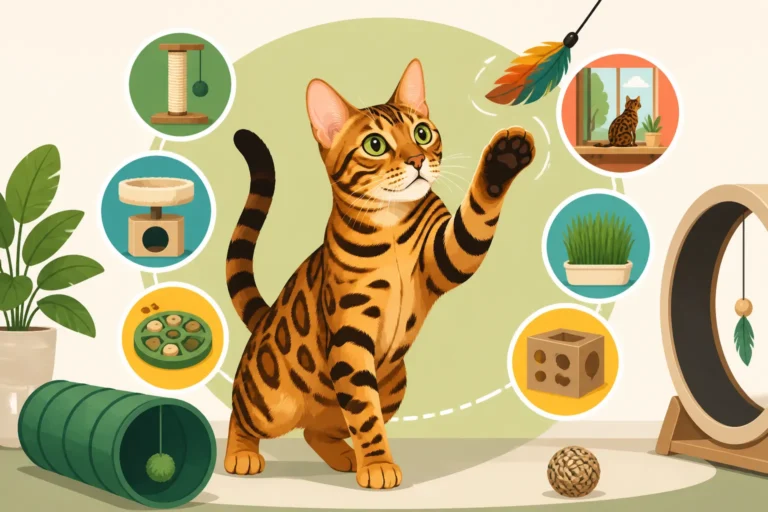
This isn't to say the new cat needs to be a puzzle master, but rather that the overall environment must continue to meet the Bengal's unique needs. A companion can add a new dimension to their play, but it doesn't absolve you of providing plenty of toys, interactive games, and training sessions. Think of it this way: a second cat might be a great playmate, but it won't replace your role in providing the diverse enrichment your Bengal craves. How Much Enrichment a Bengal Cat Actually Needs remains a crucial aspect of their well-being, whether they're solitary or part of a multi-cat pride.
Choosing the Right Companion for Your Bengal
Successfully integrating a second cat isn't just about managing your Bengal; it's equally about selecting a companion whose personality, energy level, and disposition will mesh well with your existing feline. This isn't a decision to take lightly, as a mismatch can lead to years of stress for both animals and you.
Personality and Energy Level Match
The single most important factor when choosing a companion for a Bengal is finding a cat with a compatible personality and energy level. A timid, shy cat will likely be overwhelmed and stressed by a boisterous Bengal. Similarly, a very sedentary cat might quickly become annoyed by a Bengal's relentless invitations to play. Ideally, you want a cat that is confident, playful, and can either keep up with a Bengal's antics or is calmly tolerant of them.
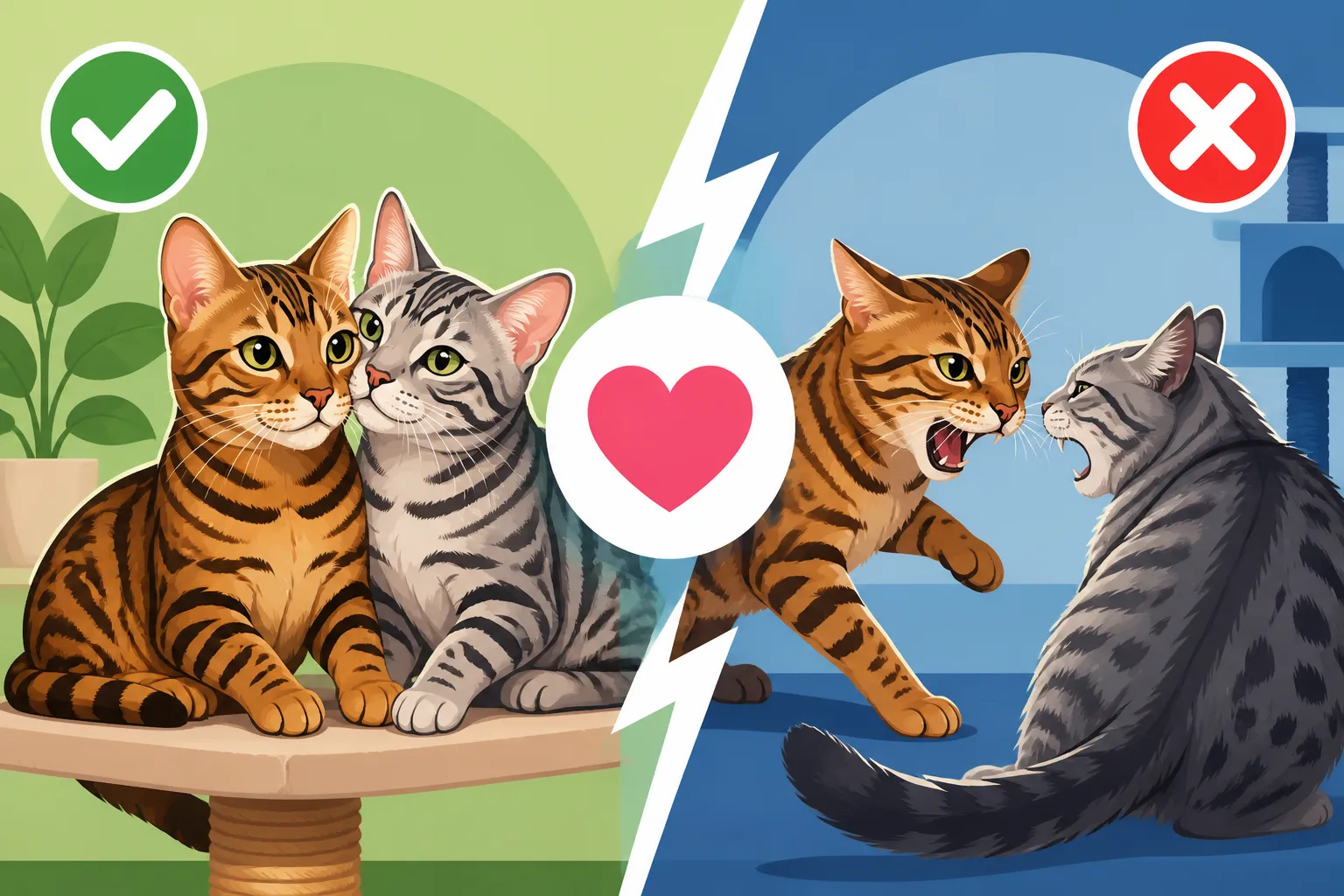
Consider a cat that enjoys interactive play and isn't afraid to assert themselves a little without being aggressive. Another Bengal, for example, often makes an excellent companion because they naturally understand each other's intense play style. However, not all Bengals are alike, so even then, a careful assessment is needed. A well-matched pair can actually reduce your workload by providing each other with mutual entertainment, fulfilling some of that immense energy need. You might even find that Whether Two Bengal Cats Tire Each Other Out becomes a pleasant reality, rather than a pipe dream.
Ideal Age and Breed Considerations
When it comes to age, a young kitten (around 8-16 weeks) can often be a good choice. Kittens are generally more adaptable and less set in their ways. A Bengal might view a tiny kitten as less of a threat and more of a protégé or something to 'herd.' However, a kitten is also extremely fragile and cannot defend itself from overly enthusiastic play, so supervision is paramount. Conversely, a confident young adult (1-3 years old) who has previous experience living with other cats can also be a fantastic option, as they are often past the most destructive kitten phases but still energetic enough to engage.
In terms of breed, while personality always trumps breed, certain breeds tend to have more suitable temperaments. Breeds known for being social, playful, and resilient, such as another Bengal, an Abyssinian, or even a confident Domestic Shorthair with a known history of getting along with other cats, might be good candidates. Avoid breeds or individual cats known for extreme shyness, fear, or those who prefer to be the sole ruler of their domain. A cat that enjoys exploration and isn't easily spooked by sudden movements or loud vocalizations is more likely to thrive alongside a Bengal.
Gender and Prior Socialization
While some conventional wisdom suggests that opposite genders tend to get along better, the reality is that individual personality is far more important than gender. A confident female Bengal might get along perfectly with a calm male tabby, or two playful males could become the best of friends. What matters most is the individual cat's temperament and their previous experiences.
The new cat's prior socialization is a huge indicator of success. Has the potential new companion lived successfully with other cats before? Do they exhibit friendly or tolerant behaviors towards other felines? A cat that comes from a multi-cat household where they were well-adjusted is often a safer bet than one with an unknown history or a history of being a "single cat." Conversely, if your Bengal has previously lived with other cats and shown tolerance or friendship, that's a positive sign for introducing a new one. This is why when you're considering When a Bengal Cat Needs a Second Cat, their past social history is an invaluable part of the equation.
| Characteristic | Ideal Companion for a Bengal | Less Ideal Companion for a Bengal |
|---|---|---|
| Energy Level | Active, playful, can keep pace with high-energy antics | Very timid, sedentary, easily overwhelmed by rough play |
| Confidence | Self-assured, calm, not easily spooked by new situations | Shy, nervous, prone to hiding or fleeing from interaction |
| Age | Young kitten (8-16 weeks) or confident young adult (1-3 years) | Very elderly, frail, or a kitten too young to defend itself |
| Play Style | Enjoys interactive play, tolerant of wrestling and pouncing | Prefers solitary play, easily agitated or scared by active play |
| Prior Socialization | Has lived successfully with other cats, friendly/tolerant | No prior experience with other cats, shows aggression or extreme fear |
The Slow and Steady Introduction Process
You've chosen your new companion, and now comes the critical stage: the introduction. This is not a process to rush. Patience, meticulous planning, and a deep understanding of feline behavior are your most valuable tools. Skipping steps or forcing interactions can set back progress by weeks or even months, potentially creating permanent animosity between your cats.
Establishing Safe Zones and Scent Swapping
The very first step is to establish a completely separate safe zone for the new cat. This should be a room with all their necessities: food, water, litter box, bed, and toys. This room becomes their sanctuary, a place where they can feel secure and decompress without the looming presence of your Bengal. Ensure the door to this room is solid enough to prevent interaction. For the first few days, the cats should not see each other at all.
Scent swapping is the foundation of a successful introduction. Cats communicate heavily through scent, and making each cat familiar with the other's smell before a visual introduction is paramount. You can do this by gently rubbing a towel or blanket on one cat and then placing it in the other cat's space. Repeat this process multiple times a day. You can also swap bedding, or even gently stroke one cat and then immediately stroke the other without washing your hands. Consider using Feliway diffusers, which release calming pheromones, in both cats' areas; you can find these helpful tools readily available on Amazon. This subtle exchange of scent helps them understand that the "new" smell isn't threatening.
Gradual Visual and Supervised Introductions
Once both cats seem relaxed with each other's scent, you can move to supervised visual introductions. Start by cracking the door to the new cat's room, just enough for them to peek at each other through the gap. You can also use a baby gate or a pet gate to allow visual interaction while maintaining a physical barrier. During these brief visual periods, keep things positive! Distract both cats with treats or engaging toys on opposite sides of the barrier. The goal is for them to associate seeing each other with positive experiences.
Keep these initial visual sessions very short – just a few minutes, several times a day. Watch their body language intently. Are ears forward or flattened? Are tails twitching rapidly or held in a relaxed curve? Any signs of tension, hissing, growling, or lunging mean you're pushing too fast. End the session calmly and try again later. Gradually increase the duration of these supervised "meet and greet" times. The goal isn't immediate friendship, but rather calm tolerance and curiosity. If you're wondering How to Introduce a Bengal Cat to a Resident Cat, remember: slow and positive is the only way forward.
Managing Resources and Potential Conflicts
Resource management is absolutely critical, both during the introduction phase and long-term. Cats are inherently solitary hunters, so they don't naturally "share" resources in the same way pack animals do. The golden rule for litter boxes is N+1, meaning one more litter box than you have cats. Place them in different, easily accessible locations throughout the house, not all bunched together. This prevents one cat from guarding all the boxes and ensures a clean option is always available.
Food and water should also be provided in multiple stations. Consider feeding cats in separate rooms initially, or using elevated dishes for one cat if another is prone to guarding. Vertical space is invaluable for a Bengal home, and even more so with multiple cats. Provide plenty of cat trees, wall-mounted shelves, and high perches, ensuring each cat has multiple options to escape, observe, or just relax away from the other. Your Bengal will particularly appreciate ample vertical territory. Think about Which Cat Tree a Bengal Cat Needs to ensure it's sturdy and tall enough for multiple occupants. Similarly, Why a Bengal Cat Needs a Water Fountain is not just about encouraging hydration; multiple water sources prevent guarding. Always provide escape routes and ensure no cat feels trapped, especially during early interactions.
Fostering Long-Term Harmony in a Multi-Cat Home
Even after the initial introduction phase seems successful, the work isn't over. Maintaining a peaceful, happy multi-cat household, especially with a dynamic Bengal, requires ongoing effort and observation. Cats' relationships can evolve, and what worked initially might need adjustment down the line.
Continued Enrichment and Individual Attention
Your Bengal cat's need for high-level enrichment doesn't diminish just because they have a companion. In fact, a second cat might even intensify the need for appropriate outlets for their energy, as they now have a consistent playmate. Continue to provide a variety of interactive toys, puzzle feeders, and dedicated play sessions with you. If you relied on your Bengal to How Long a Bengal Cat Copes Alone, now you have two to consider.
It's equally important to ensure both cats receive individual attention from you. Bengals are known for forming strong bonds with their human companions, and a new cat should not feel like a replacement for that bond. Dedicate specific time each day for one-on-one play, petting, or cuddling with each cat separately. This reinforces your bond with both, helps prevent jealousy, and allows you to assess each cat's individual well-being without the influence of the other. You might even find yourself engaging in targeted training sessions, using various treats and toys found on Amazon, to keep both felines mentally sharp and engaged.
Recognizing Signs of Stress and Intervention
Cats are masters at hiding pain and stress, a survival instinct from their wild ancestors. In a multi-cat household, you need to be an astute observer of subtle behavioral cues that might indicate underlying tension or unhappiness. Signs of stress in one or both cats can include changes in appetite, litter box habits (e.g., urinating outside the box), excessive grooming or pulling out fur, hiding more than usual, changes in vocalization (more yowling or silence), or even weight loss or gain. Remember, Why a Bengal Cat Hides Pain applies to emotional distress too.
If you observe these signs, it's time to re-evaluate the dynamics. Sometimes, stepping back and temporarily re-separating the cats can help. You might need to increase resources, add more vertical space, or even consult with a professional feline behaviorist. Don't ignore subtle cues, as they can escalate into significant behavioral problems or even health issues. Early intervention is always better. For example, if you see signs that Signs a Bengal Cat Is Bored this might indicate that their companion isn't providing enough stimulation, or that your own enrichment efforts have slipped. A harmonious multi-cat home is an ongoing project, but with careful planning and attentive care, it’s a deeply rewarding experience for everyone involved.
Disclaimer
This article is for general informational purposes only and does not constitute professional advice. Laws, prices and regulations vary by location and change over time. Consult a qualified professional for guidance on your specific situation.