Why a Bengal Cat’s Coat Came From the Asian Leopard Cat
If you've ever had the pleasure of petting a Bengal cat, you know there's something incredibly special about their coat. It's not quite like any other domestic cat's fur; it feels distinct, looks vibrant, and possesses a unique shimmer. This isn't accidental or simply good breeding; it's a direct, intentional inheritance from their wild ancestor, the Asian Leopard Cat, and understanding this origin helps us appreciate and care for this magnificent breed.
The Wild Roots of the Bengal Coat: Tracing Back to the Asian Leopard Cat
The Bengal cat is, at its heart, a domestic cat with a rich, recent lineage tracing directly back to a small wild feline: the Asian Leopard Cat (ALC). This isn't just a fun fact; it's the fundamental reason why everything from their athleticism to their striking appearance, including their magnificent coat, stands out so much. Breeders specifically sought to retain the ALC's wild beauty while cultivating a loving, domestic temperament.
Who is the Asian Leopard Cat?
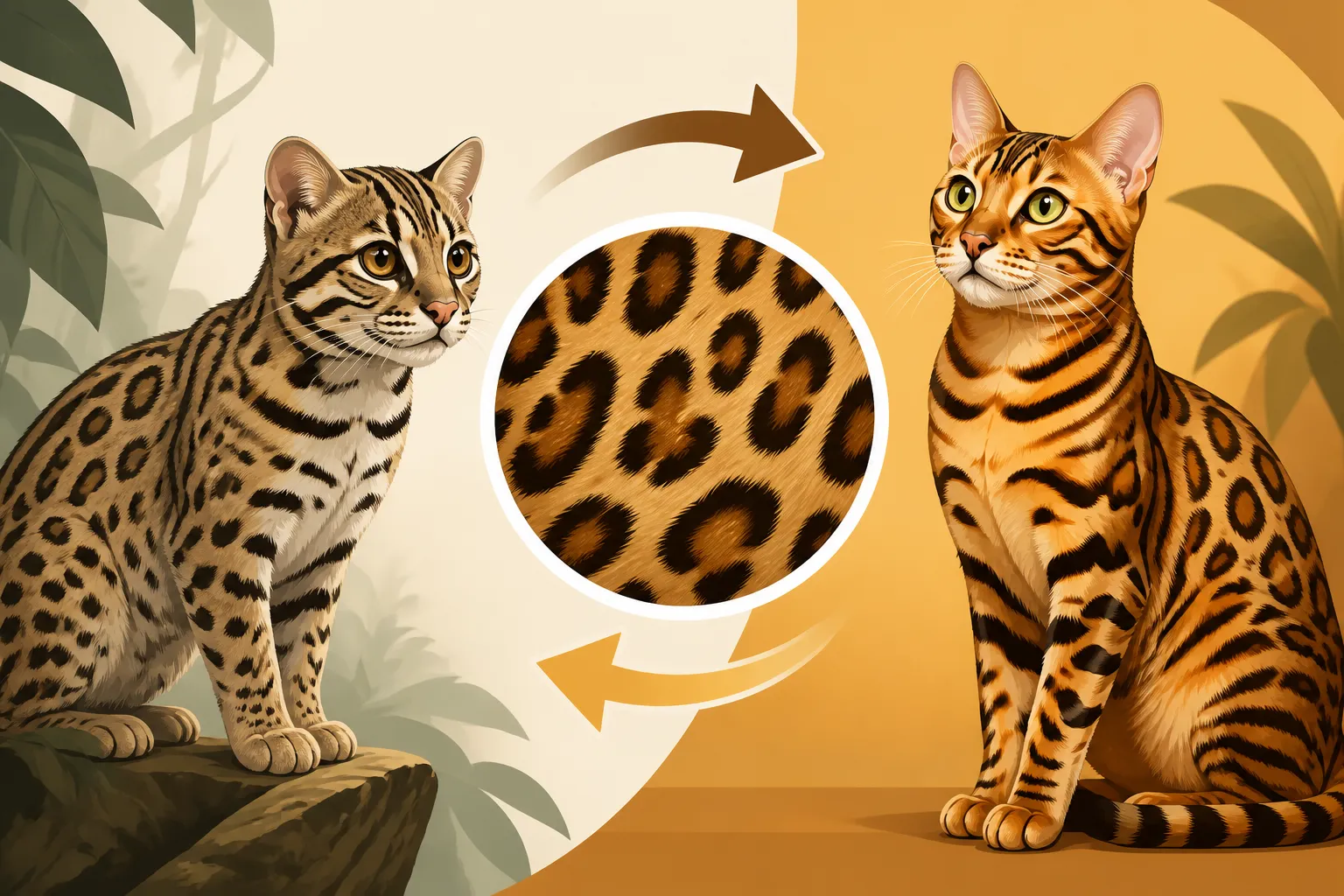
Imagine a small, sleek wild cat, roughly the size of a domestic housecat, but with an unmistakable primal elegance. That's the Asian Leopard Cat. They roam diverse habitats across Asia, from dense forests to rocky terrain, and their coat is perfectly adapted to these environments. Their fur isn't just pretty; it's a highly functional camouflage, allowing them to blend seamlessly into dappled sunlight and shadows as they hunt. This is where the magic begins for the Bengal cat's coat. The ALC boasts a short, dense coat with vivid spots and rosettes, offering protection from the elements and exceptional concealment. Their fur has a naturally sleek, almost oiled feel, designed to shed water and dirt effortlessly.
The Foundation of the Bengal Breed
The journey of the Bengal cat began with the visionary work of Jean Mill in the early 1960s, who started crossing domestic cats with Asian Leopard Cats. Her initial motivation was actually to study feline leukemia immunity, but she quickly recognized the incredible potential to create a domestic cat with the exotic look of its wild ancestor. When breeders began to focus on developing the Bengal breed, the coat was paramount. They wanted to capture that wild, jungle-cat aesthetic: the bold patterns, the incredible contrast, and that unique texture that screamed "miniature leopard." Every subsequent generation of Bengal cats, leading to the fully domestic "SBT" (Stud Book Tradition) Bengals we know today, was carefully bred to preserve these distinct ALC characteristics. The goal was never to simply have a spotted cat, but to have a cat whose spots, texture, and overall coat quality were undeniably reminiscent of the Asian Leopard Cat. To learn more about this fascinating origin, check out A Leopard Cat and a Housecat Made the First Bengal Cat and What an Asian Leopard Cat Is Behind Every Bengal Cat.
Inherited Characteristics: More Than Just Spots
When we talk about the Bengal cat's coat coming from the Asian Leopard Cat, we're not just referring to the spots. It's a whole package of inherited traits that make their fur so incredibly distinctive. These traits contribute to its unique feel, its appearance, and even how much care it needs.
The "Pelted" Feel and Minimal Undercoat
One of the first things people notice when they touch a Bengal is that incredibly soft, smooth sensation. It's often described as a "pelted" feel, like velvet or silk, rather than fluffy fur. This characteristic is a direct inheritance from the ALC. The Asian Leopard Cat, living in often warm and humid environments, doesn't need the thick, insulating undercoat that many domestic cats have. Instead, they have a short, dense, single coat that lies incredibly close to their body. This structure helps them regulate temperature, stay agile, and quickly shed water. When you feel a Bengal cat's coat, you're feeling that same efficient, streamlined design. It's why they feel so different from, say, a fluffy Persian or even a standard domestic shorthair. This lack of a significant undercoat also contributes to why they shed far less than many other breeds. You can dive deeper into this unique texture with A Bengal Cat's Coat Is a Pelt, Not Fur and Why a Bengal Cat's Coat Feels Like Nothing Else.
The Clarity of Pattern and "Glitter"
The patterns on a Bengal cat—the rosettes, spots, and marbling—are truly works of art, and again, they echo their wild ancestor. The Asian Leopard Cat’s markings are sharp, distinct, and highly contrasted, designed for camouflage. Bengal breeders worked tirelessly to select for these clear, vivid patterns, ensuring that the spots weren't blurry or faded but stood out boldly against the background color. Beyond the patterns themselves, many Bengal cats possess a trait called "glitter." This isn't literal glitter, of course, but a unique quality where the tips of their guard hairs are translucent, catching the light and giving the coat an incredible, shimmering effect, as if it's been dusted with gold or diamonds. This trait, while enhanced through selective breeding, is believed to originate from the ALC's natural coat structure, which contributes to its overall sheen and reflectivity in the wild. It adds another layer of exotic beauty that sets them apart. We’ve explored this further in The Glitter Gene and What It Does to a Bengal Cat's Coat and Whether Every Bengal Cat Has Glitter.
Short, Flat-Lying Hair
The length and lay of a Bengal's coat are also crucial aspects inherited from the ALC. Their hair is notably short and lies very flat against their body. This isn't just for aesthetics; it's a functional adaptation. In the wild, short, flat hair minimizes snagging on branches and undergrowth, allows for quicker drying after a rain shower or a dip in water (Bengals are known for their love of water!), and prevents dirt and debris from becoming easily trapped. For the domestic Bengal, this means a coat that is remarkably clean and requires minimal intervention from their human companions. It also contributes to that sleek, muscular appearance that makes them look like they're always ready for action. You'll find more details on this in Why a Bengal Cat's Coat Is Shorter Than a Housecat's and Why a Bengal Cat's Coat Lies So Flat.
What Makes a Bengal's Coat So Distinct from Domestic Breeds
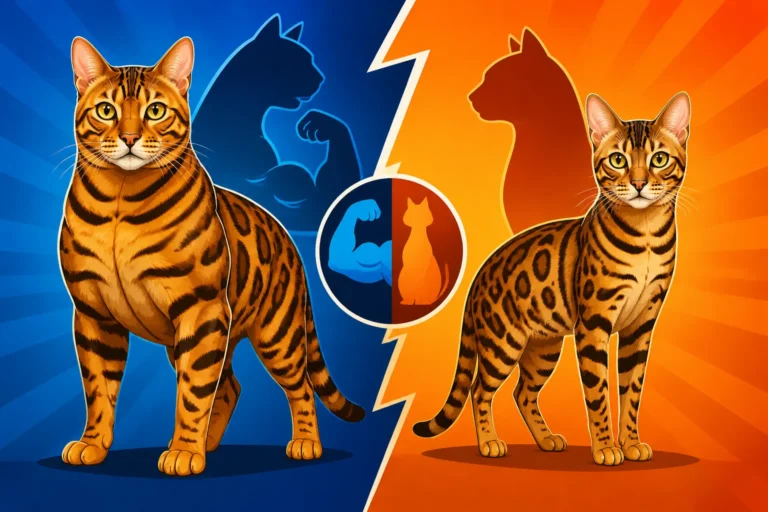
It’s one thing to say a Bengal’s coat comes from a wild cat, but what does that really mean for a pet owner? The differences are quite profound when you put it side-by-side with a typical domestic cat. It impacts everything from shedding to grooming and even how you might keep your home.
Comparison to Common House Cat Fur
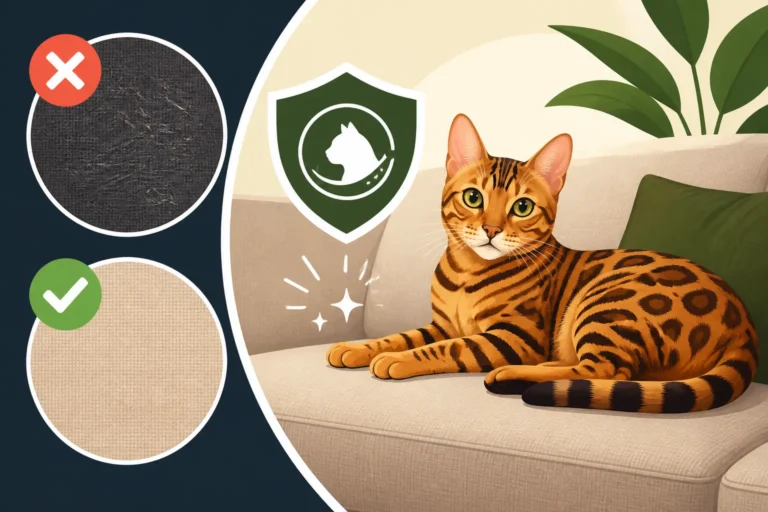
Most domestic shorthair cats have a double coat: a softer, insulating undercoat, and coarser guard hairs on top. This provides excellent warmth and protection, particularly in temperate climates. However, it also means more shedding, often in seasonal "blowouts" when the undercoat is shed. Think of the tumbleweeds of cat hair under your sofa! The Bengal, with its ALC-derived single, pelted coat, experiences a different kind of shedding. While no cat is truly non-shedding, Bengals shed significantly less than many other breeds because they simply don't have that abundant undercoat to lose. The hairs they do shed are finer and often less noticeable.
Another key difference is the texture. Domestic cats can have soft, fluffy, or even somewhat coarse fur. A Bengal’s coat is consistently smooth, dense, and has that signature luxurious feel. This unique texture also contributes to a certain resistance to moisture, a trait useful for a wild cat that might encounter wet conditions or even choose to swim. This water-loving tendency is something many Bengal owners attest to!
The Impact on Grooming Needs
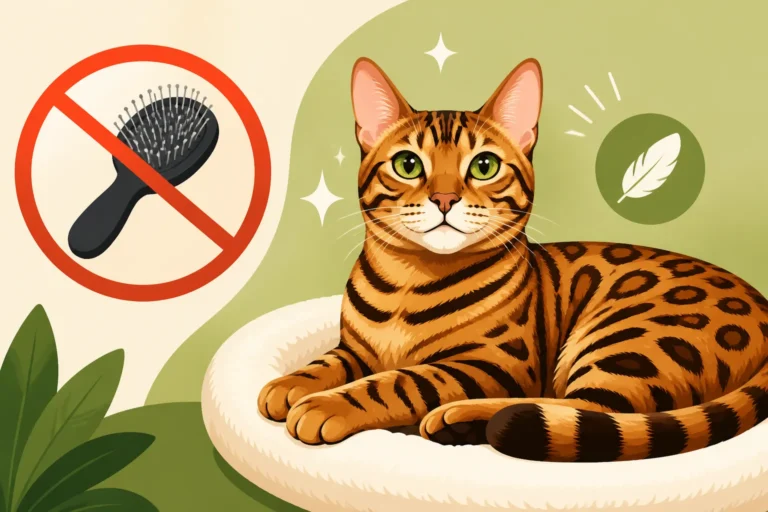
Because their coat is so well-adapted for self-sufficiency, Bengals require surprisingly little grooming from their human companions. Unlike many breeds that need regular brushing to prevent mats, reduce shedding, and distribute oils, a Bengal's short, flat, single coat is largely self-maintaining. Their grooming routine is efficient and thorough, much like their wild ancestors. They keep themselves meticulously clean, and their fur rarely mats or tangles.
This minimal grooming requirement is a huge plus for busy owners. While a quick brush once a week can be a pleasant bonding experience and help remove loose hairs, it’s far from a necessity. This stands in stark contrast to breeds with long, dense coats that demand daily attention to stay healthy and free of mats. This natural cleanliness means less fuss for you and a consistently pristine coat for your Bengal. You can read more about this in A Bengal Cat Needs Almost No Grooming.
Here’s a quick comparison of the Bengal’s coat versus a typical domestic cat:
| Feature | Bengal Cat (ALC-derived) | Typical Domestic Shorthair Cat |
|---|---|---|
| Texture | Smooth, soft, "pelted" like velvet or silk | Varies from soft to coarse, often fluffy |
| Undercoat | Minimal to none (single coat) | Present, often dense (double coat) |
| Shedding | Significantly less, finer hairs | Moderate to heavy, seasonal "blowouts" |
| Pattern Clarity | Highly contrasted, vivid spots/rosettes | Often less defined, tabby stripes or solid |
| Glitter | Often present (translucent hair tips shimmer) | Absent |
| Maintenance | Low; largely self-maintaining | Moderate; benefits from regular brushing |
| Water Repellency | Good; hair lies flat, sheds water efficiently | Varies; can absorb more water |
Nurturing Your Bengal's Wild-Born Coat
While the Bengal's coat is naturally low-maintenance, providing the right care and nutrition can enhance its health and maintain that incredible sheen and texture for years to come. Think of it as supporting their natural brilliance rather than fixing problems.
Diet and Coat Health
A healthy coat truly starts from within, and for an active, muscular cat like a Bengal, nutrition is key. Because their wild ancestors relied on a diet rich in protein, Bengals generally thrive on high-quality cat food that reflects these needs. Look for foods where meat is the primary ingredient, and avoid excessive fillers. A diet rich in essential fatty acids (like Omega-3 and Omega-6, often found in fish oils) is particularly beneficial for skin and coat health, promoting shine and reducing dryness.
If you're looking for specialized, high-protein foods that support that gorgeous coat, retailers like Chewy offer a fantastic selection that you can browse by dietary needs. Some owners even explore fresh or raw food options, believing it further enhances coat health and shine, though this path requires careful research and veterinary consultation to ensure nutritional completeness. Proper hydration is also paramount, so ensure your Bengal always has access to fresh, clean water, perhaps even a flowing water fountain to encourage drinking.
Simple Grooming Routines
The beauty of the Bengal's coat is how little fuss it needs. Most of the time, your Bengal will do an excellent job keeping themselves clean. However, occasional, gentle grooming sessions can be a wonderful bonding experience and help keep their coat in top condition.
- Brushing: A soft rubber brush or grooming glove, easily found on Amazon, can be used once a week or so. This helps to remove any loose hairs and distribute natural oils, enhancing the coat's shine. Most Bengals tolerate this well, especially if introduced from a young age.
- Bathing: Bengals generally don't require regular baths. Their coats are designed to be self-cleaning, and frequent bathing can strip natural oils. If your Bengal gets into something truly messy, a gentle cat-specific shampoo is best, followed by thorough rinsing and drying to prevent chilling, especially if they enjoy their famous water antics!
- Nail Trims: While not directly related to coat, regular nail trims are essential for any cat and part of overall care. Start early to get your Bengal accustomed to it.
Even Bengal kittens, with their adorable "fuzzies" (a temporary, slightly duller baby coat that helps camouflage them in the wild), typically require minimal grooming. These fuzzies usually clear up as they mature, revealing their full, vibrant adult pattern. You can learn more about this developmental stage by reading What Fuzzies Are on a Bengal Cat Kitten and When a Bengal Cat Kitten's Fuzzies Clear.
By understanding that your Bengal cat's magnificent coat is a direct gift from their Asian Leopard Cat ancestors, you can better appreciate its unique characteristics and provide the simple, supportive care it needs to continue looking its wild and wonderful best.
Disclaimer
This article is for general informational purposes only and does not constitute professional advice. Laws, prices and regulations vary by location and change over time. Consult a qualified professional for guidance on your specific situation.