Why the Maine Coon HCM Test Does Not Work on a Bengal Cat
It can be incredibly confusing and even frustrating when you’re trying to be a responsible Bengal cat parent, researching health tests for your beloved furball, and you keep running into discussions about gene tests for HCM in breeds like Maine Coons. You think, "Great! A simple swab to tell me if my Bengal is at risk!" But then you discover that test doesn't apply. This guide is here to unravel that mystery, explaining precisely why the Maine Coon HCM gene test doesn't work for Bengal cats and what that means for keeping your spotted companion healthy.
Understanding HCM in Cats and the Promise of Genetic Tests
Hypertrophic Cardiomyopathy (HCM) is a condition that affects the heart muscle, causing it to thicken over time. This thickening makes it harder for the heart to pump blood effectively, leading to a range of serious health issues, including blood clots, congestive heart failure, and even sudden death. It's the most common heart disease in cats, and sadly, it's often a silent killer, progressing unnoticed until symptoms become severe or it's too late.
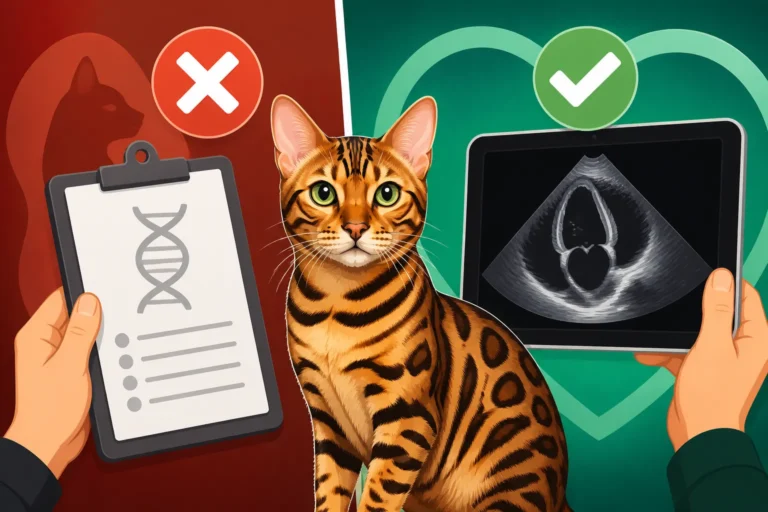
For many years, diagnosing HCM relied primarily on physical exams and echocardiograms, which are specialized ultrasound scans of the heart. While these are still the gold standard for diagnosis, the advent of genetic testing has brought a new layer of understanding and prevention to some breeds. The idea behind a genetic test is simple: if scientists can identify a specific gene mutation that causes HCM in a particular breed, then breeders can test their cats to avoid passing that mutation on, and owners can be aware of their cat's predisposition.
What is Hypertrophic Cardiomyopathy Anyway?
Imagine your cat's heart as a beautifully engineered pump. It has four chambers, and the walls of these chambers are made of muscle. In HCM, these muscular walls, particularly the left ventricle, become abnormally thick. This thickening reduces the volume inside the chamber and makes it rigid, preventing it from relaxing and filling properly with blood between beats. Think of it like trying to fill a water balloon that's already mostly full of hardened clay – it just can't hold as much or expand as easily. The heart then has to work much harder to push blood out to the body, straining the entire cardiovascular system.
This increased workload can lead to a host of secondary problems. Fluid can back up into the lungs, causing congestive heart failure. Blood clots can form in the enlarged left atrium, potentially traveling to block arteries, most commonly in the hind legs, a devastating condition known as saddle thrombus. You might notice signs like rapid breathing, lethargy, or even sudden paralysis if a clot occurs. Understanding What HCM Does to a Bengal Cat's Heart is crucial for any owner.
The General Idea Behind Genetic Health Screening
Genetic screening for diseases in cats (and humans, for that matter) is about identifying specific changes, or mutations, in an animal's DNA that are known to cause a particular condition. If a single gene mutation is strongly linked to a disease in a specific breed, a DNA test can be developed. This test allows breeders to identify carriers (cats that have one copy of the mutated gene but might not show symptoms) and affected cats (cats with two copies, or one copy in dominant diseases, that are likely to develop the condition).
The goal is to use this information responsibly to make informed breeding decisions, gradually reducing the incidence of the disease within the breed's gene pool. It's a powerful tool, offering the potential to eradicate certain inherited diseases from future generations, but it hinges entirely on finding those specific, identifiable gene mutations.
The Maine Coon HCM Gene Test: A Breed-Specific Solution
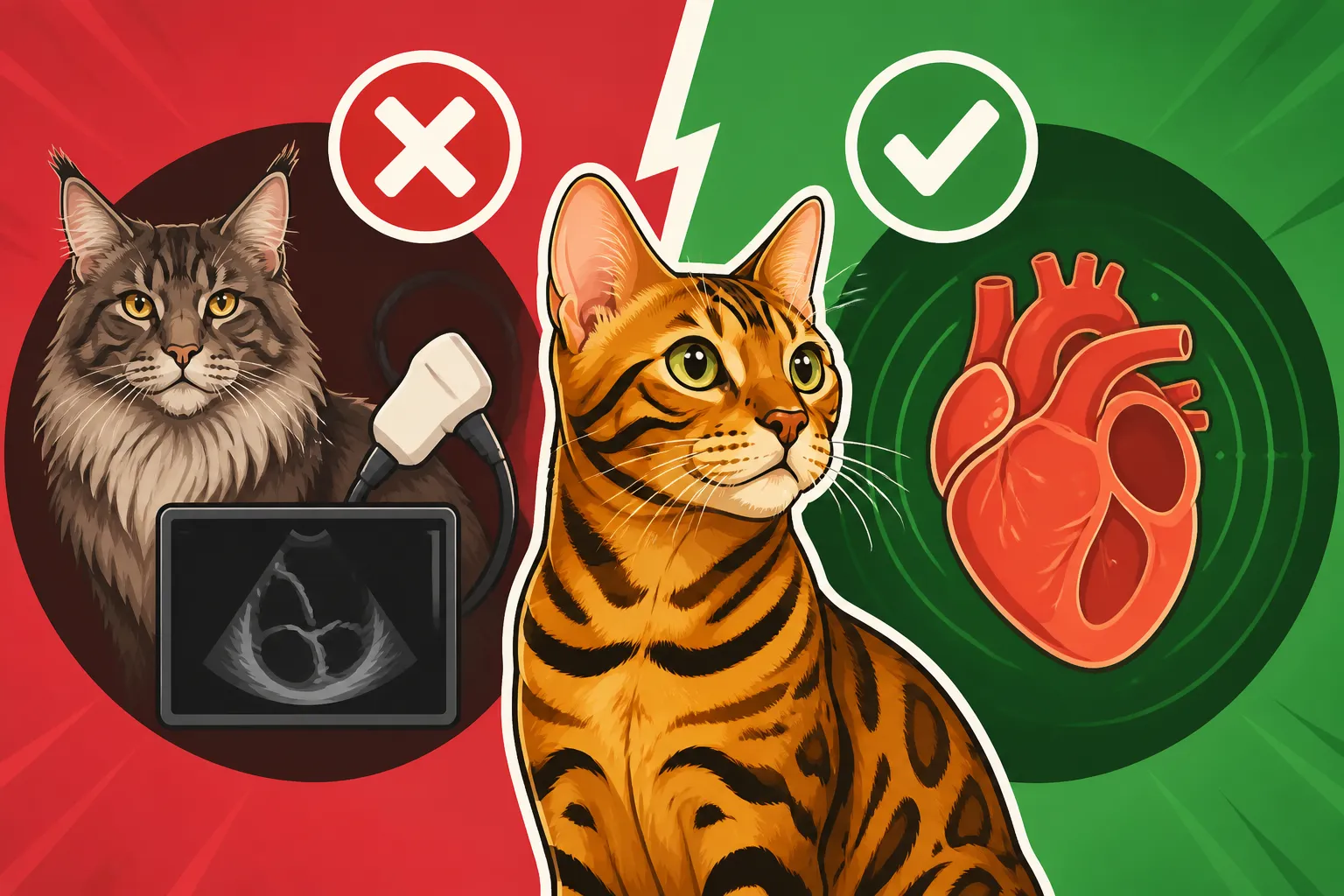
When you hear about an HCM gene test, it's very likely the one developed for Maine Coon cats, and later found to be relevant for Ragdolls. This test, while a fantastic step forward for those breeds, highlights a critical point: genetic diseases are often incredibly specific to certain breeds and even particular lines within those breeds.
The MYBPC3 Mutation in Maine Coons
For Maine Coon cats, researchers identified a specific mutation in a gene called MYBPC3 (Myosin Binding Protein C3) that is strongly associated with the development of HCM. This gene plays a vital role in heart muscle function. When mutated, it leads to the abnormal protein production that contributes to the characteristic thickening of the heart walls seen in HCM.
This was a groundbreaking discovery because it provided a clear, testable marker for a disease that had been plaguing the breed for years. A simple buccal swab (a swab taken from the inside of the cat's cheek) can be sent to a specialized lab, and the results will indicate if the cat is clear, a carrier, or affected by this particular mutation. Breeders can then use this information to make pairing decisions, aiming to produce kittens that are clear of the mutation, or at least not affected. This allows for a proactive approach to heart health, ideally reducing the prevalence of HCM within the Maine Coon population over time.
Why This Specific Test Doesn't Help Other Breeds
Here's the rub: the MYBPC3 mutation discovered in Maine Coons (and subsequently found in some Ragdolls) is unique to those breeds or specific lines. It's like finding a faulty part in a Ford engine; that same faulty part isn't necessarily going to be present in a Toyota engine, even if both cars experience engine problems. Different cars can have different issues, even if the symptoms (an overheating engine, or in this case, a thickened heart) seem similar.
For a genetic test to be useful, it must target the exact genetic anomaly responsible for the disease in that specific breed. Since the MYBPC3 mutation isn't present in other breeds, including Bengal cats, testing a Bengal for this specific mutation would yield absolutely no meaningful information about their risk for HCM. The test would simply come back "clear," not because the Bengal cat is free of all HCM risk, but because they don't carry the Maine Coon-specific mutation. It creates a false sense of security, which is arguably more dangerous than knowing there isn't a gene test.
The Unique Challenge of HCM in Bengal Cats
So, if the Maine Coon test doesn't work, what's the deal with HCM in Bengal cats? This is where things get a bit more complex, and unfortunately, a bit more frustrating for dedicated Bengal owners and breeders alike. The simple truth is, while Bengal cats are susceptible to HCM, just like many other breeds, the underlying genetic causes appear to be far more diverse and elusive.
No Single Gene Mutation Identified (Yet!)
Unlike Maine Coons with their identified MYBPC3 mutation, scientists have not yet pinpointed a single, predominant gene mutation responsible for HCM in Bengal cats. This doesn't mean Bengals don't get HCM; they absolutely do. It just means that the disease in Bengals is what's known as "genetically heterogeneous." This is a fancy way of saying that HCM in Bengal cats likely arises from a variety of different genetic mutations, or perhaps even combinations of multiple genes, some of which may not even be in genes directly related to heart muscle structure but rather to other pathways that indirectly affect heart health.
Imagine trying to find the "cause" of baldness if there were 50 different genes that could individually or in combination lead to hair loss, rather than just one. It would be incredibly difficult to create a single, all-encompassing genetic test. This is the challenge researchers face with Bengal cat HCM. Until those specific genetic culprits are identified, a simple DNA swab test for HCM in Bengal cats remains out of reach. This is precisely Why There Is No Bengal Cat HCM Gene Test available in the way there is for Maine Coons.
The Importance of Regular Echocardiograms
Given the lack of a reliable genetic test, the gold standard for monitoring and diagnosing HCM in Bengal cats remains regular echocardiograms. An echocardiogram is a non-invasive ultrasound of the heart that allows a veterinary cardiologist to visualize the heart's structure, measure the thickness of its walls, assess its pumping function, and detect any abnormalities.
This is a critical tool because it provides a real-time snapshot of your cat's heart health. A skilled cardiologist can identify early signs of thickening, even before your cat shows any outward symptoms. Early detection is key, as it allows for interventions that can help manage the condition and improve your cat's quality of life. Many breeders will regularly screen their breeding cats, a practice that is vital for the health of the breed. It's important to understand When a Bengal Cat Should Have Its First Echo and How Often a Bengal Cat Needs an Echo to ensure proactive care.
| Feature | Maine Coon HCM Gene Test | Bengal Cat HCM Detection (Current) |
|---|---|---|
| Method | DNA Swab Test (buccal swab) | Echocardiogram (heart ultrasound) |
| Target | Specific MYBPC3 gene mutation | Direct visualization of heart structure/function |
| Reliability | High for detecting that specific mutation | High for diagnosing existing HCM |
| Applicability | Effective for Maine Coons & Ragdolls (specific lines) | Universal for all cat breeds |
| Frequency | Once in a cat's lifetime to check genotype | Regular screenings throughout life (annual/biennial) |
| Cost | Relatively low (tens to low hundreds of dollars) | Higher (hundreds of dollars per scan) |
| Benefit | Breeding decisions, risk assessment | Early diagnosis, monitoring, treatment planning |
What You Can Do to Protect Your Bengal Cat from HCM
While the absence of a simple gene test can feel discouraging, it absolutely doesn't mean you're powerless. There are very proactive steps you can take to safeguard your Bengal cat's heart health. Being informed and diligent is your best defense.
Choosing a Reputable Breeder Who Screens
This is perhaps the single most important step you can take when bringing a Bengal kitten into your home. A truly responsible Bengal breeder will be transparent about their health screening practices, especially regarding HCM. They understand that without a gene test, regular echocardiograms are the only way to monitor their breeding lines.
When you're speaking with a breeder, ask specific questions:
- Do they regularly screen their breeding cats for HCM using echocardiograms?
- Can they provide documentation (reports from a board-certified veterinary cardiologist) for both parents of your kitten, showing clear results?
- How old were the breeding cats at their last echo? Results are typically considered "clear" for 12-18 months, so current results are important.
- Do they stand behind their kittens with a health guarantee that covers inherited conditions like HCM?
Look for breeders who work with veterinary cardiologists and are part of health programs that emphasize screening. This commitment reflects a genuine dedication to the well-being of the breed. Remember, Why a Bengal Cat Breeder Must Show an Echo, Not a Gene Test is fundamental to responsible breeding practices.
Regular Veterinary Check-ups and Heart Monitoring
Even if you get your Bengal from a top-notch breeder, ongoing veterinary care is essential. Your regular vet plays a crucial role in early detection. During routine wellness exams, your vet will listen to your cat's heart for any murmurs or abnormal rhythms. A heart murmur doesn't automatically mean HCM, but it's a red flag that warrants further investigation, usually with an echocardiogram. Understanding What a Bengal Cat's Murmur Means can help you have a more informed conversation with your vet.
Don't skip these annual check-ups, especially as your Bengal ages. Cats are incredibly adept at hiding illness, and a subtle change that your vet picks up during an exam could be the first sign of a developing issue. If your vet does detect a murmur, be prepared to follow through with a referral to a veterinary cardiologist for a definitive diagnosis.
Understanding the Importance of a Veterinary Cardiologist
When it comes to diagnosing and managing HCM, a general practitioner vet is a great starting point, but a board-certified veterinary cardiologist is truly the expert. These specialists have advanced training and experience specifically in animal heart conditions. They use specialized ultrasound equipment and have the nuanced skill to interpret complex cardiac images.
An echocardiogram performed by a cardiologist provides the most accurate assessment of your Bengal cat's heart. They can precisely measure heart wall thickness, assess blood flow, and identify even subtle changes that might be missed by someone without that specialized focus. If your cat is diagnosed with HCM, the cardiologist will also be the best resource for developing a treatment plan, which may involve medications to improve heart function, prevent clot formation, or manage symptoms like fluid buildup.
Financial Planning for Potential Heart Care
The reality is that advanced diagnostics like echocardiograms and ongoing treatment for a condition like HCM can be expensive. A single echocardiogram can cost several hundred dollars, and if medication is needed, those costs are recurring. This is where pet insurance can be a real lifesaver. Companies like Healthy Paws offer comprehensive pet insurance plans that can help cover the costs of unexpected veterinary care, including specialist consultations, diagnostics, and long-term medication for chronic conditions like HCM. Having a plan in place with Healthy Paws can alleviate the financial stress, allowing you to focus on getting your Bengal the best possible care without worrying about the bill.
It's wise to consider pet insurance early in your cat's life, before any pre-existing conditions are diagnosed. While the initial cost of buying a Bengal cat can be substantial, it's also important to consider What a Bengal Cat Costs Over Its Lifetime, which includes potential health care expenses. Be sure to investigate whether an insurance provider's policy covers specific conditions or breeds when looking into plans. If you're wondering What a Bengal Cat's First Echo Costs, or if Whether Insurance Pays for a Bengal Cat's Echo, these are excellent questions to discuss with your insurance provider. Similarly, medication costs can add up, so understanding What a Bengal Cat's HCM Medication Costs is also part of responsible ownership.
Living with a Bengal cat diagnosed with HCM can be challenging, but with regular monitoring, appropriate medication, and a loving home environment, many cats can still live fulfilling lives for years after diagnosis. Being aware of How Long a Bengal Cat Lives After an HCM Diagnosis can help you manage expectations and provide the best possible palliative care.
Disclaimer
Please remember that the information provided in this article is for general informational purposes only and does not constitute veterinary medical advice. Always consult with a qualified veterinarian or veterinary cardiologist for any health concerns or before making any decisions about your pet's medical care.