Whether the Bengal Cat Threatens Wild Leopard Cats
A Bengal cat’s wild-looking coat can make it seem like a direct threat to the Asian leopard cat, but appearance and ancestry are not the same as ecological impact. Today’s domestic Bengals are not generally being bred from wild leopard cats. The realistic risks come from ordinary pet-cat problems—escape, abandonment, hunting and disease—especially where domestic cats overlap with wildlife.
What Bengal cats have to do with wild leopard cats
The Bengal’s ancestry is real, but it is not the whole story
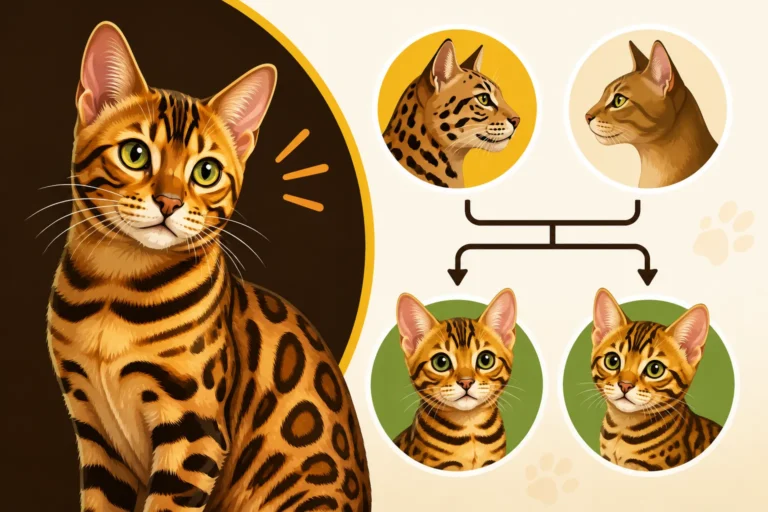
The domestic Bengal breed traces back to crosses involving the Asian leopard cat, a small wild feline native to parts of Asia. That connection explains the Bengal’s name and some of its striking features, but it does not mean that a pet Bengal is a wild leopard cat or a recent wild hybrid. The breed developed through generations of selective breeding with domestic cats. For background on the species involved, see What an Asian Leopard Cat Is Behind Every Bengal Cat and Where the Bengal Cat Comes From.
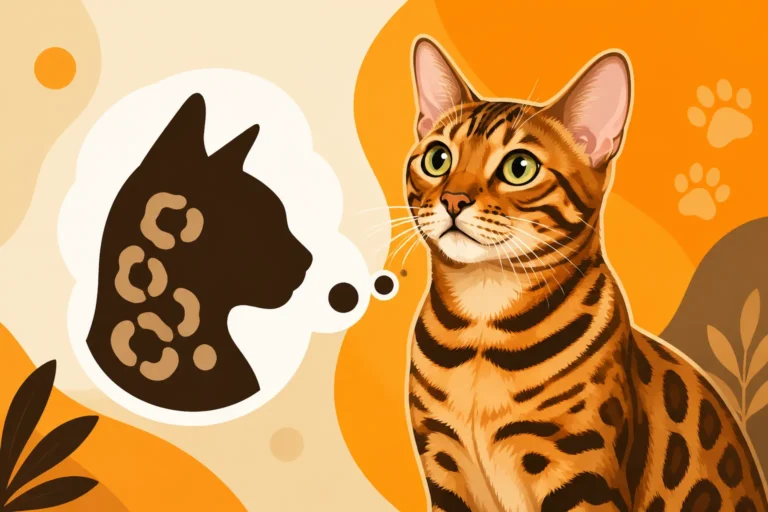
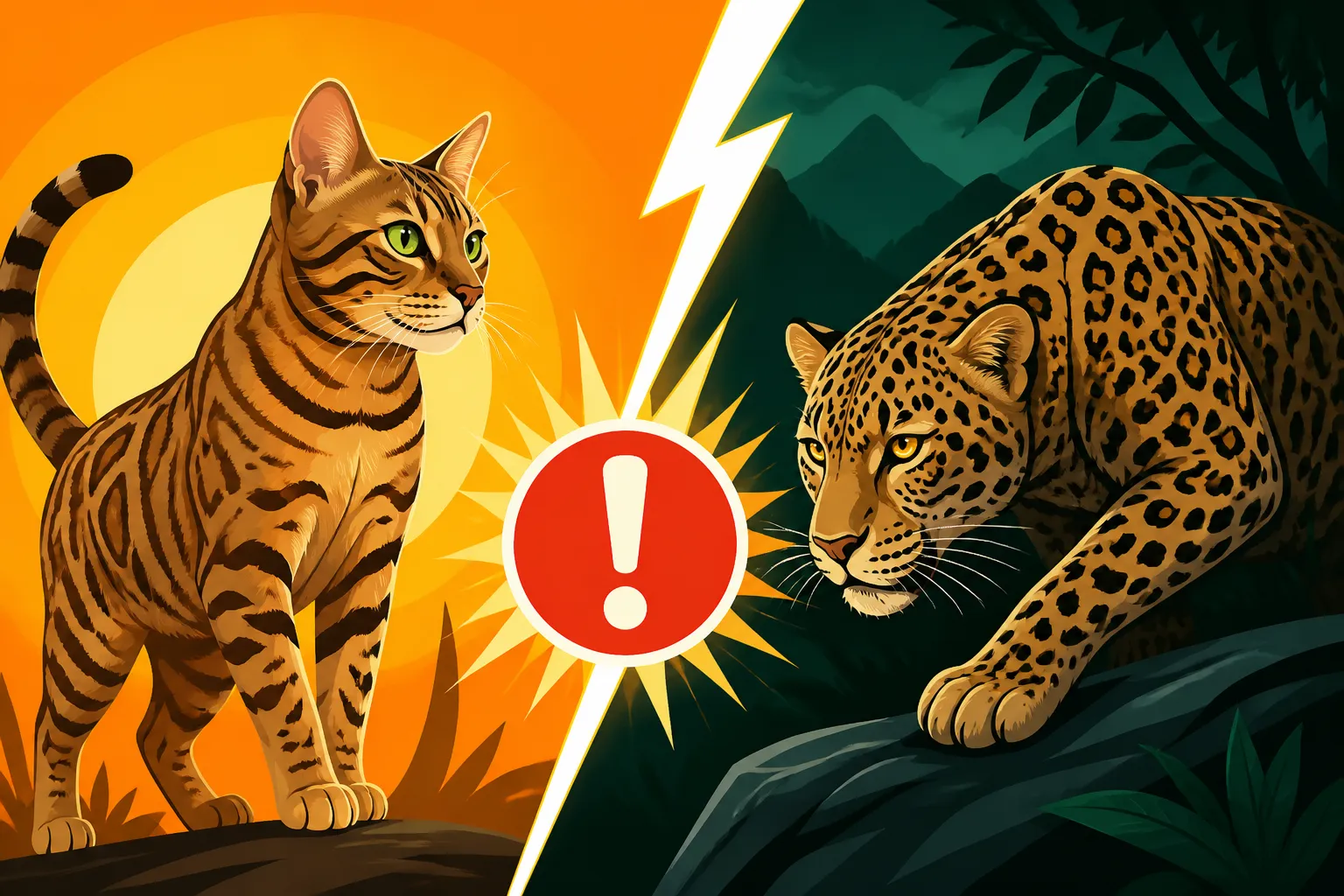
A Bengal’s spotted or rosetted coat can make the connection feel more immediate than it is. Coat pattern alone does not reveal how close a cat is to a wild ancestor, whether it has any recent wild ancestry, or whether it poses a special conservation risk. Many domestic cats, including cats without a Bengal pedigree, hunt birds and small mammals if they have outdoor access.
The generation label on a Bengal’s pedigree describes its place in the breed’s ancestry. It is not a simple measure of how dangerous the individual cat is to wildlife, nor does it tell you that the cat has recently been taken from the wild. If you are trying to understand the terminology, F1 to SBT: How a Bengal Cat's Generation Is Counted explains how those labels are used.
Modern breeding is different from the breed’s founding crosses
The Bengal breed’s history includes early crosses between domestic cats and Asian leopard cats. That history sometimes leads people to assume breeders still routinely bring wild cats into the breeding program. In established domestic Bengal lines, that is not the usual practice: breeders generally work with domestic Bengals rather than repeatedly crossing pets with wild leopard cats. For more detail, see Whether Bengal Cats Are Still Bred From Wild Cats.
That distinction matters for conservation. A breed with a wild ancestor is not automatically a continuing source of demand for wild-caught animals. The question is whether current breeding relies on removing animals from the wild, whether escaped or released cats can establish themselves in wildlife habitat, and whether cats have opportunities to breed with wild or free-roaming cats.
It is also reasonable to ask broader ethical questions about creating and keeping hybrid-origin breeds. Those concerns can include animal welfare, early-generation behavior, and the responsibility of breeders and owners—not just effects on wild populations. Whether Breeding Hybrids Like the Bengal Cat Is Ethical explores those issues separately.
The realistic ways domestic cats can affect wildlife
Hunting and disturbance are the everyday concerns
An outdoor Bengal may catch birds, rodents, reptiles or other small animals. A cat’s athletic build and strong prey drive can make hunting look dramatic, but those traits do not make the Bengal uniquely harmful compared with other free-roaming domestic cats. The number and type of animals affected depend on the local ecosystem, the cat’s behavior, and how much time it spends outside.
Even cats that are well fed may hunt. A full food bowl does not reliably switch off stalking and chasing, because those behaviors are part of normal feline play and predatory activity. Hunting can also happen around a home, in a garden, or near a wildlife corridor, so an owner may not see every encounter.
The broader wildlife impact of pet cats is a concern in many places, but it should not be confused with a Bengal-specific threat to Asian leopard cats. Where local wildlife is vulnerable, keeping a cat safely contained is a practical step. Some owners build a secure outdoor enclosure or “catio”; others use indoor play, climbing spaces, and supervised outdoor time. If you are planning an indoor setup, Why a Catio Is the Answer to a Bengal Cat offers ideas for balancing stimulation with containment.
Escape, abandonment and breeding can create added risks
A pet cat that escapes may hunt, spread parasites or other pathogens, compete with local wildlife, or breed with free-roaming domestic cats. These are general concerns for domestic cats. A Bengal’s appearance may make an escaped cat more noticeable, but it does not make the underlying risks exclusive to the breed.
Abandonment is especially serious. A Bengal may be energetic, vocal, clever and demanding of interaction, and a household that is unprepared for those needs may struggle to manage the cat. That does not mean the animal should be left outdoors or released. A responsible rehoming plan through a reputable rescue, breeder, or veterinary network is far safer for the cat and wildlife.
Owners can reduce the chance of an escape by securing screens and doors, using a carrier during travel, keeping identification current, and considering a microchip. A harness is not a substitute for a secure home, and a cat that slips out of a harness can be difficult to recover. For practical behavior and containment ideas, see How to Stop a Bengal Cat Door Dashing.
Does a Bengal threaten the Asian leopard cat directly
Direct hybridization is not the main concern for most pet owners
For most domestic Bengal owners, the prospect of their pet mating with a wild Asian leopard cat is not a realistic day-to-day scenario. Asian leopard cats live in parts of Asia, while domestic Bengals are kept in homes around the world. The likelihood of contact depends on geography, local conditions, and whether cats are allowed to roam; it is not a consequence of simply owning a Bengal.
Where domestic cats and wild felids do overlap, conservation professionals may be concerned about a range of interactions, including disease transmission, competition, predation and hybridization. The details vary by location and species. It is better not to treat every theoretical interaction as a documented, widespread threat—or to assume there is no risk anywhere. Keeping pets contained is a sensible precaution in regions with native wild cats and other vulnerable wildlife.
Current breeding practices also matter. A modern domestic Bengal should not be treated as though it is a fresh cross with a wild leopard cat. Questions about whether new crosses are permitted or acceptable are distinct from questions about what a pet Bengal might do if it roams outdoors. See Whether a New Wild Cross Into the Bengal Cat Is Allowed for the breeding side of that discussion.
The wild leopard cat faces broader conservation pressures
The Asian leopard cat is a wild species with its own conservation challenges. Habitat loss and fragmentation, conflict with people, and changes in prey availability can affect wild cats and other wildlife. Those pressures are not caused by ordinary household Bengal ownership. To understand the species’ conservation context, see Whether the Asian Leopard Cat Behind the Bengal Cat Is Endangered.
It can be tempting to focus on the visible link—the Bengal’s coat—because it is easy to picture. But conservation problems are usually more complex than a domestic breed’s appearance. The more useful questions are whether wild animals are being captured, whether habitat is being protected, and whether pets are being kept from roaming and breeding outside homes.
| Concern | How it relates to Bengal cats | Practical response |
|---|---|---|
| Wild-caught animals used for breeding | The breed’s historic origins do not by themselves show that current breeding depends on wild capture | Ask breeders about ancestry, records and breeding practices |
| Hunting by escaped or outdoor pets | A Bengal can hunt, but this is not unique to the breed | Keep the cat indoors or use secure, supervised outdoor access |
| Disease transmission | Possible contact between domestic and wild cats can create risks in some locations | Prevent roaming, keep routine veterinary care current, and seek local advice |
| Hybridization with wild cats | Geography and direct contact matter; this is not a routine outcome of owning a Bengal | Prevent escape and uncontrolled breeding, especially where wild cats occur |
| Habitat loss affecting leopard cats | This is a broader conservation issue, not a result of owning a domestic Bengal | Support habitat protection and responsible wildlife conservation |
How Bengal owners can make a responsible choice
Ask careful questions before bringing a Bengal home
A responsible decision starts with the individual cat, not just the coat pattern. Ask about the cat’s pedigree, generation, health history, temperament, socialization and the breeder’s approach to placing kittens. A thoughtful breeder should be able to explain the cat’s domestic lineage and discuss the realities of living with an active, intelligent animal.
If you are considering an early-generation Bengal, do additional research before committing. These cats may have different needs and can be subject to local rules. Laws and requirements can depend on where you live and on how the cat’s generation is documented, so check the relevant authorities before bringing one home. For the breed’s broader history and the claims people commonly make about it, What People Get Wrong About the Bengal Cat is a useful companion read.
Also be honest about your household. A Bengal that lacks play, climbing opportunities, and daily interaction may become difficult to live with. That frustration can lead to the cat being surrendered or allowed to roam—outcomes that are bad for the animal and potentially harmful to local wildlife. Before adopting, think through how you will provide enrichment, manage doors and windows, and arrange care when you travel.
Keep the cat safe without making enrichment an afterthought
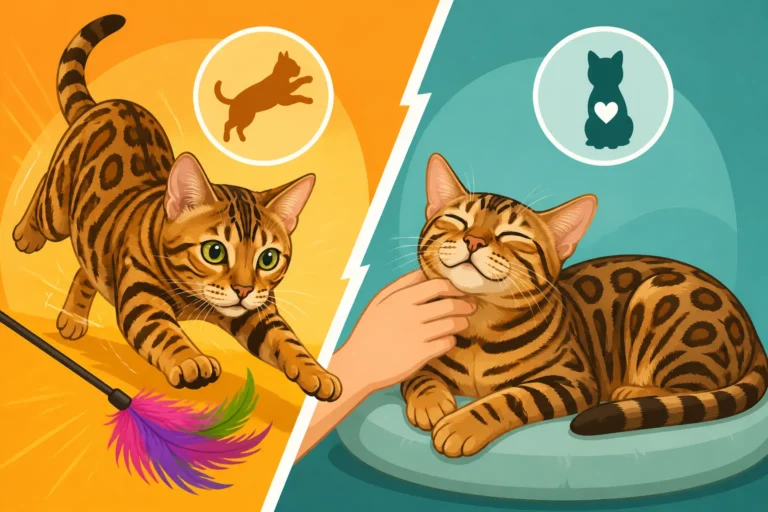
Containment does not have to mean a dull life. Provide sturdy climbing furniture, scratching surfaces, puzzle feeders, and regular interactive play. Rotate toys rather than leaving every toy out all the time, and use play sessions that let the cat stalk, chase and catch a toy. If you are shopping for basics, Chewy is one place owners may use to find cat trees, puzzle feeders, harnesses and other supplies; check that products are sturdy and appropriate for your cat.
For outdoor stimulation, choose secure options rather than free roaming. A properly built enclosure should have a roof or other escape prevention, secure doors, and no gaps the cat can squeeze through. Supervised leash time can work for some cats, but it takes patient training and a well-fitted harness. A Bengal that is frightened by a dog, traffic or a sudden noise can pull backward quickly, so outdoor training should begin in a quiet, enclosed space.
If your cat is bored or demanding, adding supplies alone will not solve everything. You may need to schedule play at predictable times, make climbing routes available, and reduce opportunities to open doors or raid cupboards. Chewy may help with practical equipment such as treat puzzles or scratching posts, but the important part is matching the setup to your cat and using it consistently. Owners comparing ways to provide safe outdoor access can also read Whether a Bengal Cat Can Be an Indoor Only Cat.
Think beyond the individual pet
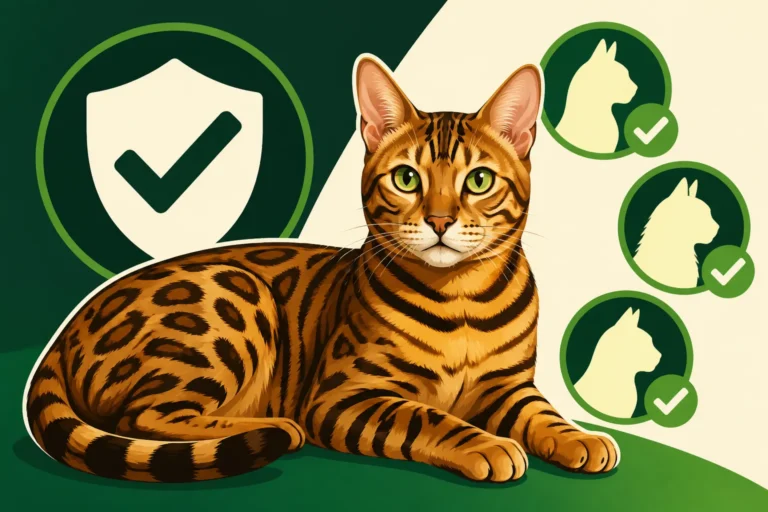
Responsible ownership helps keep domestic cats from becoming a problem for wildlife, whether the cat is a Bengal or a mixed-breed rescue. Keep the cat from roaming, arrange neutering or spaying as advised by your veterinarian, and make a plan for identification and emergency recovery. If you live in an area with native wild cats or sensitive wildlife, ask a local veterinarian or conservation organization about region-specific precautions.
If you cannot meet a Bengal’s needs, seek help early rather than waiting until the situation becomes unmanageable. A breeder may have a return policy, and a rescue experienced with the breed may help with a suitable placement. Rehoming responsibly is not a failure; releasing a pet outdoors is a dangerous alternative.
The balanced answer is that domestic Bengals are not generally a direct, ongoing threat to wild Asian leopard cats simply because of their ancestry. The more immediate and manageable issue is the same one faced with any pet cat: preventing roaming, abandonment and uncontrolled breeding. A secure, enriched home protects the Bengal while also reducing avoidable pressure on local wildlife.
Disclaimer
This article is for general informational purposes only and does not constitute professional advice. Laws, prices and regulations vary by location and change over time. Consult a qualified professional for guidance on your specific situation.