Where a Bengal Cat Is Illegal in the United States
Bringing a new Bengal cat into your life is incredibly exciting, but the journey can quickly turn stressful when you realize that owning one isn't always straightforward. Many aspiring Bengal parents face the frustrating reality that these beautiful cats, despite being beloved companions, are subject to a patchwork of confusing and often contradictory laws across the United States. This comprehensive guide will help you understand the legal landscape, from state-level bans to local ordinances, ensuring you can navigate the regulations and determine if a Bengal cat is legally permitted in your area.
Understanding the F-Number: The Key to Bengal Cat Legality
When you start researching Bengal cat ownership, one of the first things you’ll encounter is the "F-number." This isn't just some breeder jargon; it's the fundamental distinction that dictates whether a Bengal cat is legal in a given jurisdiction. This number, short for "Filial generation," directly relates to how far removed your Bengal is from its wild ancestor, the Asian Leopard Cat (ALC). It's a critical concept to grasp because it forms the basis of virtually all legal restrictions. Without understanding the F-number, you're essentially walking into a legal maze blindfolded.
What Filial Generations Mean for Bengal Cats
The F-number simply tells you how many generations separate a particular Bengal cat from its wild Asian Leopard Cat ancestor. An F1 Bengal cat, for instance, is a direct cross between a domestic cat and an ALC. It's the "first filial generation." An F2 Bengal has an F1 parent and a domestic cat parent, making it two generations removed from the wild. This continues down the line: an F3 has an F2 parent, an F4 has an F3 parent, and so on. The further down the F-line you go, the more domestic the cat's genetics and, typically, its temperament are considered to be.
The idea behind these classifications is to track the dilution of the wild genetics. While all Bengals ultimately trace back to the Asian Leopard Cat, the behavioral traits and physical characteristics become progressively more domestic with each successive generation. Breeders focus on creating cats that retain the stunning appearance of their wild ancestors but possess the loving, manageable temperament of a domestic house cat. Understanding How a Bengal Cat's Generation Is Counted is crucial for potential owners.
The Legal Implications of F1 to F4+ Bengal Cats
Most regulations specifically target the early generations, usually F1 through F4. The reason is simple: these cats are considered to retain more of their wild instincts and physical capabilities. An F1 Bengal might be incredibly shy, highly intelligent, and possess a stronger prey drive than later generations. They can also be larger and more challenging to manage in a typical home environment. States and municipalities often classify F1, F2, and F3 Bengals as "hybrid wild animals" or "dangerous wild animals," subjecting them to exotic pet laws rather than standard domestic cat regulations.
Once a Bengal cat reaches the F4 generation or later, it's generally considered "SBT" (Stud Book Traditional) and is treated, for legal purposes, much like any other domestic cat breed. The vast majority of Bengal cats available as pets today are SBT Bengals, typically F4 or higher. These later generations are the ones you'll most commonly see in homes, and they are usually the focus when discussing a "legal Bengal cat." Many states draw the line at the F4 generation, considering Why F4 Is the Line Between Wild and Domestic Bengal Cats. It's why an F4 Bengal will likely be legal in more places than, say, an F2 Bengal.
State-by-State Breakdown: Where Bengal Cats Face Restrictions
The legality of owning a Bengal cat is not a national standard; it's a state-by-state, and sometimes even city-by-city, decision. This creates a confusing tapestry of regulations that can be incredibly challenging for prospective owners to navigate. What's perfectly fine in one state might land you in serious trouble just across the border. It’s absolutely vital to do your homework specific to your location before committing to bringing a Bengal home.
States with Outright Bans
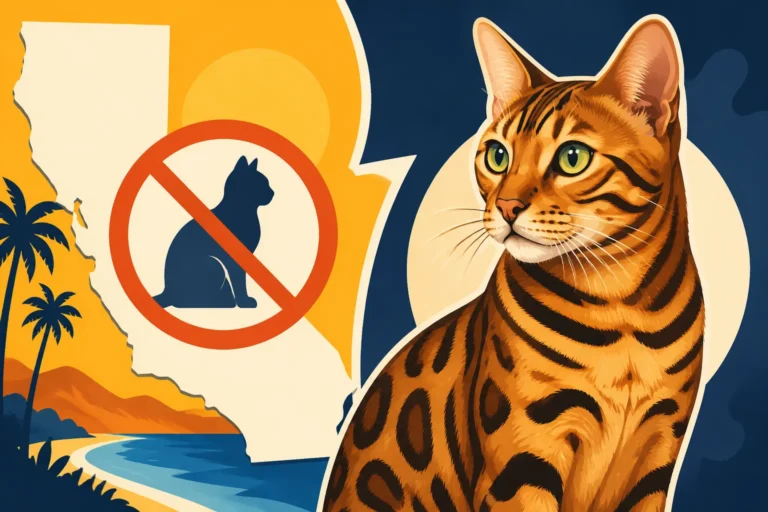
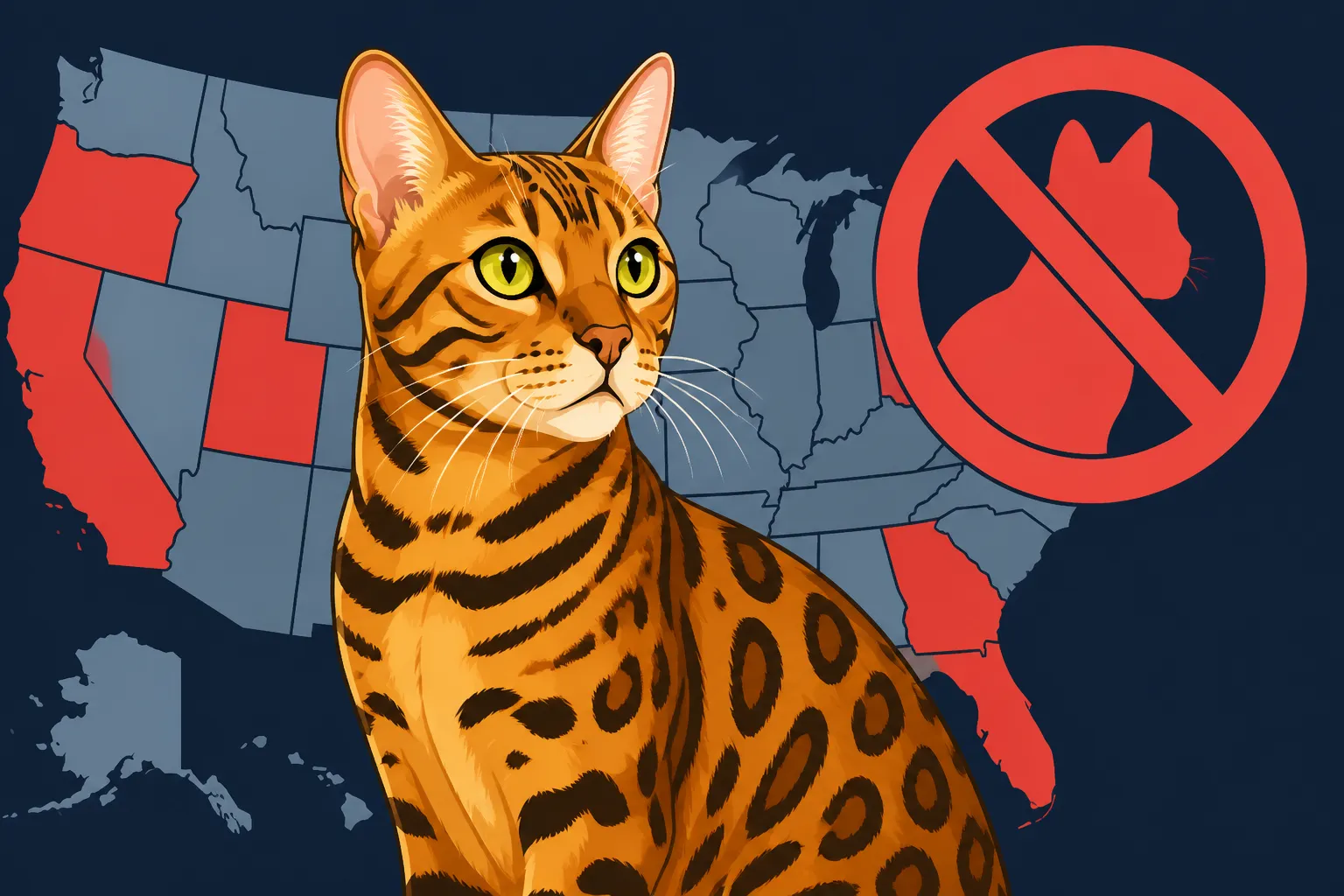
Some states have taken a clear stance, banning Bengal cats across all generations. This means regardless of whether your Bengal is an F1 or an SBT, it's simply not allowed within state lines. These bans are often rooted in concerns about exotic pet ownership, potential impacts on local wildlife, or public safety, even if those concerns are sometimes disproportionate to the actual risks posed by later-generation Bengals. For example, Hawaii has a blanket ban on all hybrid cats, including Bengals, due to its unique ecosystem and strict biosecurity laws.
It’s not just Hawaii. Other states may have interpretations of their "wild animal" or "exotic pet" laws that encompass all Bengals, even the most domestic ones. These bans leave no room for exceptions or permits, making ownership impossible. Before you even think about looking at Bengal kittens, you must confirm that your state doesn't have such an outright prohibition. Relying on outdated information or anecdotal evidence could lead to heartbreaking consequences.
States with Generation-Specific Restrictions
This is the most common scenario: states that allow later-generation Bengals but restrict or outright ban early generations (F1, F2, F3, or sometimes F4). For example, a state might permit only SBT Bengals (F4 and above) without any special permits, while requiring licenses for F3s, and banning F1s and F2s entirely. These laws acknowledge the progressive domestication of the breed and aim to regulate based on perceived "wildness."
Each state's cutoff point can vary. Some might draw the line at F3, meaning F4 and later are fine. Others might be stricter, only allowing F5 or even later. It’s this variability that makes thorough research essential. You might find a beautiful F3 Bengal, but if your state only allows F4 and up, you could face confiscation and fines. Always check the precise F-number cutoff. This is often where prospective owners get caught out, assuming "Bengal cat" means all Bengals are treated equally. For specific guidance, you'll need to know Which States Restrict Early Generation Bengal Cats.
States with Permits or Special Requirements
Even if your state or city allows certain generations of Bengal cats, you might not be off the hook entirely. Some jurisdictions require special permits, licenses, or even registration for ownership, particularly for early-generation Bengals. These requirements can involve application fees, inspections of your property to ensure adequate containment, proof of veterinary care, and even liability insurance. It’s not uncommon for these permits to be quite costly and time-consuming to obtain, reflecting the regulatory body's desire to ensure responsible ownership of animals they classify as hybrids.
For instance, in some areas, owning an F3 Bengal might be legal, but only if you jump through a series of hoops, including demonstrating secure caging and providing detailed care plans. This level of scrutiny goes far beyond what's typically required for a standard domestic cat. If you're considering an early-generation Bengal, you need to be prepared for this additional administrative burden and potential costs. Always investigate What Permit an Early Generation Bengal Cat Needs and factor that into your decision-making process. The goal is to ensure that you’re not just able to own the cat, but legally entitled to.
Here’s a simplified overview of common state approaches, but remember this is for illustrative purposes and you must check current local laws:
| State Category | Typical F-Number Stance | Example States (illustrative, always verify) | Common Requirements |
|---|---|---|---|
| Outright Ban | All Bengal generations prohibited | Hawaii, New York City (despite state law) | None, ownership is illegal |
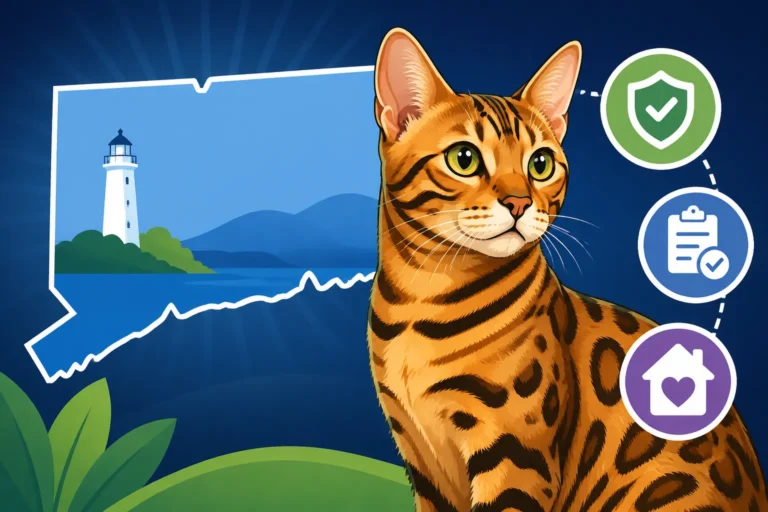
| Early Gen Restricted | F1-F3 (or F4) restricted/banned; SBT allowed | Georgia, Massachusetts, Connecticut | Permits, licenses, secure enclosures for early gens |
| Generally Allowed | SBT (F4+) generally allowed | Florida, Texas, Washington | Standard pet laws apply; check local ordinances |
| Permit Required | Specific generations require permits | Varies by city/county within allowed states | Application, inspection, proof of care, insurance |
Please remember, this table is a generalization. Laws change, and specific city ordinances can override state rules. Always consult official state and local government websites or animal control agencies for the most accurate and up-to-date information.
The City & County Conundrum: Local Ordinances Matter
Even if your state allows Bengal cats, your local city or county might have its own set of rules, often stricter than the state’s. This is a crucial point that many prospective owners overlook, leading to unexpected legal troubles. It’s not enough to check your state; you must check your specific municipality. The phrase "ignorance of the law is no excuse" rings particularly true here, and you don't want to find yourself in a situation where your beloved pet is suddenly deemed illegal by a local animal control officer.
Why Local Laws Can Override State Laws
In the American legal system, local governments (cities, counties, towns) often have the authority to enact ordinances that are more restrictive than state laws, as long as they don't directly contradict them. This means that a state might have a general allowance for F4+ Bengal cats, but your city could have a specific ordinance banning all "hybrid wild cats" or even all Bengals, regardless of generation. This creates pockets of illegality within states that are otherwise considered "Bengal-friendly."
The rationale behind these local ordinances often stems from specific community concerns, local animal control resources, or past incidents. For instance, a city council might be swayed by a vocal group of residents concerned about exotic animals, or perhaps they simply don't have the resources to handle potential issues arising from larger, more active cat breeds. It's a frustrating reality, but one you absolutely cannot ignore when planning to bring a Bengal into your home. This is especially pertinent for jurisdictions where New York City Bans the Bengal Cat the State Allows, highlighting the complex layers of law.
How to Research Your Local Bengal Cat Ordinances
Finding this information can sometimes feel like a treasure hunt, but it's a necessary step. Start by visiting your city or county government's official website. Look for sections on "Animal Control," "Animal Ordinances," "Exotic Pets," or "Permits and Licenses." Many municipalities have their full code of ordinances available online, which you'll need to pore over. Keywords to search for include "Bengal cat," "hybrid," "wild cat," "exotic animal," and "felidae." Don't be afraid to call your local animal control department directly or even the city clerk's office. Be polite, explain you're researching pet ownership, and ask for specific guidance regarding Bengal cats.
When speaking with officials, it’s helpful to have the exact F-number of the Bengal you're considering, as this is often the deciding factor. Ask for the specific code section numbers, so you can refer back to the written law. Never just take a verbal "yes" or "no" as gospel; try to get confirmation in writing if possible, or at least note down the name of the person you spoke with and the date. This diligence helps you understand How to Read Your City Code for a Bengal Cat effectively.
Common Local Restrictions and Permits
Local restrictions can take many forms. Beyond outright bans, cities might require:
- Special Permits: Similar to state-level permits, these might demand application fees, property inspections, and proof of secure enclosures.
- Liability Insurance: Some cities mandate that owners of "exotic" or "hybrid" animals carry a certain amount of liability insurance to cover potential damages or injuries.
- Microchipping and Registration: While good practice for any pet, some localities specifically require it for Bengals, linking the cat directly to its owner in their records.
- Outdoor Containment Rules: Even if a Bengal is allowed indoors, there might be specific requirements for outdoor access, such as a fully enclosed catio that prevents escape and protects local wildlife. This is especially true given A Bengal Cat Opens Cabinets, Doors and Drawers and can be a skilled escape artist.
It’s not just about what is banned; it's about what is required to own a Bengal legally and responsibly. Failing to comply with these local rules, even if you’re perfectly legal at the state level, can result in hefty fines, confiscation of your cat, and a lot of emotional distress. This is the stage where the advice of a brand like Healthy Paws, which offers pet insurance, might become relevant, as some policies might have exclusions or special conditions for certain breeds or types of animals, especially if they are considered "exotic" by local ordinances.
Navigating the Legal Landscape: Owning a Bengal Cat Responsibly
Once you've done your homework and confirmed that Bengal cats are legal in your specific location, the journey isn't over. There are practical steps you need to take to ensure your ownership is not only legal but also responsible and fully documented. This involves proving your cat's heritage and adhering to any permits or regulations. Skipping these steps can lead to severe consequences, turning a joyful new pet experience into a legal nightmare.
Proving Your Bengal Cat's Generation
The F-number is the cornerstone of legality, but how do you prove it? A reputable Bengal breeder will provide you with official registration papers from a recognized cat registry, such as The International Cat Association (TICA). These papers will clearly state the cat's lineage and generation. This documentation is your primary proof that your Bengal is indeed an F4 SBT, an F5, or whatever generation is permitted in your area. Without these papers, you might struggle to convince authorities, especially if your cat looks particularly wild or if a neighbor reports you.
Beyond registration papers, some breeders may also offer DNA testing results that can confirm the percentage of Asian Leopard Cat ancestry. While not always legally required, having this additional documentation can be a powerful tool for proving your cat's classification to skeptical officials. Always ensure your breeder is transparent and willing to provide all necessary paperwork. Never, ever buy a Bengal cat without proper registration papers that clearly state its generation; otherwise, you have no definitive proof of its legality. You can learn more about How to Prove Your Bengal Cat's Generation for documentation details.
Obtaining Necessary Permits and Licenses
If your state, county, or city requires a permit or license for Bengal cat ownership, you must go through the proper channels to obtain it before you bring your cat home. This process usually involves filling out applications, paying fees, and potentially undergoing inspections. The specific requirements can vary widely, but typically include:
- Application Forms: Detailed forms asking for your information, the cat's information, and sometimes a declaration that you understand and will abide by the regulations.
- Fees: These can range from a nominal registration fee to substantial annual permit costs, especially for early generations.
- Veterinary Records: Proof of vaccinations, spay/neuter (if required), and general health.
- Property Inspections: For early-generation Bengals, officials might inspect your home to ensure secure enclosures, adequate space, and safety measures.
- Proof of Insurance: Some permits require proof of liability insurance specifically covering the "exotic" or "hybrid" animal.
It's a bureaucratic process, but it's non-negotiable. Don't try to skirt the rules, as the penalties can be severe. This diligence ensures you're a responsible pet owner and that your beautiful Bengal isn't living under a cloud of legal uncertainty.
The Risks of Non-Compliance
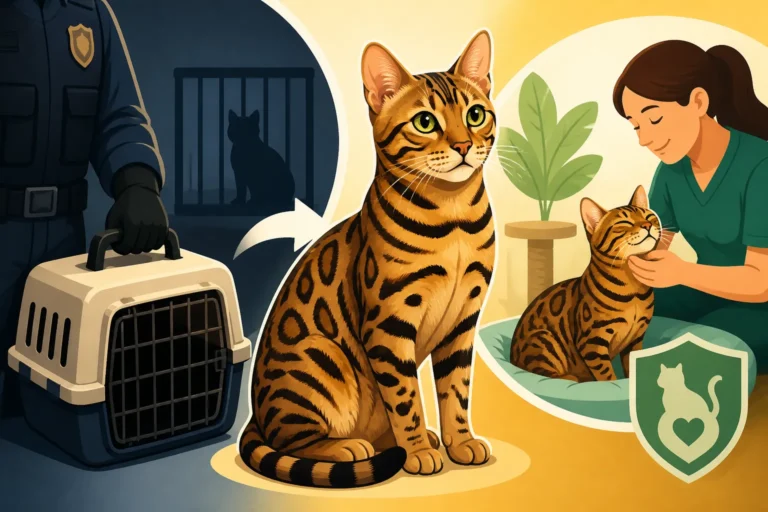
The consequences of owning an illegal Bengal cat can be devastating. At best, you might face significant fines. At worst, your beloved pet could be confiscated, rehomed to a rescue (if one can be found in a legal area), or in extreme cases, even euthanized. Imagine the emotional toll of having your family member taken away simply because you weren't aware of a local ordinance. In addition to losing your cat, you could face legal charges, civil penalties, and potentially a criminal record depending on the severity and nature of the violation.
Furthermore, non-compliance can affect other aspects of your life. Homeowner's insurance policies might be voided if you're housing an illegal animal, leaving you without coverage in case of an incident. Veterinary care might also become complicated if vets are hesitant to treat an animal that is illegally owned. The long-term costs and emotional distress far outweigh the effort of doing your due diligence upfront. Understanding What Happens to a Confiscated Bengal Cat can be a sobering realization and a powerful motivator for compliance.
Special Cases and Considerations for Bengal Cat Owners
Beyond the initial legality check, there are several other situations where Bengal cat owners need to be particularly aware of the law. Life happens – people move, travel, or encounter unexpected issues with housing or insurance. Each of these scenarios can trigger new legal questions that require careful planning and understanding of the specific regulations.
Moving with a Bengal Cat Across State Lines
If you're planning a move, whether across state lines or even just within a state to a new city, you absolutely must re-evaluate the legality of your Bengal cat in your new location. What was perfectly legal in your old town might be banned outright in your new one. This is a common pitfall for owners who assume that because they legally owned their cat in one place, its status remains unchanged elsewhere. Many people have faced heartbreaking situations because they didn't check local laws before moving.
Before packing your boxes, research the animal control ordinances for your new address. Call the relevant authorities and confirm the Bengal cat regulations, especially regarding F-numbers. If your cat's generation is restricted or banned in your new home, you'll need to make difficult decisions: find a new home for your cat in a legal area, or reconsider your move. Never assume; always verify. This is exactly why it's crucial to understand What Happens If You Move With an Illegal Bengal Cat.
Traveling by Air or Other Transportation with a Bengal Cat
Traveling with a Bengal cat, especially by air, adds another layer of complexity. Airlines have their own rules regarding pet travel, often distinguishing between domestic cats and "hybrid" or "wild" cats. Early-generation Bengals might be classified as exotic animals, making them ineligible for cabin travel and, in some cases, even cargo travel. The specific rules depend on the airline, the origin, and the destination, including any layover locations, as each jurisdiction involved might have its own regulations.
Beyond air travel, road trips can also pose challenges. If you're driving through a state where Bengals are restricted or banned, even a temporary stop could put you in a difficult legal position. Always carry your cat's registration papers and any necessary permits when traveling. It's wise to contact airlines well in advance to confirm their specific policies for Bengal cats and to map out your route to avoid any legal hot spots if traveling by car. This meticulous planning ensures a smooth journey for both you and your feline companion.
Landlord and Homeowner's Insurance Challenges
Even if your Bengal is perfectly legal in your area, you might encounter issues with landlords or homeowner's insurance providers. Many rental properties have breed restrictions for dogs, and increasingly, some are extending these to certain cat breeds, including Bengals, due to their perceived "exotic" nature or high energy levels. A landlord might have a blanket "no exotic pets" policy, which could be applied to Bengals regardless of their generation. It's imperative to discuss pet policies with your landlord before signing a lease and ideally get their approval for a Bengal in writing.
Homeowner's insurance is another area of concern. Some insurance companies might categorize Bengals as “high-risk” pets, refusing to cover them or charging a higher premium. In the event of an incident involving your Bengal, your policy might deny coverage if the cat was not disclosed or if it falls under an exclusion for “exotic” or “hybrid” animals. Always review your insurance policy carefully and speak with your agent to understand any potential limitations or additional costs associated with owning a Bengal. Checking Whether a Landlord Can Ban a Bengal Cat or if your insurer covers certain breeds can prevent future headaches.
Beyond Legality: Ethical Ownership and the Bengal Cat
Navigating the legal intricacies of Bengal cat ownership is undeniably important, but it's only one piece of the puzzle. True responsible ownership extends far beyond merely complying with the law. It involves ethical considerations, a deep understanding of the breed's needs, and a commitment to providing a loving, stimulating home environment. These beautiful, active cats require more than just food and a litter box; they need engagement, proper care, and a secure place to thrive.
Finding a Reputable Breeder
One of the most critical steps in ethical Bengal ownership is choosing a reputable breeder. A good breeder will prioritize the health and temperament of their kittens over profit. They will be transparent about the cat's lineage, providing TICA (The International Cat Association) registration papers that clearly state the F-number and parentage. They'll also provide comprehensive health records, including genetic testing for common Bengal-related health issues such as PRA-b and PK-Deficiency, and regular echocardiograms (heart scans) for HCM. A reputable breeder will also ensure their kittens are well-socialized, vaccinated, and typically spayed or neutered before going to their new homes.
Beyond paperwork, a reputable breeder will ask you a lot of questions. They'll want to ensure you understand the Bengal breed's unique needs, activity levels, and legal status in your area. They should be a resource for you throughout your cat's life. Avoid breeders who refuse to show you the parents, don't provide proper documentation, sell kittens that are too young, or don't seem concerned with where their cats are going. Often, breeders who are cutting corners on health testing or registration are also cutting corners on welfare, and you may find their Bengals are not legal or healthy. Always ask to see What a Bengal Cat Breeder Should Have Tested.
Considering Bengal Cat Rescue Options
While many Bengals come from breeders, rescue organizations also offer a lifeline to these magnificent cats. Sometimes, owners realize they can't meet the demanding needs of a Bengal, or their circumstances change, leading them to surrender their pet. Adopting a Bengal from a rescue can be an incredibly rewarding experience, giving a deserving cat a second chance. Rescue organizations often have a thorough screening process to ensure potential adopters are a good match for the cat's personality and needs, and that they understand the legal requirements.
When adopting from a rescue, they will typically provide all available health and historical information, and the cat will usually be spayed/neutered, vaccinated, and microchipped. The rescue fee is usually much lower than buying from a breeder, and it helps cover the costs of care the cat received. However, Bengals in rescue are often adults, so you might miss the kitten phase. But on the flip side, their personality is already established, making it easier to find a cat that truly fits your lifestyle. Finding Where to Find a Bengal Cat Rescue is a great starting point for those considering adoption.
Understanding the Commitment Beyond the Law
Even with all the legal boxes checked and a healthy cat in your home, owning a Bengal is a significant commitment. These are not your average couch potato cats. Bengals are known for their high energy, intelligence, vocal nature, and love of water. They require significant mental and physical enrichment to prevent boredom and destructive behaviors. This means regular interactive play sessions, puzzle feeders, tall cat trees for climbing, and possibly even a cat wheel. Many Bengal owners invest in secure outdoor enclosures, or "catios," to allow safe outdoor exploration.
The financial commitment is also considerable, from high-quality food to veterinary care, toys, and insurance. The average lifespan of a Bengal cat is long, often 12 to 16 years, so you're committing to over a decade of dedicated care. Before bringing a Bengal home, consider if you truly have the time, energy, and resources to meet its unique needs. A Bengal cat thrives when its owners are fully engaged and prepared for the vibrant, active personality that makes this breed so special.
Disclaimer
This article is for general informational purposes only and does not constitute professional advice. Laws, prices and regulations vary by location and change over time. Consult a qualified professional for guidance on your specific situation.