Whether a Bengal Cat Hunts a Small Pet
One of the most pressing concerns for many prospective Bengal cat owners, especially those who already share their homes with smaller, more vulnerable creatures, is whether this wild-looking feline will view their existing pets as prey. It's a completely valid fear, given the Bengal's striking appearance and renowned energy, and this guide aims to unpack the realities of the Bengal cat's prey drive and offer realistic expectations and strategies for keeping all your beloved animals safe.
Understanding the Bengal Cat's Instincts
Let's be honest, the first thing that draws many of us to Bengal cats is their incredible resemblance to their wild ancestors. That beautiful rosetted coat, those piercing eyes – it’s all part of their allure. But it also means they come with a genetic blueprint that's very different from your average domestic tabby, particularly when it comes to their natural instincts. You're not just getting a pretty cat; you're getting a cat with a powerful internal drive that's wired for hunting.
The Wild Ancestry Connection
Every Bengal cat, no matter how many generations removed, has the Asian Leopard Cat (ALC) in its family tree. This isn't just a fun fact; it's a crucial piece of information that dictates much of their behavior. The ALC is a small, solitary wild cat known for its incredible hunting prowess. They're adept at stalking, pouncing, and catching small mammals, birds, and even insects in their natural habitat. While selective breeding has certainly mellowed the Bengal over generations, particularly from the F4 generation and beyond (SBT Bengals), that core programming for hunting remains. It's an instinct that runs deep, like a river carving its way through stone, and it’s something you simply cannot train out of them entirely. It’s part of what makes them a Bengal.
Think of it like this: you can teach a retriever not to jump on the furniture, but you can't teach it not to want to retrieve. Similarly, you can manage a Bengal's environment, but you can't erase that fundamental urge to stalk and capture. This isn't about malice; it's about millions of years of evolutionary success packed into a domestic house cat. Their heightened senses, incredible agility, and powerful musculature are all designed for efficiency in the hunt. For more about their background, you might want to read What an Asian Leopard Cat Is Behind Every Bengal Cat.
Manifestations of Prey Drive in Domestication
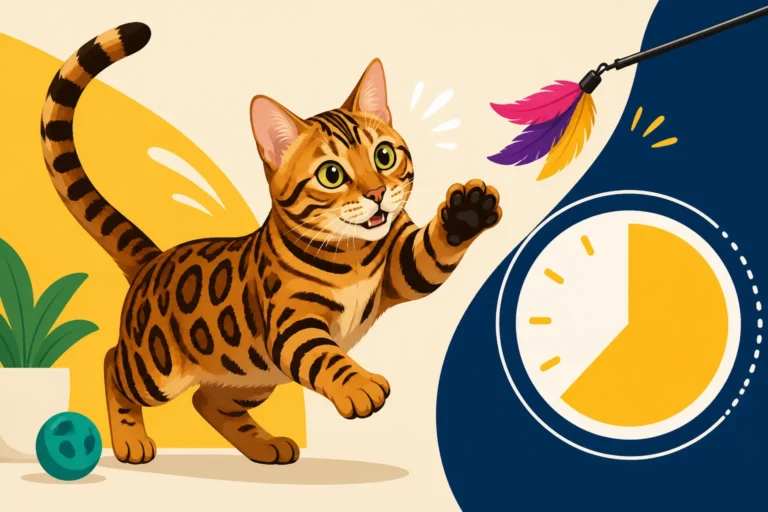
So, what does this ingrained prey drive actually look like in your living room? It’s not always overt hunting. Often, it manifests as incredibly energetic and focused play. A Bengal cat isn't just batting at a toy; they're practicing. They'll stalk a feather wand with intense concentration, their eyes narrowed, body low to the ground, tail twitching slightly before an explosive pounce. They might 'kill' their toy, holding it down with their paws and delivering a "neck bite" that would be lethal to a real mouse.
This drive extends to anything small and moving. Dust bunnies, shadows, dropped pens, even your wiggling toes under a blanket can trigger that instinct. They might chase reflections, climb to the highest point to survey their "territory," and exhibit incredible bursts of speed and agility. This intense focus on movement and sound is what makes them such effective hunters and such captivating companions. However, it’s also what puts any small, scurrying creature at risk. They see movement, and their brain says, "prey." This doesn't necessarily mean they are aggressive; it means they are instinctual.
Assessing the Risk to Small Pets
The question isn't if a Bengal cat has a prey drive, but how that drive translates to risk for specific small pets in your home. Not all small pets are created equal in the eyes of a Bengal, and not all Bengals are identical in their temperament, although the underlying instinct is always present.
Defining "Small Pet"
When we talk about "small pets," we're usually referring to animals that a cat could reasonably overpower or injure. This list typically includes:
- Rodents: Hamsters, gerbils, mice, rats, guinea pigs. These are particularly vulnerable due to their size, scurrying movements, and natural position at the bottom of the food chain for many predators.
- Birds: Parakeets, finches, canaries, cockatiels. Their fluttery movements and delicate bodies make them prime targets. Even larger birds like African Greys or Amazons could be at risk if cornered or if the Bengal is particularly determined.
- Reptiles: Small lizards (geckos, anoles), snakes. Their slithering movements can be highly stimulating to a Bengal.
- Fish: While often overlooked, small fish in tanks can also be a target. Bengals love water, and the flickering movement of fish can provoke intense interest, leading to pawing at the tank or even trying to get into it. You might find this interesting: Whether an Aquarium Is Safe Around a Bengal Cat.
- Small Rabbits: While some rabbits can be quite large, smaller breeds or juveniles can still be seen as prey.
Pets like dogs and larger cats are generally not considered "small pets" in this context, though proper introductions and supervision are still crucial for any multi-pet household. The general rule of thumb is: if it moves quickly, is significantly smaller than the Bengal, and could potentially be caught and killed in the wild by a small predator, it's at risk.
Individual Bengal Cat Variations
While the prey drive is universal, its intensity can vary from one Bengal to another. Just like people, cats have individual personalities. Some Bengals might have a more pronounced prey drive, constantly on the lookout for anything that moves, while others might be more focused on their human companions or specific toys.
Factors that can influence this include:
- Generation: Early generation Bengals (F1-F3) are much closer to their wild ancestors and typically exhibit a far stronger, less inhibited prey drive. An SBT Bengal (F4 and beyond) is considered fully domestic, but the instinct is still there, just usually more manageable.
- Early Socialization: A Bengal kitten exposed to a variety of sights, sounds, and interactions (including with other animals) in a controlled, positive way might learn some inhibition, but this doesn't erase the fundamental instinct.
- Environmental Enrichment: A bored Bengal is a dangerous Bengal. If they don't have enough appropriate outlets for their energy and hunting instincts, they're more likely to seek them out, sometimes in destructive ways. This could involve tormenting other pets. This is why How Much Enrichment a Bengal Cat Actually Needs is so critical.
- Training and Boundaries: While you can't train away instinct, consistent training, redirection, and clear boundaries can help a Bengal understand what is and isn't acceptable behavior within your home.
It's vital not to make assumptions. Never think "my Bengal is different" or "they're so sweet, they'd never hurt a fly." When it comes to prey drive, instinct often overrides learned behavior, especially if conditions are right (e.g., the small pet moves suddenly, the Bengal is bored, or an opportunity arises).
Evaluating Your Specific Home Environment and Pets
Before bringing a Bengal cat into a home with small pets, or vice versa, you need to conduct a brutally honest assessment of your environment and the personalities of all animals involved.
Consider:
- Existing Pet's Temperament: Is your small pet flighty and prone to darting movements that could trigger a Bengal's chase instinct? Or are they more laid-back?
- Bengal's Temperament: Is your Bengal particularly assertive, restless, or intensely focused during play? Some Bengals are always on the go; you can learn more about this in The Bengal Cat Is the Most Active Cat You Can Own.
- Housing Security: Are the cages, tanks, or enclosures for your small pets absolutely escape-proof and Bengal-proof? Can your Bengal bat at them, knock them over, or even manage to open them?
- Supervision Levels: How much direct, active supervision can you provide? Can you guarantee that your small pets will never be left unsupervised with the Bengal, even for a moment?
- Space: Do you have enough space to create entirely separate living zones, not just temporary separation, but permanent, secure areas where the Bengal cannot access the small pets?
It’s a tough evaluation, and sometimes the answer, for the safety and well-being of all animals, is that these species cannot safely coexist under the same roof. It's not a reflection on you or your love for animals, but rather a realistic acknowledgment of the Bengal's natural programming.
Strategies for Coexistence: When It's Possible, and When It's Not
Trying to blend a high-prey-drive cat with small, vulnerable animals is like mixing oil and water – it might look okay for a moment, but deep down, they're always distinct. While absolute safety is the goal, managing the risk requires consistent, diligent effort.
Strict Separation Protocols
This is, by far, the most critical strategy if you're determined to have both a Bengal and small pets. It means complete, unyielding physical separation at all times. This isn't just closing a door; it's about creating secure, impenetrable barriers.
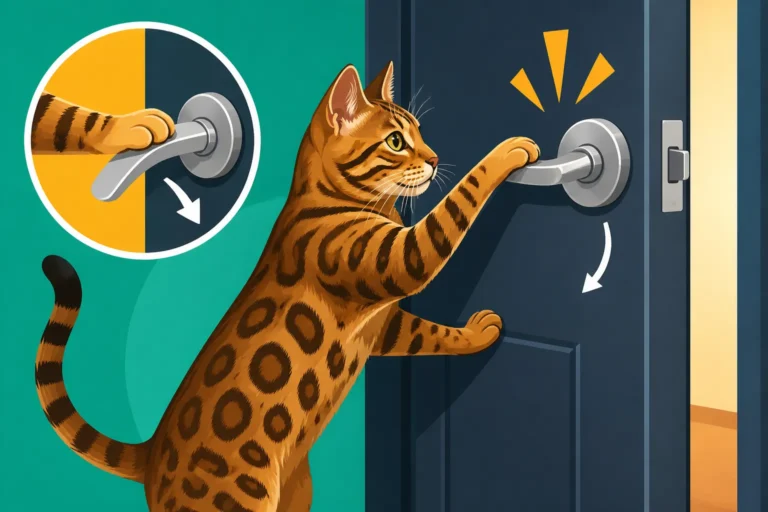
- Dedicated Rooms: Small pets should have their own dedicated room, ideally one that the Bengal cannot access under any circumstances. This means solid doors that latch securely, no gaps under doors, and windows that are securely screened. Bengals are incredibly intelligent and persistent; A Bengal Cat Opens Cabinets, Doors and Drawers and will test every boundary.
- High-Quality Cages/Enclosures: Even within a dedicated room, the small pet's enclosure must be robust. For rodents and birds, this means heavy-gauge wire, secure latches (not just flimsy clips), and potentially placing the cage on a sturdy, high surface that the Bengal cannot jump to or pull down. For fish, tanks should have heavy, securely fastened lids. Consider reinforced glass tanks or even custom-built enclosures if your small pets are particularly delicate.
- No Unsupervised Time: This cannot be stressed enough. Never, ever leave your Bengal unsupervised in the same room as a small pet, even if the small pet is in a supposedly secure cage. Accidents happen in a blink of an eye. A Bengal might figure out a latch, a cage might fall, or a small pet might manage a momentary escape.
- Scheduled Access: You might consider a schedule where the Bengal has free roam of certain areas at certain times, and the small pets have their turn when the Bengal is securely confined elsewhere. This helps prevent boredom for the Bengal while ensuring the safety of the smaller animals.
This level of separation requires significant dedication and is often only feasible in larger homes where separate living zones can be established without causing undue stress or isolation for any pet.
Enrichment as a Distraction
A bored Bengal cat is a dangerous Bengal cat. Their energy and intelligence mean they constantly need stimulation. If they don't get enough appropriate outlets for their hunting instincts, they will find their own, and unfortunately, a small pet can become an accidental "toy." Providing ample enrichment is not a solution to prevent hunting, but it is a crucial component of managing their overall behavior.
- Interactive Play: Dedicate significant time each day to active, interactive play sessions with your Bengal using wand toys, laser pointers (used carefully to avoid frustration), and puzzle toys. These sessions should mimic hunting behavior: stalking, chasing, pouncing, and a definitive "kill" at the end (allowing them to catch the toy). How Many Hours a Day a Bengal Cat Plays is a good indicator of the commitment needed.
- Vertical Space: Bengals love to climb and survey. Provide tall cat trees, wall shelves, and cat walks. This allows them to express their natural inclination to be high up, where they would naturally observe prey in the wild. Look for sturdy options on Amazon that can withstand their powerful jumps and intense play. How High a Bengal Cat Can Jump shows just how much vertical space they demand.
- Puzzle Feeders: Instead of just putting food in a bowl, make mealtime a game. Puzzle feeders force them to "hunt" for their food, engaging their minds and instincts. This can help burn mental energy and reduce the drive to find other "challenges."
- Cat Wheels: For some Bengals, a cat wheel can be an incredible outlet for their boundless energy, allowing them to run off steam safely indoors. They truly are The Bengal Cat Is the Most Active Cat You Can Own.
- Outdoor Enclosures (Catios): A secure catio can provide safe outdoor stimulation, allowing them to observe birds and squirrels from a distance without posing a threat. This can be a fantastic way to satisfy their innate curiosity and need for varied sensory input.
While enrichment helps manage their energy and focus, it's a preventative measure for boredom, not a guarantee against their prey drive. Even a well-exercised Bengal will still react to a small, scurrying creature.
Training and Desensitization (and its Limits)
Can you train a Bengal not to hunt? The short answer is no, not entirely. Their prey drive is hardwired. However, you can manage their responses and teach them impulse control to some degree, especially if you start early.
- Clicker Training: Bengals are highly intelligent and respond well to clicker training. You can teach them commands like "leave it" or "come" which can be invaluable in redirecting their attention. Consistency is key, and positive reinforcement works wonders. Their intelligence is remarkable; you'll be amazed at How Intelligent a Bengal Cat Is.
- Redirection: If you see your Bengal intensely focused on a small pet's enclosure, immediately redirect their attention with a favorite toy or a training session. The goal is to interrupt the predatory sequence before it escalates.
- "Meet and Greet" Caution: Some owners attempt to slowly introduce a Bengal to a small pet in a controlled environment, hoping for desensitization. This is incredibly risky and generally not recommended. Even if a Bengal appears calm, one sudden movement from the small pet could trigger a fatal reaction. The stress this places on the small pet, constantly living in fear of a predator, is also a significant welfare concern. In almost all cases, true "desensitization" to live prey simply isn't achievable with a Bengal cat. Their wiring is too strong. It's often safer to assume the worst and maintain strict separation.
| Small Pet Type | Vulnerability to Bengal | Recommended Safety Measures |
|---|---|---|
| Hamsters, Gerbils | Very High | Heavy-gauge, escape-proof cage; dedicated, locked room; never unsupervised. |
| Small Birds | Very High | Strong cage with secure latches; dedicated, locked room; high placement out of reach. |
| Guinea Pigs, Rats | High | Robust, heavy enclosure (metal/thick plastic); dedicated, locked room. |
| Small Reptiles | High | Terrarium with heavy, locking lid; ensure no gaps for paws; dedicated room. |
| Fish | Moderate | Heavy-duty tank lid; placed on sturdy stand; ensure Bengal cannot knock over or get paws in water. |
| Rabbits (small) | High | Very strong hutch/cage, ideally in a separate room. Supervise any interaction. |
Creating a Safe Environment
A Bengal cat in a home with small pets demands a fortress mentality when it comes to security. You can't just hope for the best; you must actively engineer safety into your living space. This isn't just about protecting the smaller animal; it's also about preventing a stressful or dangerous situation for your Bengal, too.
Secure Habitats for Small Pets
This goes beyond just a basic cage. You need to think like a Bengal, anticipating every possible angle of attack or infiltration.
- Cage Material and Construction: For rodents and birds, opt for cages made of thick, chew-proof wire, not flimsy plastic or thin bars. The spacing between bars should be narrow enough to prevent a Bengal from reaching a paw inside. Ensure all doors and access points have strong, predator-proof latches, not just simple clips that could be fiddled with by clever paws. Many great options can be found on Amazon, but always read reviews with a Bengal's strength and intelligence in mind.
- Placement is Key: Position cages on sturdy, heavy furniture that the Bengal cannot knock over or climb onto easily. Avoid placing them near windows, ledges, or shelves that the Bengal uses for climbing, as this provides a direct visual and physical stimulus. The higher the better, but ensure the furniture itself is immovable. For aquariums, ensure the stand is robust and the tank itself is too heavy to shift.
- Tank Lids and Covers: For aquariums and terrariums, ensure lids are heavy, secure, and have no gaps where paws could reach. A determined Bengal will push, pull, and try to pry any opening. Heavy glass lids or locking mesh screens are essential.
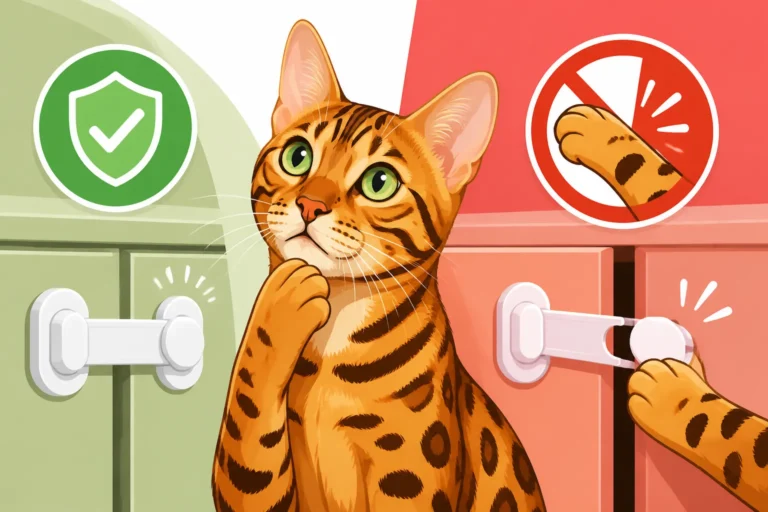
Remember, a cage that’s "cat-proof" for a typical domestic cat might be child's play for a Bengal. Their strength, agility, and problem-solving skills are often underestimated. You need to really think about How to Cat Proof Cabinets From a Bengal Cat and apply that same level of diligence to pet enclosures.
Vertical Space and Escape Routes for Bengals
While the focus is often on protecting the small pets, it's also important to manage the Bengal's environment to reduce their stress and provide outlets for their natural behaviors. Giving them ample vertical space and opportunities to survey their domain can sometimes reduce their fixation on things at floor level.
- Tall Cat Trees and Shelves: Install very tall, sturdy cat trees and wall-mounted shelves or "cat highways" in common areas. This allows your Bengal to climb, observe, and feel secure from a height. A good cat tree on Amazon might be a significant investment, but it's worth it for a Bengal's mental and physical health.
- Designated "Bengal Zones": Consider areas of your home that are primarily for the Bengal, with plenty of enrichment, toys, and climbing opportunities, and keep small pets entirely out of these zones. This helps define boundaries and expectations for your Bengal.
- Safe "Escape" for Bengal: In areas where a small pet might accidentally be visible (e.g., if you temporarily move a cage for cleaning), ensure the Bengal has plenty of space to retreat or be distracted. This is more about managing potential frustration or over-excitement than direct safety, but it contributes to a calmer household.
Preventing Accidental Encounters
The best defense is often a proactive one, eliminating any chance of an accidental meeting between your Bengal and a smaller pet.
- Double Doors or Air Locks: If you have a dedicated room for small pets, consider adding a second door or an airlock system (like a small hallway or vestibule) to create an extra layer of security. This is particularly useful if your Bengal is a "door-dasher."
- Secure Latches and Locks: Beyond just closing doors, consider child-proof locks or barrel bolts on doors to rooms housing small pets. Bengals can be incredibly clever at opening lever handles or even pushing open slightly ajar doors.
- Supervision During Cleaning/Feeding: When you need to access your small pet's enclosure for cleaning or feeding, ensure your Bengal is securely confined in another room. Do not take chances. Even a quick moment of distraction can lead to disaster.
- Never Leave Small Pets Out: Even if you think your Bengal is sleeping soundly, never take a small pet out of its enclosure for "playtime" or "snuggles" if your Bengal is in the vicinity. The risk is simply too high. What a Bengal Cat Does All Day involves a lot of napping, but they are always ready for action.
- Guest Awareness: Inform any houseguests about the strict protocols. A well-meaning visitor who unknowingly leaves a door ajar or lets a small pet out of its cage could cause a tragedy.
Ultimately, the burden of proof for safety rests entirely on the human owner. You must assume your Bengal will try to get to any small pet, and plan accordingly.
Making the Difficult Decision
Sometimes, despite our best intentions and efforts, the most responsible decision is to acknowledge that certain pet pairings are just not safe or fair to the animals involved. It’s a heartbreaking realization for many, but one that prioritizes the welfare of all.
Prioritizing Pet Safety
The primary consideration must always be the safety and well-being of all your animals. A small pet living in constant fear, or a Bengal cat constantly frustrated by unfulfilled instincts, is not living its best life.
- The Cost of Constant Vigilance: Maintaining strict separation and constant vigilance is incredibly demanding. It can lead to stress for you and potentially compromise the quality of life for your pets if corners are cut due to exhaustion or forgetfulness. Is it truly sustainable for the entire lifespan of your pets?
- The Small Pet's Stress: Even if a Bengal never physically touches a small pet, the mere presence of a predator can cause immense stress. A bird constantly chirping in alarm, a hamster hiding perpetually, or a rabbit displaying fear behaviors – these are signs that their welfare is compromised. Chronic stress can lead to health problems in small animals.
- The Bengal's Fulfillment: While you can provide enrichment, constantly denying a Bengal access to something that triggers its intense prey drive can also lead to frustration. While this is less critical than the small pet's immediate safety, it's worth considering for the Bengal's overall happiness and temperament.
It’s about more than just preventing a physical attack; it’s about creating a harmonious and safe environment where all pets can thrive, not just survive.
Realistic Expectations
It's easy to fall in love with the idea of a multi-species household where everyone gets along. With Bengal cats and small pets, this is rarely a realistic expectation.
- Accepting Natural Instincts: You cannot change a Bengal cat's fundamental nature. Their prey drive is not a behavioral problem to be "fixed" with training; it's an intrinsic part of who they are. Expecting them to ignore a small, vulnerable animal is like asking a bird not to fly.
- One Incident Is All It Takes: Unlike issues like scratching furniture (which is annoying but usually not fatal), a lapse in judgment or a momentary failure of security with a Bengal and a small pet can have irreversible, tragic consequences. There is no second chance.
- The Stress on You: Living with the constant anxiety of whether your Bengal might somehow access your small pet can take a significant toll on your mental well-being. This stress can then inadvertently affect how you interact with your pets.
Be honest with yourself about what you can realistically manage. If the constant vigilance feels overwhelming, or if you find yourself taking shortcuts, it's a sign that the situation might be untenable in the long run. Sometimes What a Bengal Cat's Temperament Is Really Like just doesn't mesh with other species.
Rehoming Considerations
If, after careful consideration, you come to the difficult conclusion that a Bengal cat and your small pets cannot safely coexist, you have tough decisions to make. This is never easy, and it often involves significant emotional pain.
- Prioritizing the Most Vulnerable: In most cases, the small pet is the most vulnerable and the one whose safety should be paramount. If the risk is too high, finding a new, safe home for the small pet (where no predatory cat is present) might be the kindest option.
- Rehoming the Bengal: If you already have established small pets and decide to bring a Bengal into your home, and then find that the situation is unmanageable or too stressful, rehoming the Bengal to a suitable environment (one without small prey animals) might be necessary. This should always be done responsibly, ideally through a reputable Bengal rescue organization or by finding an experienced owner willing to take on the commitment. You can find places to start looking by searching Where to Find a Bengal Cat Rescue.
- Seeking Professional Advice: If you're struggling with this decision, consult with a certified feline behaviorist. They can help you assess your specific situation, offer expert advice on risk management, and guide you through the process of making the best decision for all your animals.
The desire to have all kinds of pets under one roof is understandable, but with a Bengal cat, it's crucial to put their powerful instincts first and make choices that ensure the safety and well-being of every creature in your care.
Disclaimer
This article is for general informational purposes only and does not constitute professional advice. Laws, prices and regulations vary by location and change over time. Consult a qualified professional for guidance on your specific situation.