Whether Washington Restricts a Bengal Cat
Bringing a vibrant, intelligent Bengal cat into your home is an exciting prospect, but the labyrinth of state and local laws surrounding these magnificent hybrids can often feel like navigating a dense jungle. Many prospective owners worry about unknowingly violating regulations, especially when moving or adopting from another state. This comprehensive guide will cut through the confusion and clarify the specific restrictions, if any, on Bengal cat ownership in Washington State, ensuring you can welcome your spotted companion with confidence.
Understanding Hybrid Cat Laws in General
The term "hybrid cat" immediately conjures images of wild animals, and for good reason. Bengal cats, as you know, descend from the Asian Leopard Cat, a small wild feline. Because of this wild ancestry, some states and municipalities have put strict laws in place, often classifying early-generation Bengals as wild animals or exotic pets, even if they're generations removed from their wild ancestor. This is where the "F-number" comes in, and it's absolutely crucial to understand.
The F-number (Filial generation) indicates how many generations removed your Bengal cat is from its wild ancestor. An F1 Bengal has one Asian Leopard Cat parent and one domestic cat parent. An F2 has an F1 parent and a domestic cat parent, and so on. By the time you get to an F4 or an SBT (Stud Book Traditional) Bengal, they are generally considered fully domestic by most cat registries and, crucially, by many state laws. The behavior and temperament often follow this generational distinction; earlier generations tend to retain more wild traits, while later generations are typically indistinguishable from other domestic cat breeds in terms of their core temperament, though still possessing that signature Bengal energy! It's this distinction that often dictates legality.
The frustration comes when states don't uniformly define "domestic" versus "wild." What might be perfectly legal in one county could land you in hot water just across the state line. This patchwork of regulations is precisely why owners often feel so overwhelmed when researching whether they can own a Bengal cat. It's not enough to know if the state allows them; you often need to dig deeper into county and city ordinances, which can have their own set of rules. This can lead to a sense of unease, wondering if you're truly in compliance or if a minor detail could cause issues down the line. Knowing How to Prove Your Bengal Cat's Generation is incredibly important here.
Specifics of Bengal Cat Ownership in Washington State
When it comes to Bengal cats, Washington State takes a fairly pragmatic approach compared to some other states that have outright bans or very strict permitting processes for all generations. This is usually a huge relief for potential owners in the Evergreen State.
The State-Level Stance on Bengal Cats
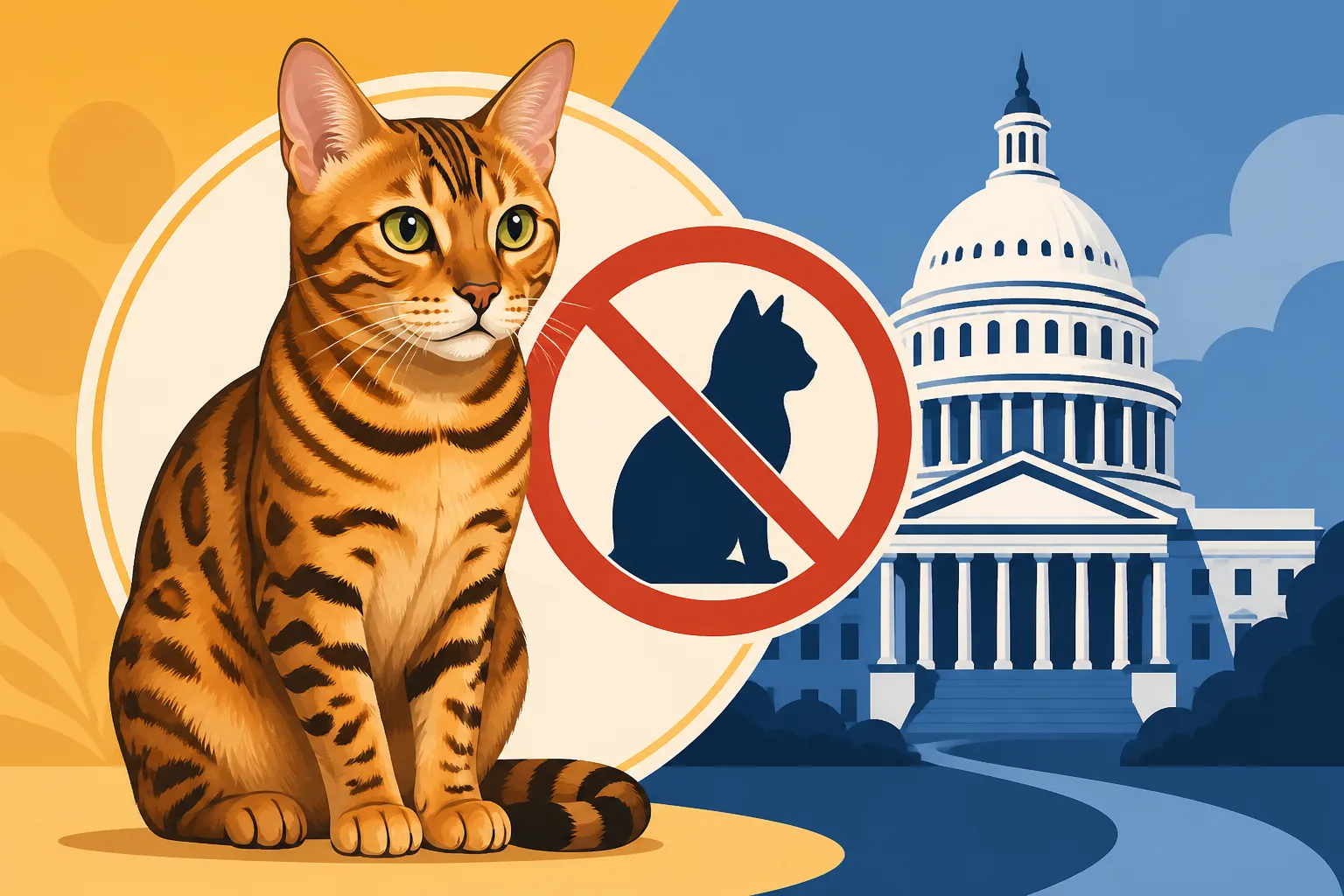
In Washington, the state typically categorizes Bengal cats based on their generation. The good news for most prospective pet owners is that standard, later-generation Bengal cats (typically F5 and beyond, often referred to as SBT Bengals) are generally considered domestic cats. This means they are not subject to the same stringent regulations that apply to truly wild or exotic animals. The state does not have a blanket ban on Bengal cats, nor does it typically require special state-level permits for these later generations. This aligns with how many major cat registries, like The International Cat Association (TICA), classify and register Bengal cats as a recognized domestic breed.
However, the state does draw a line. Early generation Bengal cats (usually F1, F2, and F3) are often seen differently because they retain a closer genetic link and, potentially, more behavioral traits of their wild ancestors. While the state's specific language might vary slightly, these earlier generations often fall under regulations pertaining to "wild animals," "exotic animals," or "dangerous animals," which can carry restrictions on ownership, require special permits, or even be outright prohibited. It’s a crucial distinction, as owning an F1 Bengal in Washington is a very different legal landscape than owning an F5 or SBT. This distinction matters deeply, especially for breeders, but even for pet owners who might encounter an early-generation cat in a rescue situation. You can learn more about What an F Number on a Bengal Cat Means Legally.
County and City Ordinances: Where the Rules Can Change
While Washington State law provides a general framework, it's absolutely vital to remember that counties and individual cities often have their own animal control ordinances that can, and frequently do, impose additional restrictions. This is where many prospective Bengal owners get tripped up, because a cat that's perfectly legal at the state level might be prohibited in their specific city or county.
For example, a city might have a municipal code that prohibits the ownership of any "hybrid cat with wild ancestry," regardless of generation. Other cities might specifically list certain breeds or hybrid crosses that are not allowed. Some may require special permits even for later-generation Bengals if they fall under a broad definition of "exotic pets," even if the state doesn't. This can be incredibly frustrating for someone who has done their homework at the state level only to find their local council has a completely different interpretation. You can't just assume what's legal statewide applies to your front door.
Therefore, before you commit to bringing a Bengal cat home in Washington, you must contact your local animal control department, county clerk's office, or city hall. Ask for the specific ordinances regarding "hybrid cats," "wild cats," "exotic animals," or even just "domestic cats" to see if there are any clauses that would affect Bengal ownership. Don't rely on online forums or anecdotal evidence; get it directly from the source. It’s the only way to avoid potential legal issues, fines, or even the heartbreaking situation of having your beloved pet confiscated. This diligent research is part of How to Check Your State's Bengal Cat Law.
Here's a simplified table illustrating the general approach, though local laws are paramount:
| Bengal Cat Generation | State of Washington (General) | Potential Local (City/County) Variation |
|---|---|---|
| F1, F2, F3 | Often restricted as "wild/exotic," may require permits or be prohibited. | Highly likely to be restricted, require permits, or outright banned. |
| F4, SBT (F5+) | Generally considered domestic; no state-level restrictions. | Varies greatly: usually permitted, but some localities may still have restrictions or permit requirements. |
This table shows why the burden is really on you, the owner, to verify. Even if an SBT Bengal is considered domestic by the state, a local ordinance might still have a loophole that catches them.
Navigating Local Ordinances and Breeder Responsibilities
The process of ensuring your Bengal is legal in your Washington home involves a bit more than a quick search. It requires thorough investigation and open communication, both with authorities and your breeder.
How to Research Your Local Laws
The best approach is proactive. Start by identifying your specific city and county. Then, look for their official government websites. Most cities and counties will have an animal services or animal control section, and sometimes a municipal code or legislative section. Search these areas for keywords like "cat," "animal," "exotic pet," "hybrid," "wild animal," or "dangerous animal."
If you can't find clear answers online, don't hesitate to call. Speak directly with the animal control department or the city/county clerk. Be specific in your inquiry: "I am considering adopting a Bengal cat, which is a hybrid domestic cat. My understanding is that later generations (F4 and beyond, or SBT) are considered domestic by state law. Can you confirm if there are any specific local ordinances in [Your City/County Name] that restrict the ownership of Bengal cats of any generation?" Getting the information directly from them can prevent misunderstandings. This might seem like a lot of effort, but it's far better than facing legal ramifications down the line. Remember, ignorance of the law is rarely an excuse.
The Role of a Responsible Breeder
A reputable Bengal cat breeder in Washington State should be fully aware of the legal landscape. They should be able to tell you which generation their kittens are, explain the F-number system clearly, and provide documentation to prove the cat's lineage. They should also caution you about checking your local laws, as they cannot guarantee legality beyond the state level.
A good breeder will also typically require a contract that outlines what generation your kitten is and often specifies that the cat is for pet ownership (not breeding, unless you've purchased breeding rights). This documentation is critical, especially if you ever need to prove your cat's generation to local authorities. Some breeders will even ask for proof that you've checked your local ordinances before placing a kitten with you, which is a sign of their commitment to responsible ownership and the welfare of their cats. When looking for a kitten, remember to ask Which Questions to Ask a Bengal Cat Breeder.
Ensuring Your Bengal Cat's Wellbeing in Washington
Beyond the legalities, bringing a Bengal cat into your Washington home means committing to their unique needs, regardless of state restrictions. These active, intelligent felines thrive on enrichment, and you'll want to ensure your home environment is safe and stimulating for them.
Creating a Safe and Stimulating Home
Bengal cats are renowned for their energy and curiosity. They need plenty of vertical space, durable toys, and consistent interaction to prevent boredom and destructive behaviors. While Washington might not restrict them, it's your responsibility to provide an environment where they can flourish. Consider investing in tall cat trees, sturdy shelves, and interactive puzzle toys. Many Bengal owners find that a cat wheel is an excellent way for their cats to burn off energy indoors. Online retailers like Chewy offer a vast selection of high-quality cat furniture and toys that can withstand the vigorous play of a Bengal.
Given their love for water, you might even find your Bengal fascinated by a running faucet or a pet fountain. Just be prepared for potential splashing! Their intelligence also means they can learn quickly, so positive reinforcement training and clicker training can be very rewarding, teaching them tricks and even how to walk on a leash. How to Leash Train a Bengal Cat can be a fantastic way to safely explore the outdoors.
Planning for Long-Term Care and Potential Costs
Owning a Bengal cat is a long-term commitment, and their lifespan can be a wonderful The Twelve to Sixteen Years a Bengal Cat Gets. It's not just about the initial cost; it's about providing for their health, nutrition, and well-being for over a decade. While Washington's laws might be relatively lenient, that doesn't reduce the financial responsibility.
Bengals, like all breeds, can be prone to certain health conditions, even with careful breeding. It's wise to consider pet insurance from providers like Healthy Paws to help cover unexpected veterinary costs, which can quickly add up. Regular vet check-ups, quality food (like the high-protein options often recommended for active breeds, though always check with your vet), and preventative care are all part of responsible ownership. Understanding What a Bengal Cat Costs Over Its Lifetime will give you a realistic picture. Even if your Bengal is fully domestic by law, their active nature means they need a home prepared for a robust feline companion.
Disclaimer
This article is for general informational purposes only and does not constitute professional advice. Laws, prices and regulations vary by location and change over time. Consult a qualified professional for guidance on your specific situation.