Why a Rosetted Bengal Cat Costs More Than a Spotted One
When you start looking into bringing a stunning Bengal cat into your life, one of the first things you notice is the price tag. And often, people are left scratching their heads wondering why some of these gorgeous creatures seem to command a significantly higher price than others, especially when it comes to their markings. The reality is, the beautiful rosetted patterns that mimic their wild ancestor, the Asian Leopard Cat, aren't just pretty to look at; they represent a pinnacle of selective breeding and a complex genetic dance that directly impacts their cost. This guide will explore exactly why those coveted rosettes can make a Bengal cat cost more than one with simpler spots.
The Allure of the Rosette: Mimicking the Wild Ancestor
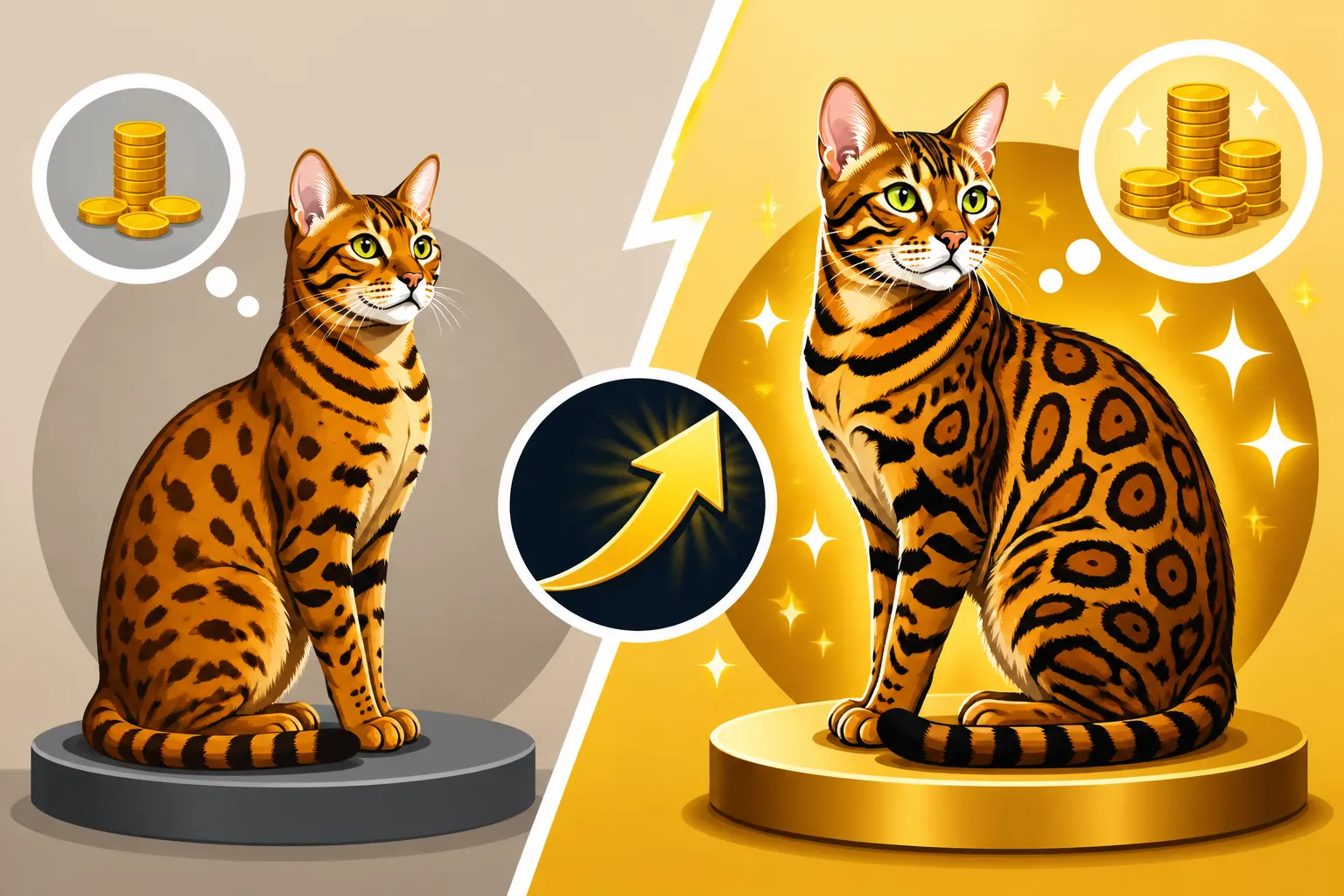
Let's be honest, part of the immense appeal of a Bengal cat is their stunning, exotic appearance, making them look like a miniature wild cat prowling your living room. And nothing screams "wild" more than those intricate, multi-colored rosettes that so perfectly mimic the markings of a leopard or jaguar. Simple spots are lovely, don't get me wrong, but they don't quite capture that same depth and complexity that makes a rosetted Bengal truly stand out. This isn't just a matter of personal taste; it's deeply ingrained in the breed standard and what breeders strive to achieve.
Imagine looking at a painting: a simple dot pattern can be charming, but a masterpiece with layered textures and varying shades instantly commands more attention and appreciation. Rosettes are the feline equivalent of that masterpiece. They aren't just solid dots; they're spots that have a darker outline and a lighter, often reddish or tawny, interior, creating a three-dimensional effect. This is a very specific genetic trait that took years of careful breeding to establish and perfect within the Bengal cat lines. When prospective owners are looking for that ultimate "mini leopard" look, it's the rosettes that truly seal the deal, driving up demand and, consequently, the price. Understanding What a Rosette Is on a Bengal Cat compared to What a Single Spotted Bengal Cat Is helps to clarify this visual difference.
The desire for this particular type of pattern isn't just about aesthetics; it's about the unique heritage of the breed. The whole point of the Bengal was to bring the beauty of the wild Asian Leopard Cat into a domestic companion, and the rosetted pattern is the most direct visual link to that ancestry. Breeders spend immense amounts of time and resources to produce kittens that consistently exhibit these highly sought-after patterns. This means careful selection of breeding pairs, extensive genetic testing, and a deep understanding of feline genetics to improve the quality of rosettes with each successive generation.
The Genetic Puzzle of Rosette Breeding
Producing those perfect, clear, and well-defined rosettes is far from a simple roll of the genetic dice. It's a complex undertaking that requires significant knowledge, experience, and sometimes, a little luck on the breeder's part. While a simple spotted pattern can appear more readily, achieving distinct rosettes, especially the highly prized "donut" or "arrowhead" rosettes, involves very specific gene combinations.
Think of it like baking a gourmet cake versus a basic cupcake. Both are good, but one requires more precise ingredients, a specific technique, and a higher level of skill to get just right. A breeder can't just throw two spotted Bengals together and guarantee rosetted offspring. They must meticulously track pedigrees, understand the genetic contributions of each parent, and know which lines tend to produce the best rosetting. This is why a breeder's reputation and their success in consistently producing high-quality rosettes play a huge role in the cost of their kittens. A breeder who consistently delivers stunning rosettes has earned that ability through years of dedication.
Furthermore, not all rosettes are created equal. There's a spectrum, from somewhat indistinct, faint rosettes to those bold, clearly defined "clouded" or "pancake" rosettes that truly pop. The quality and clarity of the rosettes are key factors. A Bengal cat with a dull, muddy pattern will command a different price than one with sharp, high-contrast markings. This focus on quality means that breeders are constantly evaluating their breeding stock, sometimes retiring cats that don't produce the desired patterns, and investing in new breeding cats from other catteries that do. This investment in their breeding program, including the cost of purchasing top-quality foundation cats, genetic testing, and vet care, all gets factored into the final price of a rosetted kitten. It's a testament to the effort involved in maintaining and enhancing the breed's most iconic feature.
| Pattern Type | Description | Breeding Difficulty | Market Demand |
|---|---|---|---|
| Rosetted | Spots with a darker outline and lighter center (e.g., donut, paw-print, arrowhead) | High | Very High |
| Single Spotted | Solid, uniform spots without an interior color | Moderate | High |
| Marbled | Swirling patterns, often resembling marble, no distinct spots or rosettes | Moderate | Moderate |
The Impact of Show Standards and Market Demand
The world of cat shows heavily influences what is considered desirable in a Bengal cat, and the rosetted pattern is almost always at the top of that list. Show standards, like those set by The International Cat Association (TICA), explicitly detail the preferred pattern characteristics, and rosettes are celebrated for their clarity, contrast, and resemblance to the Asian Leopard Cat. This means that a breeder aiming for show-quality cats will prioritize rosettes, investing more time and resources into breeding programs that produce them.
When a particular trait is highly valued in the show ring, it naturally creates a higher demand among those looking for top-tier cats, whether they intend to show them or simply want a pet with exceptional beauty. This demand-driven pricing is a fundamental economic principle. People are willing to pay more for what is considered superior or more rare. A well-rosetted Bengal is often seen as a more striking and valuable example of the breed, attracting buyers who specifically seek out that wild look. This is why Which Bengal Cat Patterns Cost the Most directly correlates with the complexity and desirability of rosettes.
Beyond show potential, there's a certain “wow” factor that comes with a beautifully rosetted Bengal. They stand out. They turn heads. For many, owning such a visually stunning animal is a source of pride and joy, and they're willing to invest more to achieve that. This isn't just about luxury; it's about connecting with the unique heritage of the breed. The intensive process of producing these patterns – from meticulous breeding choices to careful kitten rearing and health screening – means that breeders have poured significant resources into each animal. These costs include vet visits, high-quality nutrition, genetic testing for hereditary diseases like Pyruvate Kinase Deficiency in a Bengal Cat and PRA-b Blinds a Bengal Cat by Two and There Is a DNA Test, and maintaining a clean, enriched environment. All of these contribute to the overall cost, which is then reflected in the kitten's price, especially for those with the most desirable markings.
Breeding Costs and Breeder Reputation
Let's talk about the practical side of breeding. Producing healthy, well-socialized, and visually stunning Bengal kittens, especially those with exquisite rosettes, is not a cheap endeavor. It's a labor of love, certainly, but it's also a significant financial commitment. Think about the parent cats themselves. A breeder might spend a substantial amount to acquire top-quality breeding animals with desirable traits, including excellent rosetting. This initial investment in their foundation stock, sometimes tens of thousands of dollars, has to be recuperated over time.
Then there are the ongoing costs. Breeders perform regular health screenings on their breeding cats, including echocardiograms to check for HCM Is What Kills Bengal Cats Early, DNA tests, and general veterinary care. They ensure proper nutrition, often feeding specialized diets high in protein to support the active and muscular Bengal physique. Providing an enriched environment with ample space for climbing, playing, and running on cat wheels is also crucial for their physical and mental well-being. Add to this the cost of stud fees if they don't own a suitable male, the expenses associated with pregnancy and birth, and the extensive care required for litters of kittens – vaccinations, deworming, early socialization, and more. All these factors contribute to What a Bengal Cat Costs to Buy in 2026, and those costs are higher when aiming for specific, difficult-to-achieve traits like superior rosetting.
A reputable breeder, one who consistently produces healthy, well-tempered, and beautiful rosetted Bengals, has invested years into honing their craft and establishing their lines. They stand behind their kittens and often offer health guarantees. Their reputation, built on ethical practices and consistent quality, is invaluable. When you pay more for a rosetted Bengal from a reputable breeder, you're not just paying for the pattern; you're paying for the peace of mind that comes from knowing your kitten has been raised with the utmost care, health considerations, and genetic integrity. This includes ensuring that kittens are screened for common Bengal health issues and sometimes even providing a head start on things like leash training, which ties into understanding How to Leash Train a Bengal Cat. Some even advise on pet insurance options like Healthy Paws to help manage potential future veterinary costs, particularly since Bengals are an active breed prone to occasional bumps and scrapes.
The Long-Term Value and Satisfaction of a Rosetted Bengal
While the initial cost difference for a rosetted Bengal might seem significant, many owners find that the long-term satisfaction and pride of owning such a distinctive cat far outweigh the upfront investment. These cats are not just pets; they are living works of art, embodying the unique blend of wild beauty and domestic charm that defines the breed. The "wow" factor they bring, the compliments you receive, and the sheer joy of observing their stunning patterns often reinforce the feeling that it was money well spent.
Furthermore, the demand for rosetted Bengals tends to remain consistently high, which speaks to their perceived value. This isn't to say a spotted Bengal is any less of a companion, but when it comes to specific aesthetic appeal, rosettes hold a special place. For those who prioritize this wild look, the extra investment is simply part of acquiring their dream cat. It's also worth noting that a truly striking rosetted pattern often maintains its vibrancy and clarity as the cat ages, whereas some simpler patterns might soften. How an Old Bengal Cat's Pattern Changes often depends on the quality of the initial pattern.
Ultimately, the choice between a rosetted and a spotted Bengal comes down to personal preference and budget. However, understanding the intricate genetic work, the dedication of reputable breeders, the influence of show standards, and the high market demand for that classic wild look helps to explain why a rosetted Bengal cat commands a higher price than a merely spotted one. It’s an investment in a piece of living art, a testament to careful breeding, and a commitment to owning a truly extraordinary feline companion.
Disclaimer
This article is for general informational purposes only and does not constitute professional advice. Laws, prices and regulations vary by location and change over time. Consult a qualified professional for guidance on your specific situation.