Whether a Bengal Cat Can Get Fat
Many Bengal cat owners, myself included, often fall into the trap of thinking our energetic, seemingly tireless companions are immune to weight gain. After all, they're constantly on the go, climbing, chasing, and causing delightful chaos, so how could they possibly get fat? The truth, however, is that even these magnificent athletes can pack on the pounds if their diet and activity aren't perfectly balanced. This guide will walk you through why Bengal cats can indeed become overweight, how to spot the signs, the health risks involved, and most importantly, how to keep your spotted friend fit and thriving.
The Persistent Myth: "My Bengal Cat Can't Get Fat!"
It’s a common refrain among Bengal cat enthusiasts: "My cat is so active, they burn off everything they eat!" And while it's true that Bengal cats are renowned for their boundless energy and muscular physiques, this belief can sometimes lead to an oversight in their care. We see their sleek, powerful bodies and assume they're in peak condition, perhaps even underestimating the potential for them to become overweight.
The Allure of the Lean, Muscular Bengal Image
When you look at a Bengal cat, you see a miniature leopard. They possess an athletic build, powerful hind legs, and a lean, muscular frame that screams "predator." This aesthetic is one of the breed's most attractive qualities, a living echo of their wild Asian Leopard Cat ancestors. Owners often marvel at their cats' agility, their ability to leap incredible heights, and their endless pursuit of toys, leading to the logical, but sometimes mistaken, conclusion that such an active animal simply cannot accumulate excess fat. They seem to be in constant motion, burning calories faster than a conventional housecat. This perception is reinforced by anecdotes of Bengals who seem to eat a lot without gaining an ounce.
However, this visual ideal, while often accurate for a well-cared-for Bengal, can mask a gradual shift in body condition. It’s easy to believe that because they look wild and act wild, their metabolism is somehow impervious to the sedentary aspects of domestic life. Many a proud owner has dismissed a slightly rounded belly as just "a full meal" or "part of their muscular build," not realizing it could be the start of a concerning trend. The very genes that give them their impressive athleticism also demand consistent high-level activity to maintain that ideal physique.
When Lifestyle Meets Genetics: The Reality of Modern Bengals
While their wild ancestors in the jungles and forests had to hunt constantly for survival, burning immense amounts of energy, our domestic Bengal cats live a far more cushy existence. They have readily available food bowls, cozy beds, and often, more limited opportunities for sustained, high-intensity exercise. Even the most playful indoor Bengal will typically not exert themselves to the same degree as a wild cat tracking prey for hours. This is where the gap between genetic predisposition and modern lifestyle often widens, creating an environment ripe for weight gain.
Consider the typical daily routine: a few intense play sessions, maybe some zoomies, but then long stretches of napping, grooming, or simply observing their human companions. If the calories consumed during meal times, plus those sneaky treats, exceed the calories burned during these domestic activities, weight gain is inevitable. It's a simple energy balance equation. The problem is compounded when owners don't realize How Many Calories a Bengal Cat Burns in their actual domestic setting versus what they might imagine a "wild" cat burns. Many Bengal cats are fed calorie-dense foods designed for less active breeds, or their portions are simply too generous for their individual activity level, even if they are active for a domestic cat.
Decoding Your Bengal's Energy Needs and Metabolism
Understanding your Bengal cat's unique energy requirements is crucial to preventing and managing weight issues. Their lineage means they're built for speed and agility, not for lounging all day, but that doesn't mean their metabolism is a magic bullet against overeating.
The High-Octane Fuel Burn: How Active is Active Enough?
Bengal cats are celebrated for their incredible energy levels. They're often described as "perpetual motion machines" or "athletes." They climb, they jump, they run on cat wheels, and they'll play fetch with the enthusiasm of a dog. This high level of activity certainly means they burn more calories than a typical domestic shorthair cat who might prefer a leisurely nap over a vigorous chase. However, the phrase "high-octane fuel burn" can be misleading if it leads us to believe they can eat limitless amounts without consequence.
The amount of exercise a Bengal cat gets in a typical home, while impressive for a feline, might still not match the caloric intake from readily available food. A Bengal needs consistent, challenging, and varied play sessions every single day to truly meet their energy expenditure needs. This isn't just about a few minutes of wand toy waving; it's about engaging their minds and bodies for significant portions of the day. If your Bengal spends much of its time sleeping or observing, even if it has bursts of activity, it might not be burning enough to justify generous food portions. It's also vital to remember that not all Bengals are identical; some are true acrobats, while others might be a little more reserved, meaning their caloric needs will vary. For a deeper dive, read How Many Calories a Bengal Cat Burns to understand the calculations involved.
Why Calorie Intake Matters, Even for a Dynamo
Despite their lean, muscular build and famous activity levels, Bengal cats are not immune to the laws of thermodynamics. If a Bengal cat consistently consumes more calories than it expends, those extra calories will be stored as fat, just like in any other creature. The challenge lies in the fact that their naturally lean appearance can make it harder to spot early weight gain. What might look like a healthy, full body on a Bengal might, in fact, be the beginning of an overweight condition.
Many commercial cat foods are formulated with calorie counts that are perfectly adequate for less active breeds, but if fed in the wrong quantities to a Bengal, they can quickly lead to overfeeding. Treats, too, play a significant role. Even small, seemingly innocuous treats add up, especially if given frequently throughout the day. Owners often use treats for training or as expressions of affection, but it's easy to lose track of just how many extra calories are being consumed. It's not just about what they eat, but how much. A high-protein diet, which is often recommended for Bengals, still needs to be portion-controlled according to their individual energy output.
Spotting the Subtle Shifts: Early Signs of Weight Gain
Because Bengal cats are naturally so athletic and have a striking physique, it can be deceptively easy to miss the early signs of weight gain. Their dense musculature can hide a growing layer of fat, making visual assessment tricky for the untrained eye. However, paying close attention to both physical and behavioral cues can help you intervene before the problem becomes significant.
Beyond the Scales: Visual Cues and Body Condition Scoring
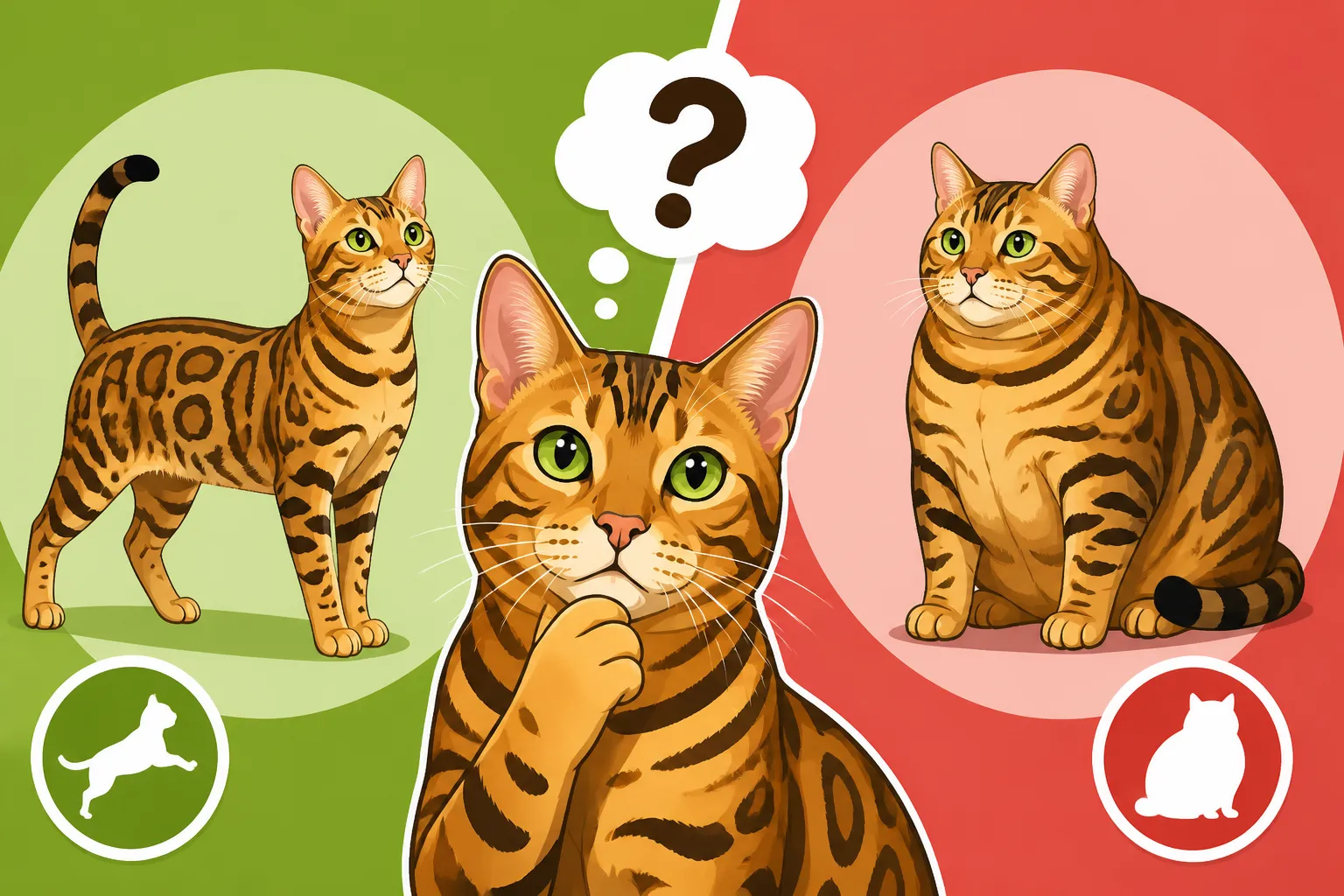
While the number on the scale is certainly a factor, relying solely on it can be misleading, especially with a breed as muscular as the Bengal. A better approach is using a body condition score (BCS) system, which helps you assess your cat's fat reserves by feeling their ribs, spine, and hip bones, and observing their overall shape. A healthy Bengal should have a clearly defined waist when viewed from above, and their abdomen should tuck up slightly when viewed from the side. You should be able to easily feel their ribs beneath a thin layer of muscle and skin, without having to press hard.
If your Bengal's waistline is less distinct, or their side profile appears more straight or even bulging rather than tucked, these are visual red flags. Feeling their ribs should be like feeling the knuckles on the back of your hand – distinct but not sharp. If it feels more like the back of your palm, with a smooth, padded sensation, your cat might be carrying too much fat. Similarly, their spine and hip bones should be palpable, but not prominent. If they feel buried under soft tissue, it’s a sign to pay closer attention. For a detailed guide, refer to How to Tell Muscle From Fat on a Bengal Cat. Even small changes in their physique can indicate a trend toward being overweight.
Behavioral Red Flags: When Playtime Becomes a Chore
Physical changes aren't the only indicators. A Bengal cat's behavior is a huge tell when it comes to their overall health, including their weight. These cats are known for their explosive energy and relentless curiosity. If you notice your Bengal is less enthusiastic about playtime, seems to tire more quickly, or is less inclined to jump and climb to their favorite high perches, it could be a sign that excess weight is impacting their agility and stamina. They might spend more time napping and less time engaging with their environment or with you.
For example, perhaps your Bengal used to effortlessly scale the tallest cat tree, but now seems to hesitate or takes a more laborious route. Or maybe their favorite wand toy, which once sent them into a frenzy of leaps and bounds, now only elicits a half-hearted paw swat from a comfortable lying position. These subtle shifts in their normal high-energy demeanor can easily be attributed to "just growing up" or "being a bit lazy today," but in reality, they could be indications that carrying extra weight is making movement more strenuous and less enjoyable. Observing these behavioral changes, alongside regular physical checks, provides a comprehensive picture of your Bengal's health.
The Hidden Dangers: Health Implications of Excess Weight
It’s easy to dismiss a few extra pounds as harmless, especially when your Bengal still looks active. However, just like in humans, even a moderate amount of excess weight can significantly impact a cat's health, leading to a host of medical problems that can reduce their quality of life and shorten their lifespan. For a breed already prone to certain genetic conditions, added weight is an unnecessary burden.
Cascading Health Problems: From Joints to Internal Organs
Being overweight puts immense strain on a Bengal cat's body, from their skeletal system to their vital internal organs. One of the most common issues is orthopedic stress. Those powerful, agile legs and joints are designed to carry a certain weight, and when that weight increases, the wear and tear accelerate. This can lead to or worsen conditions like arthritis, making jumping and climbing painful and reducing their mobility. Even a seemingly minor issue like Patellar Luxation in a Bengal Cat can become far more problematic with additional weight.
Beyond the joints, excess fat acts as an active organ, producing hormones and inflammatory substances that can disrupt normal bodily functions. Overweight cats are at a higher risk for developing serious conditions such as feline diabetes, liver lipidosis (fatty liver disease), and certain types of cancer. The heart and respiratory systems also suffer; carrying extra weight means the heart has to work harder to pump blood, and the lungs can be compressed, leading to breathing difficulties and reduced stamina. While HCM Is What Kills Bengal Cats Early is a genetic heart condition, obesity can certainly exacerbate the strain on an already compromised cardiovascular system, making managing it even more challenging.
Exacerbating Existing Conditions: A Heavier Burden
What makes weight gain particularly concerning for Bengal cats is its potential to worsen any pre-existing health conditions they might have, or those they might develop genetically. For instance, if a Bengal cat has a predisposition to certain joint issues, as some breeds do, the added stress of extra weight can bring these problems on earlier or make them more severe. A cat with mild arthritis might manage well at a healthy weight, but a few extra pounds could escalate their discomfort, requiring more medication or limiting their cherished activities.
Similarly, an overweight Bengal cat facing a health crisis, like a sudden illness or injury, might have a harder time recovering. Anesthesia for surgery, for example, can carry higher risks for obese animals due to respiratory and cardiovascular complications. The fat can interfere with diagnostic imaging and make procedures more difficult. Even something as common as Chronic Diarrhea Is the Bengal Cat Complaint Nobody Warns About can be harder to diagnose and manage if the cat's overall health is compromised by obesity. The vet might need to consider more factors and treatments could be less effective. Essentially, carrying extra weight creates a heavier burden on their entire system, making any health challenge a greater uphill battle.
Charting a Course to Healthy Weight: Practical Strategies
The good news is that if your Bengal cat has started to gain weight, there are many effective strategies you can implement to help them shed those extra pounds and maintain a healthy physique. It's a combination of smart nutrition, increased activity, and a partnership with your veterinarian.
Nutrition Nuances: Crafting the Right Diet for Your Bengal
The cornerstone of healthy weight management for your Bengal cat is a carefully controlled diet. First and foremost, you need to understand precisely how much food your individual cat needs. This isn't a one-size-fits-all equation, but rather one that depends on their age, current weight, target weight, and actual activity level. Free-feeding, where food is left out all day, is generally not recommended for Bengals who are prone to weight gain, as it encourages mindless eating. Instead, opt for scheduled meal times, dividing their daily caloric intake into two or three smaller meals.
Focus on a high-quality, high-protein, moderate-fat, and low-carbohydrate diet, which better mimics what their wild ancestors would eat. Many premium cat food brands offer formulas that fit this profile. Read labels carefully and look for meat as the first ingredient. Wet food is often preferable to dry kibble because it has a higher moisture content, which helps your cat feel fuller on fewer calories and contributes to overall hydration. Treats should be used sparingly and chosen wisely; consider low-calorie options or even small pieces of cooked lean meat. Your vet can help you calculate the exact caloric intake needed for weight loss and maintenance. For more on dietary needs, see Which Protein Percentage Suits a Bengal Cat.
Unleashing the Inner Wild: Maximizing Exercise and Enrichment
Even with a perfect diet, a Bengal cat will struggle to maintain a healthy weight if their immense energy isn't channeled correctly. You need to provide ample opportunities for physical exertion and mental stimulation. Invest in interactive toys that mimic prey, like feather wands or laser pointers (used responsibly to avoid frustration). Schedule multiple vigorous play sessions throughout the day, aiming for at least 15-20 minutes per session, several times a day. Remember, a bored Bengal is more likely to nap and less likely to burn calories.
Vertical space is also paramount for these arboreal explorers. Tall, sturdy cat trees that reach the ceiling, wall-mounted shelves, and cat "superhighways" encourage climbing and jumping. A cat wheel can be an absolute game-changer for Bengals, providing an outlet for intense running, especially if you live in a smaller space or during inclement weather. Consider investing in a high-quality one from Amazon, ensuring it's the right Which Cat Wheel Size a Bengal Cat Needs for your cat. For ultimate enrichment and safe outdoor access, a "catio" is an invaluable addition, allowing them to climb, explore, and observe the outside world without the dangers of free-roaming, thereby burning more calories and engaging their instincts. This is why Why a Catio Is the Answer to a Bengal Cat is such a popular solution for Bengal owners.
Partnering with Your Vet: A Personalized Approach
While diet and exercise are in your hands, your veterinarian is your most valuable partner in your Bengal cat's weight management journey. They can accurately assess your cat's current body condition, rule out any underlying medical conditions that might contribute to weight gain (such as thyroid issues), and help you set a realistic target weight. A vet can also provide a personalized caloric intake recommendation based on your cat's specific needs, ensuring they lose weight safely and effectively.
During regular check-ups, your vet will monitor your Bengal's progress, adjusting the plan as needed. They can also recommend specific prescription diets if necessary, which are often formulated to be lower in calories while still providing all essential nutrients. Don't hesitate to ask questions about body condition scoring so you can confidently monitor your cat at home. These consistent visits are not just for emergencies; How Often a Bengal Cat Needs a Wellness Exam is crucial for proactive health management, especially when tackling weight challenges. Your vet can also offer advice on safe ways to increase activity, troubleshoot behavioral issues related to food, and provide ongoing support to keep your Bengal happy and at their ideal weight.
Here's a quick reference table to help you distinguish between a healthy Bengal and one carrying too much weight:
| Feature | Healthy Weight Bengal Cat | Overweight Bengal Cat |
|---|---|---|
| Ribs | Easily palpable with minimal fat cover. | Difficult to feel under a layer of fat. |
| Waistline | Clearly visible, tucked in behind the ribs when viewed from above. | Indistinct or absent, straight or bulging sides. |
| Abdominal Tuck | Distinct abdominal tuck when viewed from the side. | Flat or sagging abdomen, no clear tuck. |
| Spine | Palpable with slight fat cover, vertebrae easily distinguishable. | Covered by moderate to thick fat, difficult to feel individual vertebrae. |
| Muscle Mass | Well-defined and prominent. | May be present, but often obscured by fat layer. |
| Activity Level | Energetic, agile, eager to play and climb. | Less active, tires quickly, reluctant to jump or climb. |
| Breathing | Easy, unlabored, especially after activity. | May breathe harder after mild exertion, occasional snoring. |
Disclaimer
This article is for general informational purposes only and does not constitute professional advice. Laws, prices and regulations vary by location and change over time. Consult a qualified professional for guidance on your specific situation.