TICA Accepted the Bengal Cat in 1986
When you first fall in love with the striking looks of a Bengal cat, you might not realize the complex history behind their acceptance into the feline fancy. It's easy to assume such a distinctive breed simply "is," but their journey to being recognized and registered by major organizations was a long and often contentious one, shaping everything from their breeding standards to their legal status in various regions. This guide will walk you through the pivotal moment of TICA's acceptance in 1986 and explain why this milestone was so crucial for the Bengal cat breed as we know it today.
The Road to Recognition: Why TICA's Acceptance Mattered
Imagine a time when the stunning rosetted coat and wild-eyed gaze of a Bengal cat were only seen in the scientific community or as an experimental curiosity. That was the reality before the breed found its champion in The International Cat Association (TICA). Their formal recognition wasn't just a rubber stamp; it was the essential step that transformed the Bengal from a fascinating hybrid experiment into a legitimate, pedigreed breed, opening the doors for widespread breeding, showing, and eventually, loving homes around the globe.
From Research Colony to Pedigree Breed
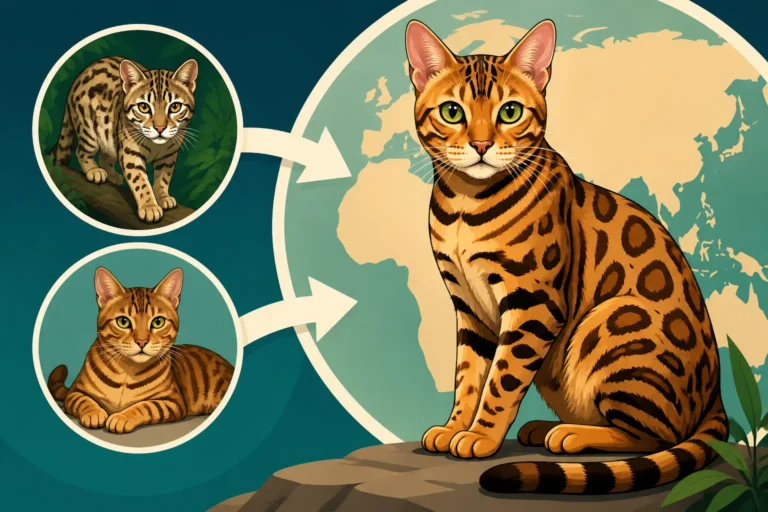
The story of the Bengal cat truly begins with two distinct but interconnected threads: the dedicated work of Jean Mill and the scientific research conducted by Dr. Willard Centerwall. Jean Mill, a passionate cat breeder, started her first crosses between an Asian Leopard Cat (ALC) and a domestic cat in the early 1960s. She was captivated by the ALC's beauty and sought to create a domestic companion that retained the exotic look without the wild temperament. Her initial efforts were foundational, but it was the unforeseen circumstances of a scientific study that provided a significant boost to the breed's genetic pool.
Around the same time, Dr. Centerwall at Loma Linda University was conducting research on feline leukemia. He found that ALCs possessed a natural immunity to the virus and began cross-breeding them with domestic cats to study this resistance, hoping to transfer it to domestic felines. These "hybrid" cats, born from the research, eventually needed homes. Jean Mill acquired some of these cats from Centerwall's program, incorporating their bloodlines into her own developing Bengal breeding project. This infusion of genetic diversity was invaluable. It meant the breed wasn't solely reliant on a handful of original crosses but had a broader foundation. This period of early development, mixing these distinct lines, was critical in establishing the genetic diversity and hardy nature that would become hallmarks of the Bengal. The Leukemia Research Colony That Founded the Bengal Cat
The Early Days of Breeding and Development
Bringing a new breed into existence is far from easy. It's not just about getting two different cats to mate; it’s about consistently reproducing desired traits, eliminating undesirable ones, and ensuring the health and viability of future generations. In the early days, breeders faced immense challenges. The first generation (F1) offspring of an ALC and a domestic cat often retained significant wild traits, making them unsuitable as typical household pets. The males in these early generations were also almost universally sterile, which meant that only female hybrids could be bred back to domestic males to continue the line. This significantly slowed down the breeding process and made genetic stabilization a painstaking endeavor.
Breeders, including Jean Mill, had to carefully select subsequent generations (F2, F3) for specific characteristics: a striking coat pattern, a friendly and confident temperament, good health, and the ability to reproduce consistently. They aimed to dilute the wild instincts while preserving the exotic appearance. This required a keen understanding of genetics, a lot of patience, and a willingness to cull animals that didn't meet the evolving breed standards. It was a true labor of love, driven by a vision to create something uniquely beautiful and domestic. Without this dedicated effort to refine and stabilize the lines, TICA would never have considered acceptance.
What TICA's Acceptance in 1986 Actually Meant for the Bengal Cat
For any aspiring cat breed, gaining recognition from a major registry is akin to earning your stripes in the professional world. TICA, or The International Cat Association, is one of the largest genetic registries of pedigreed cats in the world, and its decisions carry significant weight. Their acceptance of the Bengal in 1986 was a game-changer, providing a framework and legitimacy that had been desperately missing.
The Importance of a Provisional Status
When TICA first accepted the Bengal in 1986, it was granted "provisional status." This might sound like a minor detail, but it was incredibly significant. Provisional status meant that Bengals could officially be registered with TICA, and breeders could begin to show them in exhibitions. However, they couldn't yet compete for championship titles. Think of it like being an intern at a prestigious company: you're officially part of the team, you're learning the ropes, and you're being evaluated, but you haven't quite earned the full title and benefits yet.
This interim period was vital for several reasons. It allowed breeders to demonstrate the consistency of the breed. They had to show that they could reliably produce Bengal cats that adhered to a defined standard, not just one-off exotic-looking felines. It also provided a structured environment for breeders to gather feedback from judges and other fanciers, helping them to further refine their breeding programs. The ability to participate in shows, even without championship potential, raised the breed's profile, generating interest and attracting more dedicated breeders and potential owners. This foundational recognition was the first crucial step out of obscurity. When TICA Accepted the Bengal Cat
Setting the Breed Standard: A Blueprint for the Future
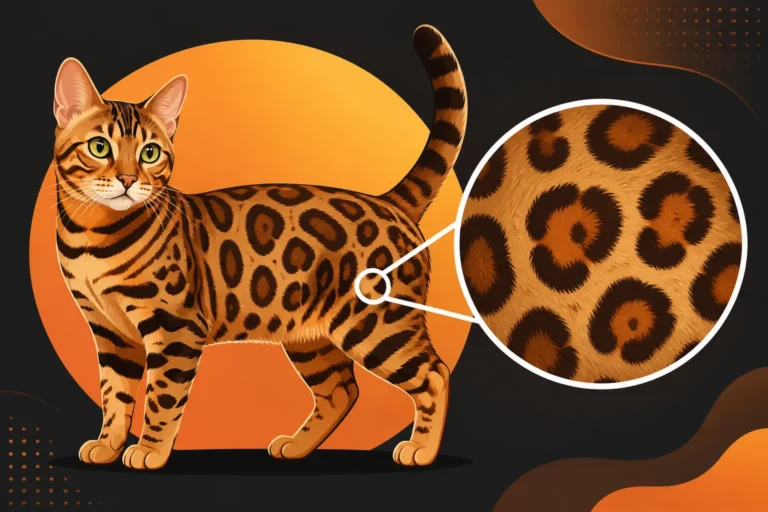
Perhaps the most enduring impact of TICA's provisional acceptance was the establishment of a formal breed standard. Before this, different breeders might have had varying ideas of what constituted an ideal Bengal. The breed standard, meticulously crafted by TICA in conjunction with experienced Bengal breeders, became the official blueprint. It detailed everything from the desired head shape and ear set to the muscular body, the length of the tail, and, of course, the iconic coat patterns.
This standard wasn't just about aesthetics; it also aimed to define the ideal Bengal temperament – active, curious, intelligent, and affectionate. By having a clear, agreed-upon standard, breeders finally had a common goal. It allowed for objective evaluation at shows, guided breeding choices, and helped prevent the breed from diverging into too many different types. For anyone looking to acquire a Bengal, this meant a greater assurance of what to expect in terms of appearance and personality. This consistent vision was key to the breed's eventual widespread appeal and solidified its place in the cat world. What a Bengal Cat Looks Like by the Standard
Beyond 1986: Achieving Championship Status
While provisional status was a monumental step, the ultimate goal for any new breed is to achieve full championship status. This is where a breed truly comes into its own, fully recognized and able to compete on equal footing with long-established breeds. The journey from provisional to championship for the Bengal cat was a testament to the dedication of its breeders.
The Journey from Provisional to Championship
The path from provisional acceptance to full championship status is rigorous. TICA has specific requirements that a provisional breed must meet before it can advance. These typically include a minimum number of registered individuals, a certain number of breeders consistently working with the breed, and most importantly, demonstrable consistency in meeting the breed standard across multiple generations and different catteries. It's about proving that the breed is stable, healthy, and capable of reproducing itself reliably.
For the Bengal, this meant years of careful breeding, meticulous record-keeping, and consistent exhibition at TICA shows. Breeders had to actively work to ensure that their cats not only looked the part but also possessed the desired temperament and robust health. Every show was an opportunity to showcase the breed's progress, to demonstrate that the Bengal wasn't just a passing fad but a well-established, distinct breed. The breeders worked tirelessly, taking feedback from judges and refining their lines. Finally, in 1991, just five years after provisional acceptance, TICA granted the Bengal cat full championship status. This meant that Bengals could now compete for Best in Show honors and earn Grand Champion titles, placing them squarely among the world's most prestigious pedigreed cats. When the Bengal Cat Got Championship Status
The Impact of Championship Status on Popularity and Acceptance
Earning championship status had a profound and immediate impact on the Bengal cat's popularity and wider acceptance. Suddenly, the Bengal was no longer just an experimental breed; it was a legitimate, recognized, and highly sought-after pedigree cat. This significantly boosted its visibility to the general public. More people learned about the breed through show results, media coverage, and the increased presence of Bengals at cat shows.
The newfound legitimacy also encouraged more reputable breeders to enter the field, further diversifying the gene pool and solidifying the breed's health and type. As more Bengals were bred and available, their unique qualities—their intelligence, energy, and stunning appearance—became more widely appreciated. The demand for Bengal cats soared, and they quickly climbed the ranks of TICA's most popular breeds. This enhanced visibility and demand also led to more resources being dedicated to Bengal-specific health research and responsible breeding practices, further cementing their place in the feline world. It truly transformed the Bengal from a niche breed into a global phenomenon. Where the Bengal Cat Ranks Among Cat Breeds
The Ongoing Role of Registries in the Bengal Cat World
While TICA's initial acceptance was a defining moment, the role of cat registries like TICA doesn't end there. They continue to play a crucial, ongoing role in safeguarding the breed, promoting responsible practices, and providing a framework for the entire Bengal community. Their work ensures the integrity and future health of the breed.
TICA's Influence on Breeding Ethics and Health Testing
One of the most critical functions of a major cat registry like TICA is to establish and uphold ethical breeding guidelines. They set standards for cattery management, kitten care, and responsible placement. For a breed with a wild ancestor like the Bengal, these guidelines are particularly important. TICA encourages breeders to prioritize the health and temperament of their cats above all else. This includes advocating for comprehensive health testing to screen for genetic conditions that can affect the breed.
Reputable Bengal breeders, often listed with TICA, go above and beyond to test their breeding cats for known genetic diseases such as Hypertrophic Cardiomyopathy (HCM), Pyruvate Kinase Deficiency (PKD), and Progressive Retinal Atrophy (PRA-b). TICA's framework helps to standardize these practices, ensuring that health information is recorded and considered in breeding decisions. This collective effort to health test is vital for reducing the incidence of these conditions and ensuring that Bengal cats live long, healthy lives. Without such oversight, health issues could easily proliferate, undermining the very foundation of the breed. What a Bengal Cat Breeder Should Have Tested
Consider a scenario where you're looking for a Bengal kitten. A breeder who proudly shares their cats' TICA registration numbers and health testing results for conditions like HCM Is What Kills Bengal Cats Early or PRA-b Blinds a Bengal Cat by Two and There Is a DNA Test is signaling their commitment to the breed's welfare, aligning with TICA's ethical standards. They understand that transparency is key, and the registry provides that platform.
The Difference Between TICA and Other Registries
While TICA was pioneering in its acceptance of the Bengal cat, it's worth noting that not all cat registries share the same stance, especially concerning hybrid breeds. The Cat Fanciers' Association (CFA), for example, which is another prominent cat registry, has historically been more conservative. As of now, CFA does not recognize the Bengal cat for championship status. This is largely due to their philosophy regarding breeds derived from wild species, preferring breeds with a long history of purely domestic ancestry.
This difference in approach means that a Bengal cat registered with TICA might not be eligible for exhibition or registration with CFA. For breeders, this often means making a choice about which registry to align with based on their goals and principles. For prospective owners, it highlights the importance of understanding which registry a breeder uses and what that implies for the pedigree and recognition of their kitten. It also reinforces TICA's significant role in championing hybrid breeds and providing a platform for their development and recognition, differentiating itself from organizations with a more traditional view. Whether the CFA Recognizes the Bengal Cat
Understanding Bengal Cat Generations and Their Legal Implications
The Bengal cat's unique origins mean that the concept of "generation" is particularly important. This isn't just a bit of trivia; it directly impacts a Bengal's temperament, its legal status, and even its price. TICA's classification system for generations provides a crucial guide for breeders, owners, and legal authorities alike.
F1 to SBT: TICA's Classification System
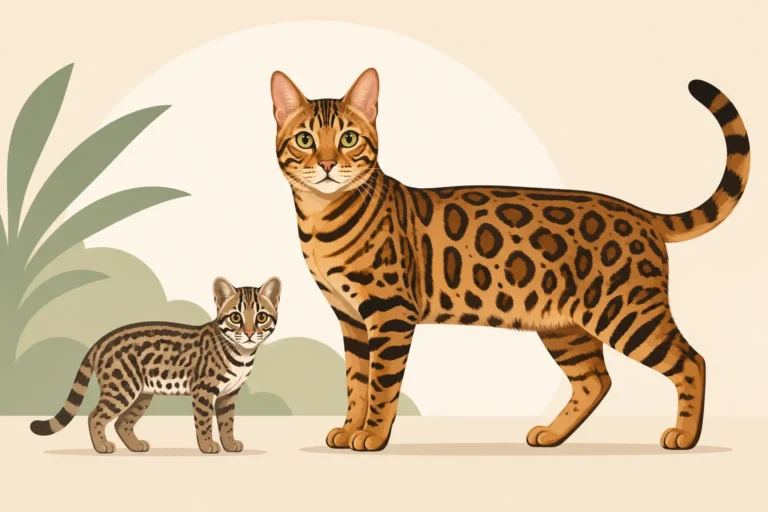
TICA uses a specific filial generation (F) system to track how many generations removed a Bengal cat is from its wild Asian Leopard Cat (ALC) ancestor.
- F1: This is a first-generation Bengal, directly resulting from the cross of an ALC and a domestic cat. These cats are typically the most "wild" in temperament and appearance.
- F2: A second-generation Bengal, with one ALC grandparent.
- F3: A third-generation Bengal, with one ALC great-grandparent.
- F4 and beyond: These generations are considered "Stud Book Traditional" (SBT). SBT Bengals are at least four generations removed from their wild ancestor, and they are generally accepted as fully domestic.
The distinction between these generations is critical. Early generation (F1-F3) Bengals are closer to their wild roots and can exhibit more pronounced wild traits, such as increased energy, less predictable behavior, and stronger prey drives. Critically, male F1, F2, and F3 Bengals are often sterile, a common characteristic of hybrid animals, which makes breeding them challenging and further explains why the lines take time to develop. F1 to SBT: How a Bengal Cat's Generation Is Counted Why F1 to F3 Bengal Cat Males Cannot Breed
For example, when you see a listing on Chewy for Bengal cat food, the specific dietary needs might vary slightly depending on whether you have an F1 with higher energy and a more "wild" digestive system or an SBT that is more akin to a highly active domestic cat. Understanding your Bengal's generation helps you tailor their care appropriately.
| Generation | Wild Ancestry | Temperament Tendency | Breeding Males |
|---|---|---|---|
| F1 | Parent | Most wild | Sterile |
| F2 | Grandparent | Moderately wild | Sterile |
| F3 | Great-grandparent | Less wild | Sterile |
| SBT (F4+) | Great-great-grandparent or further | Fully domestic | Fertile |
Legalities and Owner Responsibilities
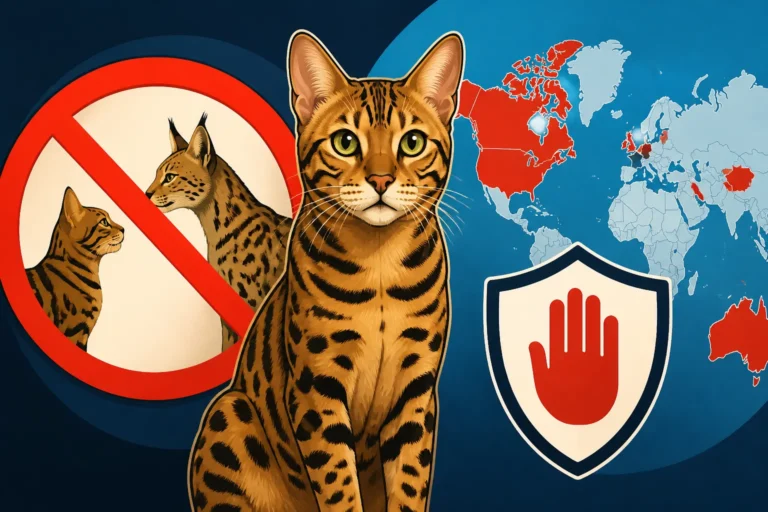
The generation number of a Bengal cat isn't just a breed characteristic; it's a legal one. Many states, counties, and cities have laws and ordinances that restrict or even prohibit the ownership of early generation Bengals (typically F1-F3), precisely because of their closer proximity to their wild ancestors. These laws are often in place due to concerns about public safety, the potential for escaped animals, and the welfare needs of cats that may not thrive in a typical domestic environment.
TICA's clear classification system provides a vital tool for legal authorities to define what constitutes a "domestic" Bengal versus a "hybrid" that might fall under wild animal regulations. For prospective owners, it places a significant responsibility on them to thoroughly research their local laws before acquiring a Bengal. What might be perfectly legal in one town (an SBT Bengal) could be illegal just a few miles away (an F2 Bengal). Ignoring these laws can lead to severe consequences, including fines and the confiscation of your beloved pet. It's not enough to simply know TICA accepts the breed; you must also know what your specific municipality permits. Why the Generation Number Decides Whether You Can Own a Bengal Cat Always verify your state and local regulations before you bring home a Bengal cat. How to Check Your State's Bengal Cat Law
The Bengal Cat's Legacy: A Testament to Recognition
The Bengal cat's story is one of transformation – from a scientific curiosity and a breeder's dream to a beloved and widely recognized breed. TICA's acceptance in 1986 was the moment the dream truly began to take flight, laying the groundwork for everything that followed.
From Controversy to Beloved Companion
In the early days, the concept of a "hybrid" cat breed was met with a fair degree of skepticism and even controversy. There were concerns about the welfare of the animals, the unpredictable nature of early generations, and the ethical implications of breeding wild cats with domestics. Critics wondered if such a breed could ever truly be domesticated and thrive as a companion animal. TICA's provisional acceptance, and subsequent championship status, provided the crucial stamp of legitimacy that helped to quell many of these concerns. It wasn't just an arbitrary decision; it was based on rigorous evaluation of the breed's consistency, health, and temperament over several generations.
Through the dedication of responsible breeders who prioritized health and socialization, the Bengal proved its critics wrong. Today's SBT Bengals are far removed from their wild ancestors in terms of temperament, making them energetic, affectionate, and highly intelligent companions. The initial controversy has largely faded, replaced by widespread admiration for their beauty and engaging personalities. This journey from skepticism to widespread acceptance is a powerful testament to the vision of the breed's founders and the hard work of the Bengal cat community.
What the Future Holds for the Bengal Breed
The Bengal cat's journey is far from over. As a relatively young breed, there are ongoing efforts within the Bengal community to further refine breeding practices, enhance genetic diversity, and tackle specific health challenges. Registries like TICA continue to play a vital role in this, updating breed standards as needed, promoting new health screening technologies, and fostering a community of responsible breeders and owners.
For instance, ongoing research into feline genetics allows breeders to screen for even more potential health issues, contributing to stronger, healthier bloodlines. There's also a continuous focus on maintaining the unique, wild look that makes Bengals so captivating, while ensuring they remain well-adjusted, loving pets. Whether it's selecting the right Which Cat Tree a Bengal Cat Needs or knowing How Many Hours a Day a Bengal Cat Plays, the community's collective knowledge, often supported by registry guidelines, helps new owners navigate the joys and challenges of living with these incredible felines. The future of the Bengal cat looks bright, built upon the solid foundation of recognition and commitment to excellence established decades ago by TICA.
Disclaimer
This article is for general informational purposes only and does not constitute professional advice. Laws, prices and regulations vary by location and change over time. Consult a qualified professional for guidance on your specific situation.