Whether Illinois Restricts a Bengal Cat
It's completely understandable to feel overwhelmed when you're researching Bengal cats, especially when it comes to legalities. You dream of bringing one of these magnificent, wild-looking companions into your home, but then you hear whispers of bans and restrictions, leaving you wondering if your state, like Illinois, even allows them. This guide aims to cut through the confusion and give you a clear, empathetic understanding of Bengal cat ownership laws in Illinois, so you can confidently prepare for your new family member or verify your existing one.
Understanding Bengal Cat Generations and Legality
One of the biggest sources of confusion surrounding Bengal cats and their legality in various states and cities stems from their unique heritage: they're a hybrid breed. This isn't just a fancy term; it means they have a wild cat ancestor, the Asian Leopard Cat, in their family tree. The closer a Bengal cat is to that wild ancestor, the more "wild" DNA it carries, and this is where the legal distinctions come into play.
The Filial Generation System
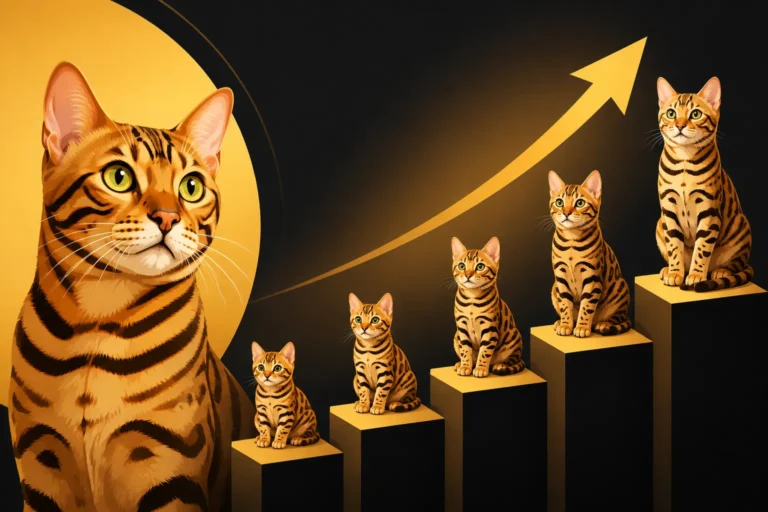
When we talk about Bengal cats, you'll often hear terms like F1, F2, F3, and SBT. These aren't just arbitrary labels; they refer to the "filial generation," indicating how many generations removed the cat is from its wild Asian Leopard Cat (ALC) ancestor.
- F1 Bengals: These are the direct offspring of an ALC and a domestic cat. They typically possess a significant portion of their wild parent's traits, often being larger, more independent, and sometimes more challenging to manage as household pets. Because of their close proximity to their wild ancestry, F1 Bengals are often the most heavily regulated, or even outright banned, in many jurisdictions.
- F2 Bengals: An F2 Bengal has one ALC grandparent. They are the result of breeding an F1 Bengal with another domestic cat. While still retaining many wild traits, they are generally a step closer to domestication than an F1.
- F3 Bengals: An F3 Bengal has one ALC great-grandparent, being the offspring of an F2 and a domestic cat. By this generation, while they still have that stunning wild look, their temperament often starts to align more closely with that of a domestic cat, though they remain highly energetic and intelligent.
- SBT Bengals (Stud Book Tradition): This is where most pet Bengals fall. An SBT Bengal is at least four generations (F4 or beyond) removed from its wild ancestor. At this point, they are considered fully domestic by most cat registries, like The International Cat Association (TICA), and are generally far more predictable and suitable as family pets. Most people seeking a Bengal cat as a companion are looking for an SBT Bengal.
The legal landscape hinges almost entirely on this generation number. Many states or cities that ban or restrict Bengals will draw the line at F4 or SBT, considering anything prior to that as a "wild hybrid" that requires permits or is prohibited altogether. It's crucial to understand Why the Generation Number Decides Whether You Can Own a Bengal Cat before you even start looking for a kitten.
Why Restrictions Exist for Early Generations
The reason some states and cities impose restrictions on earlier generation Bengal cats (F1-F3) isn't to be difficult, but typically stems from concerns about public safety and animal welfare. Early generation Bengals can exhibit behaviors more akin to their wild ancestors. This might include a stronger prey drive, a more independent nature, and sometimes a less tolerant disposition compared to a fully domesticated cat. They might also be more prone to escaping, be more destructive, or be more challenging to socialize and litter train.
For example, an F1 Bengal might not take to a litter box as readily as an SBT, and their vocalizations can be much more intense than a typical house cat. Because these cats require specialized care, housing, and a deep understanding of their unique needs, many jurisdictions err on the side of caution. This is why it's so important for potential owners to do their homework, not just on the legality, but also on the specific temperament and needs of the generation they are considering. You can learn more about How an Early Generation Bengal Cat Behaves Differently to prepare yourself.
Illinois State Law on Hybrid Cats
Now, let's get down to the specifics for Illinois. Many states have explicit laws addressing hybrid animals, including hybrid cats. This is where things can get confusing because some states have blanket bans, while others have detailed regulations based on generation.
What Illinois State Law Says
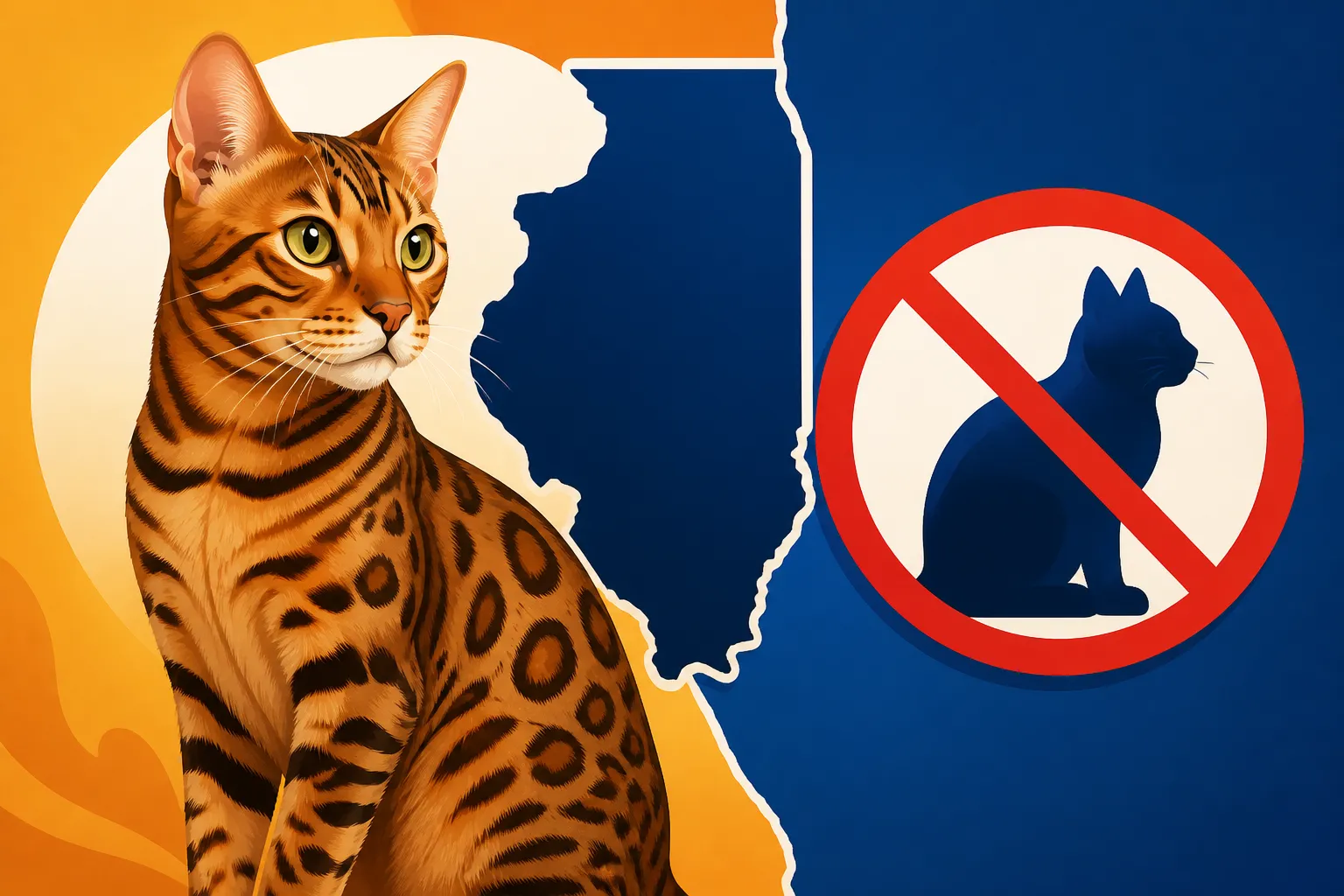
When it comes to the state level, Illinois does not have a statewide ban on Bengal cats, regardless of their generation. This might come as a relief if you've been searching for information and only finding vague or conflicting answers. The Illinois Dangerous Animals Act specifically addresses "dangerous animals" like lions, tigers, and wolves, but it does not include Bengal cats or other domestic cat hybrids within its prohibitions.
This means that, at the state level, you are generally free to own a Bengal cat, whether it's an F1 or an SBT. However, and this is a huge "however," the absence of a state-level ban does not mean you're entirely in the clear. Many regulations concerning pet ownership, especially for unique or exotic breeds, are actually set at the local level. This is a common pattern in many places; the state might be permissive, but your county or city could have very different rules. You might think, "Great, I'm in Illinois, I'm fine!" only to find out your specific city has an ordinance that catches you out. It's vital to remember that Where Bengal Cat Law Is Set, the State or the City varies greatly.
The Importance of Documentation
Even if Illinois state law is generally permissive, proving your cat's generation can be critical, especially if you ever move or if a local ordinance requires it. A reputable breeder will always provide official registration papers, typically from TICA (The International Cat Association), which clearly state your Bengal cat's generation. This pedigree is your best friend when it comes to demonstrating your cat's legal status.
Without proper documentation, it can be incredibly difficult to prove that your F4 or SBT Bengal isn't, in fact, an F1 or F2, should questions arise. Imagine a scenario where a neighbor reports your beautiful, wild-looking cat to animal control, believing it to be a dangerous wild animal. Having those papers readily available can save you a world of trouble. You'll want to ensure you know How to Prove Your Bengal Cat's Generation and always work with a reputable breeder who provides these documents.
Navigating Local Ordinances for Your Bengal Cat in Illinois
While Illinois state law might be silent on Bengal cats, local municipalities—your county, city, or even town—can and often do have their own ordinances regarding pet ownership, including those for hybrid animals. This is where the real legwork begins for any prospective Bengal owner in Illinois.
Researching Your Specific City or County Laws
This step cannot be stressed enough: you must check the specific animal control ordinances for your city and county of residence. Do not rely solely on state law. What's perfectly fine in one town in Illinois might be explicitly banned or heavily regulated just a few miles down the road.
Here's how you can go about this research:
- Start with Your City Clerk's Office or Animal Control: Many city websites have their municipal code accessible online. Look for sections on "animal control," "exotic pets," "hybrid animals," or "restricted breeds."
- Contact Your County Animal Services: If your city doesn't have specific ordinances, or even if it does, it's wise to check county-level regulations, as they can sometimes supersede or add to city rules, especially in unincorporated areas.
- Ask Specific Questions: When you call or visit, be very clear that you are asking about Bengal cats, mentioning their hybrid nature and the generation system (F1, F2, F3, SBT). Sometimes, general staff might not be familiar with the specifics of hybrid cat laws. You might need to speak with someone in the legal or animal control department who handles these kinds of inquiries. Asking questions like, "Does my city have any restrictions on F1, F2, F3, or SBT Bengal cats?" is a good starting point. You'd be surprised how often a simple phone call can clarify things that reading legal jargon online can't.
Failure to research can lead to heartbreaking situations, including fines, legal battles, or even the confiscation of your beloved pet. You don't want to bring home a Bengal cat only to discover it's illegal, putting both you and the cat in a terrible position. It's truly worth the effort to How to Read Your City Code for a Bengal Cat.
Common Local Restrictions You Might Encounter
Even if your city doesn't outright ban Bengal cats, you might find other types of restrictions or requirements. These can include:
- Permits and Licensing: Some municipalities require special permits for hybrid cats, even SBTs. These permits might involve an application fee, home inspections, or proof of secure containment (like a robust catio or secure enclosure).
- Containment Requirements: Especially for early generations, local laws might mandate specific enclosure types to prevent escape and ensure public safety.
- Proof of Generation: You might be required to provide official TICA or other registry papers proving your Bengal's generation to local authorities.
- Insurance Requirements: Some areas might require specific liability insurance for owners of certain "exotic" or hybrid pets. This is where researching options like Healthy Paws can be proactive, even if not legally mandated, to protect your investment in your cat's health.
- Breeding Restrictions: Even if ownership is allowed, breeding might be restricted or require additional licensing.
It's a lot to unpack, and it can feel like a maze, but knowing these potential hurdles beforehand allows you to either prepare for them or choose a different path.
Essential Considerations for Bengal Cat Ownership in Illinois
Beyond legalities, owning a Bengal cat in Illinois, or anywhere for that matter, comes with a unique set of responsibilities. These are highly active, intelligent, and sometimes vocal creatures that require more than just food and a litter box.
Providing Adequate Enrichment and Exercise
Bengal cats are not your average couch potato felines. They are incredibly energetic and need a lot of physical and mental stimulation to thrive. Without it, they can become bored, destructive, and even develop behavioral problems. Trust me, a bored Bengal cat can wreak havoc on your home – they're clever enough to A Bengal Cat Opens Cabinets, Doors and Drawers and can be quite the escape artists.
- Vertical Space: Bengals love to climb. Investing in tall, sturdy cat trees, wall-mounted shelves, and perches is not a luxury, but a necessity. They need to explore heights and survey their domain.
- Interactive Play: Daily, dedicated play sessions with wand toys, laser pointers, and puzzle feeders are a must. They thrive on interaction and challenges. The Bengal Cat Is the Most Active Cat You Can Own is not an exaggeration.
- Catios and Leash Training: Many Bengal owners find immense value in secure outdoor enclosures (catios) to give their cats safe access to the outdoors. Alternatively, leash training can provide supervised outdoor adventures. A Bengal Cat Walks on a Leash can be a great way to bond and provide enrichment. You can find many essentials for enrichment and daily needs on sites like Chewy, making it easy to stock up.
Dietary Needs and Health Management
Bengal cats, with their active metabolism, often have specific dietary needs. While not all Bengals require a specialized diet, many owners find that a high-quality, high-protein food works best for their energy levels and sensitive digestive systems.
- High Protein Diet: Given their lean, muscular build and high energy, a diet rich in animal protein is generally recommended. Look for foods where meat is the first ingredient, and avoid excessive fillers. Some owners even explore fresh, human-grade food options that might appeal to a Bengal's natural predatory instincts. You can explore The High Protein Argument for a Bengal Cat for more insights.
- Preventative Health Care: Bengals are generally a healthy breed, but like all purebreds, they can be predisposed to certain genetic conditions such as Hypertrophic Cardiomyopathy (HCM) and Pyruvate Kinase Deficiency (PKDef). Regular vet check-ups, including cardiac screenings if recommended by your vet or breeder, are crucial. This is where pet insurance, like a policy from Healthy Paws, can be an absolute lifesaver. Knowing that unexpected vet bills for diagnostics or treatment won't break the bank provides immense peace of mind. Discussing What a Bengal Cat Breeder Should Have Tested is a must when looking for a kitten.
| Bengal Cat Generation | Proximity to Wild Ancestor | Typical Temperament | Common Legal Status | Key Ownership Challenge |
|---|---|---|---|---|
| F1 | Direct offspring | Very wild, independent, high prey drive | Often restricted or banned, requires permits | Intense needs, potentially challenging to house train |
| F2 | One ALC grandparent | Still wild, energetic, can be challenging | Often restricted or banned, requires permits | High energy, needs significant stimulation |
| F3 | One ALC great-grandparent | More domesticated, but still high energy | Sometimes restricted, often requires permits | Can be vocal, needs consistent training |
| SBT (F4+) | Four+ generations removed | Generally domestic, active, intelligent | Generally allowed, check local laws | Still requires high enrichment, very active |
Building a Strong Bond and Understanding Their Voice
Bengal cats are incredibly intelligent and can form deep bonds with their owners, but they are not always a lap cat. They engage with their environment and their people on their own terms, often through play and interaction. They also have a distinctive "voice." Unlike the quiet meow of some domestic cats, a Bengal's vocalizations can range from chirps and trills to insistent chirps and even yowls. The Bengal Cat Voice Is a Demand, Not a Greeting is a good way to describe it! They will tell you what they want, often loudly and persistently. Learning to understand their unique communication style is part of the joy and challenge of living with a Bengal.
Remember, bringing a Bengal cat into your life is a significant commitment, one that involves understanding both their legal status in your Illinois home and their profound needs as a highly specialized and captivating breed. Doing your homework now will ensure a happy and healthy life for both you and your magnificent feline companion.
Disclaimer
This article is for general informational purposes only and does not constitute professional advice. Laws, prices and regulations vary by location and change over time. Consult a qualified professional for guidance on your specific situation.