How a Bengal Cat’s Pelt Differs From Ordinary Fur
If you've ever had the pleasure of stroking a Bengal cat, you know there's something distinctly different about their coat. It's not just "fur" in the way you might describe a fluffy domestic shorthair or a long-haired Persian. Bengal cats possess a truly unique covering, often referred to as a "pelt," and understanding these differences is key to appreciating this magnificent breed. This guide will dive deep into what makes a Bengal's coat so special, from its wild origins to its incredible texture and minimal upkeep.
Understanding the Bengal Cat's Wild Heritage
To truly grasp why a Bengal cat's coat feels and looks so different, we have to travel back to its origins. The Bengal isn't just another domestic cat; it's a hybrid, born from a cross between a domestic feline and a wild Asian Leopard Cat. This foundational difference imbues the Bengal with many of its distinctive physical traits, not least of which is its extraordinary coat.
The Asian Leopard Cat's Influence
Imagine a wild cat, moving silently through dense foliage, its spotted coat blending seamlessly with its surroundings. That's the What an Asian Leopard Cat Is Behind Every Bengal Cat, a creature whose survival depends on stealth and camouflage. Their coats are not designed for warmth in harsh climates like many domestic breeds; instead, they are sleek, dense, and provide protection from the elements of a tropical or subtropical environment, allowing for agile movement without hindrance.
When early breeders, like Jean Mill, began their work creating the Bengal cat, they were specifically aiming to retain this wild, exotic appearance while cultivating a domestic temperament. The genetic blueprint of the Asian Leopard Cat's coat was passed down, shaping the texture, density, and even the "glitter" we adore in modern Bengals. This wild influence means the Bengal's coat has evolved for different purposes than, say, a Maine Coon or a Ragdoll, which were selectively bred for lush, insulating fur. It's less about trapping air for warmth and more about being a smooth, protective layer that repels water and minimizes drag. This isn't just an aesthetic choice; it’s a functional trait that speaks volumes about their lineage. Indeed, the very essence of why their coat feels so unique traces directly back to Why a Bengal Cat's Coat Came From the Asian Leopard Cat.
Beyond Just Spots: The "Pelted" Terminology
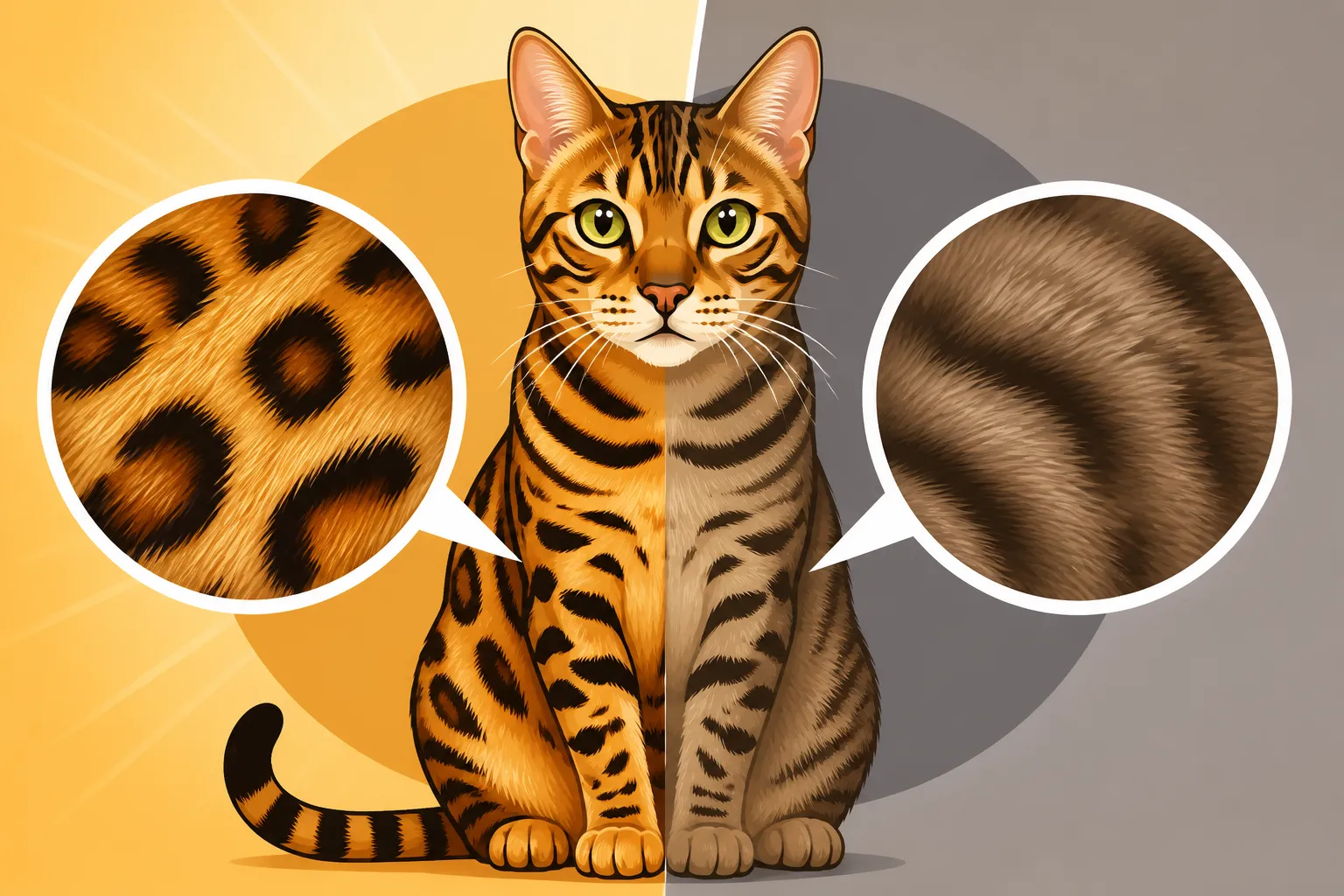
When people say a Bengal has a "pelt" rather than "fur," they're not just being fancy; they're describing a tangible difference. "Fur" often implies a soft, sometimes fluffy, multi-layered covering, typical of many cat breeds. A "pelt," on the other hand, suggests a much denser, flatter-lying, and often incredibly soft texture that feels more like velvet or silk to the touch. It's an interesting distinction that highlights the Bengal's unique characteristics.
The term "pelted" accurately describes the way the individual hairs on a Bengal lie flat against their body, creating a remarkably smooth and streamlined surface. This isn't a fluffy coat that stands away from the body; it's a tight, compact covering that accentuates their muscular physique. When you run your hand over a Bengal, you don't sink into layers of soft undercoat; instead, you feel a dense, almost cool, luxurious surface. This tactile experience is one of the first things people notice and often fall in love with when they encounter a Bengal cat. It’s part of the exotic appeal that breeders like Jean Mill sought to preserve. This distinctive feel is a key aspect of Why a Bengal Cat's Coat Feels Like Nothing Else, making them truly stand out.
The Unique Structure of a Bengal Cat's Coat
Delving deeper into the physical characteristics, the Bengal cat's coat structure is quite different from what you'd find on most common housecats. This isn't just about appearance; it affects everything from how much they shed to how they feel when you pet them.
Guard Hairs, Awn Hairs, and Down Hairs
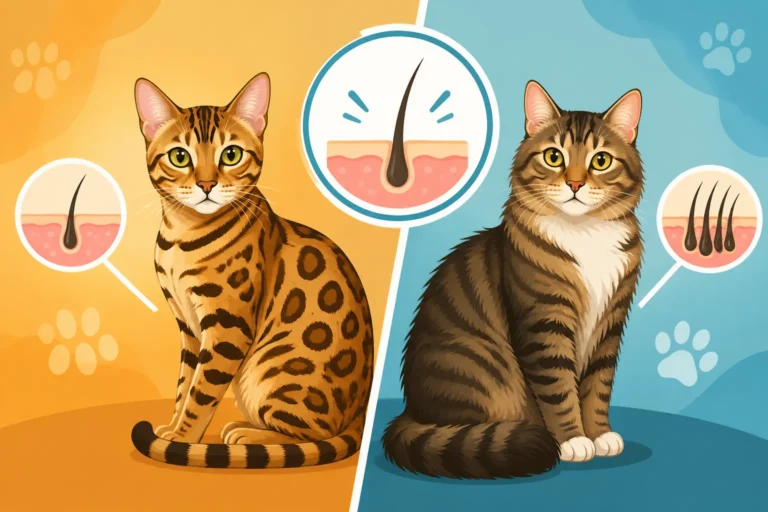
Most domestic cats have a triple-layered coat designed for insulation and protection. There are the longer, coarser guard hairs that protect against moisture and give the coat its overall color and pattern. Beneath these are the awn hairs, which are thinner and provide some insulation. Finally, closest to the skin, are the soft, dense down hairs (or undercoat), which are primarily responsible for thermal regulation.
The Bengal cat's coat, however, often significantly reduces or, in some cases, almost entirely lacks the dense undercoat that characterizes many other breeds. This is a direct inheritance from their wild ancestor, the Asian Leopard Cat, which lives in climates where heavy insulation isn isn't always necessary. Instead, Bengals tend to have a coat dominated by short, fine, and incredibly soft guard hairs that lie exceptionally close to the body. This structure is why their coat often feels more like a fine mink or rabbit pelt than traditional cat fur. The absence or scarcity of the thick, woolly undercoat is a major factor in why their shedding is often perceived as minimal, and why their coat has that distinctive smooth, almost 'wiped on' appearance. This reduced undercoat is a defining characteristic of Why a Bengal Cat's Coat Is Shorter Than a Housecat's.
The "Glitter" Phenomenon
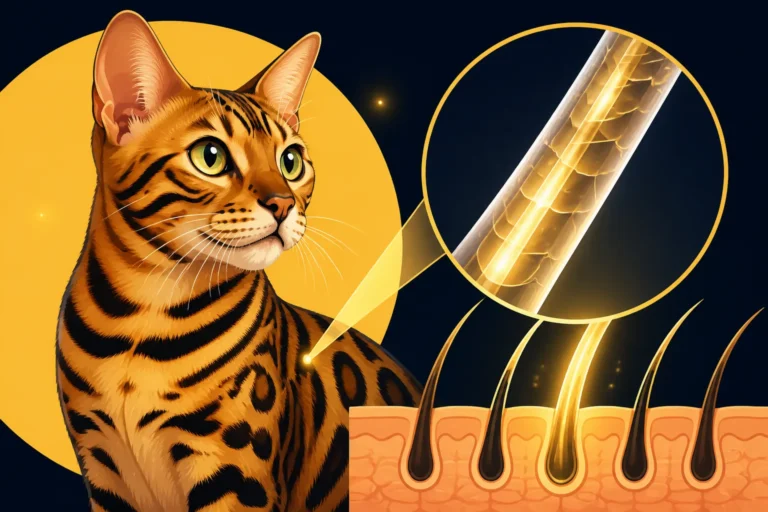
One of the most enchanting and unique features of a Bengal cat's coat is what breeders and enthusiasts refer to as "glitter." This isn't actual sparkle or sequins, of course! It's a genetic trait that gives the individual hair shafts a translucent quality, allowing light to pass through them rather than simply reflecting off the surface. The effect is truly stunning, making the coat appear to shimmer or be dusted with gold or iridescent dust, especially in natural light.
The glitter gene gives the Bengal's coat an almost ethereal glow, enhancing the clarity and contrast of their patterns. It makes the rich brown rosettes of a traditional Bengal seem to pop, and gives snow Bengals a luminous, almost pearlescent quality. What the Glitter Gene Does to a Bengal Cat is a phenomenon where the hair shaft itself is hollow or semi-hollow, transmitting light. This trait is unique to the Bengal breed and is highly prized, contributing significantly to the luxurious feel and appearance of their pelt. Not every Bengal cat will have this trait, but when present, it adds another layer of magic to their already captivating appearance. The visual impact, particularly in specific lighting conditions, is why many breeders strive for it, and it's a key part of what sets a show-quality Bengal apart. You can really see this effect clearly when observing How Glitter Looks on a Brown Bengal Cat, where the light plays off the rich tones beautifully.
How the Bengal Coat Affects Grooming and Shedding
For many cat owners, shedding and grooming are constant battles. With a Bengal cat, however, these concerns are often significantly lessened, all thanks to that unique pelt.
Minimal Shedding, Maximum Appeal
One of the biggest questions prospective Bengal owners have is, "Do they shed a lot?" The answer, happily, is generally "no" compared to many other domestic breeds. While no cat is truly non-shedding, Bengals shed considerably less, and the hair they do shed is fine and less prone to sticking to everything. This reduced shedding is a direct consequence of their unique coat structure—specifically, the reduced undercoat mentioned earlier.
The dense, sleek nature of their pelt means there are fewer loose, fluffy hairs to begin with. When they do shed, the fine hairs often go unnoticed or are easily wiped away. This is a huge benefit for owners who are tired of finding cat hair on every piece of furniture, clothing item, and even in their food! It's why How Little a Bengal Cat Sheds for a Shorthair is such a remarkable characteristic. While this doesn't make them truly hypoallergenic (no cat is), many individuals with mild cat allergies find they tolerate Bengals better than other breeds. However, it's crucial to remember that allergies are to dander and saliva, not just hair, so individual reactions can vary widely. If you're considering a Bengal for allergy reasons, spending time with one first is always advisable. This perceived low-allergy status is a big part of Why People Think a Bengal Cat Is Easier on Allergies, though it's important to manage expectations.
Grooming Needs (or Lack Thereof)
If you've ever owned a long-haired cat, you know the daily struggle of brushing out mats and tangles. With a Bengal, you can largely put those worries aside. Their sleek, short pelt is remarkably self-maintaining and requires very little intervention from you. This is fantastic news for busy owners or those who aren't keen on extensive grooming routines.
Because their coat lacks a thick undercoat, tangles and mats are virtually non-existent. The fine, close-lying hairs simply don't have the structure to knot up. Most Bengal owners find that a weekly, light brushing session is more about bonding and distributing natural oils than it is about preventing problems. A soft rubber brush or a grooming glove from a site like Amazon is usually more than sufficient. This minimal requirement stands in stark contrast to breeds like Persians or Himalayans, which demand daily, rigorous grooming. Even when considering How Often a Bengal Cat Should Be Brushed, the answer leans towards minimal, making them an excellent choice for those seeking a low-maintenance grooming routine. In fact, many Bengals enjoy being brushed as a form of petting rather than a necessary chore, turning grooming into a pleasant interaction rather than a battle of wills.
Here's a quick comparison of Bengal pelt vs. ordinary cat fur:
| Feature | Bengal Cat Pelt | Ordinary Cat Fur |
|---|---|---|
| Texture | Silky, velvety, smooth, dense | Soft, sometimes coarse, fluffy, varied |
| Undercoat | Minimal to almost absent | Often dense and thick, especially in long-hairs |
| Shedding | Generally low, fine hairs, less noticeable | Varies widely, from moderate to heavy, noticeable |
| Lying of Hair | Flat and close to the body, streamlined | Can stand away from the body, creating volume |
| Appearance | Enhances patterns, often "glittered," sleek | Can obscure patterns, less defined physique |
| Grooming Need | Very low; mostly for bonding/oil distribution | Varies from moderate to daily, necessary to prevent mats |
The Tactile and Visual Differences
Beyond the practical aspects of shedding and grooming, the Bengal cat's unique coat provides a sensory experience that sets them apart.
The Silk-Like Texture
Close your eyes and imagine the feel of pure silk or the softest velvet. That's often how Bengal owners describe the texture of their cat's pelt. It's incredibly soft, smooth, and cool to the touch, almost as if you're stroking a finely spun fabric rather than animal fur. This isn't just a subjective feeling; it's a direct result of the unique hair structure.
The individual hairs are fine and short, and they lack the coarser guard hairs that give many other breeds a slightly rougher feel. The density of the coat, combined with the lack of a fluffy undercoat, contributes to this luxurious, almost exotic tactile sensation. It's a distinguishing characteristic that makes petting a Bengal cat a truly delightful experience. This silk-like quality isn't just pleasant; it's a hallmark of the breed and a key part of the aesthetic standard in shows. When judges evaluate a Bengal in the ring, the feel of the coat, along with the vivid patterning, is paramount, directly influencing How a Bengal Cat's Pelt Is Judged in the Ring. The texture of the coat is critical for defining the overall impression and elegance of the cat.
Lying Flat and the "Pelted" Appearance
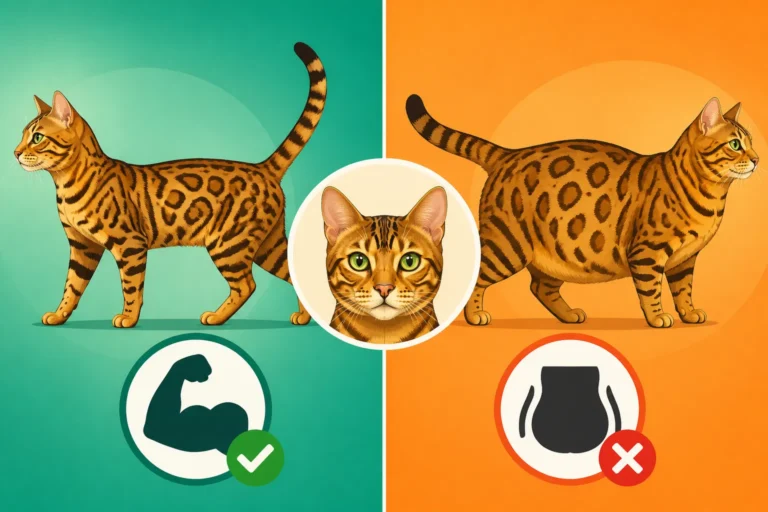
One of the most striking visual aspects of a Bengal's coat is how tightly and flatly it lies against their muscular body. This isn't a fluffy, voluminous coat that hides their physique; instead, it accentuates their athletic build, making them look even more like their wild ancestors. This "pelted" appearance gives them a sleek, streamlined look, reinforcing the impression of a miniature leopard or jungle cat.
This flat-lying coat doesn't just enhance their muscularity; it also makes their vivid patterns pop with incredible clarity and contrast. Whether they have striking rosettes, marbled swirls, or spotted markings, the pattern appears sharply defined against the body, not lost in a cloud of fur. The short, close-lying hair allows the unique color variations and markings to be fully appreciated. This is a crucial element of What a Bengal Cat Looks Like by the Standard, as the distinctness of their pattern is highly valued. It’s part of the exotic allure that attracts so many people to the breed, creating a truly magnificent and wild-looking domestic companion.
Health and Maintenance of the Unique Coat
While the Bengal cat's unique pelt generally requires less hands-on grooming, understanding how to maintain its health is still important for ensuring your cat looks and feels their best. A healthy coat is a sign of a healthy cat, and certain factors can impact its quality.
Skin Health and Environmental Factors
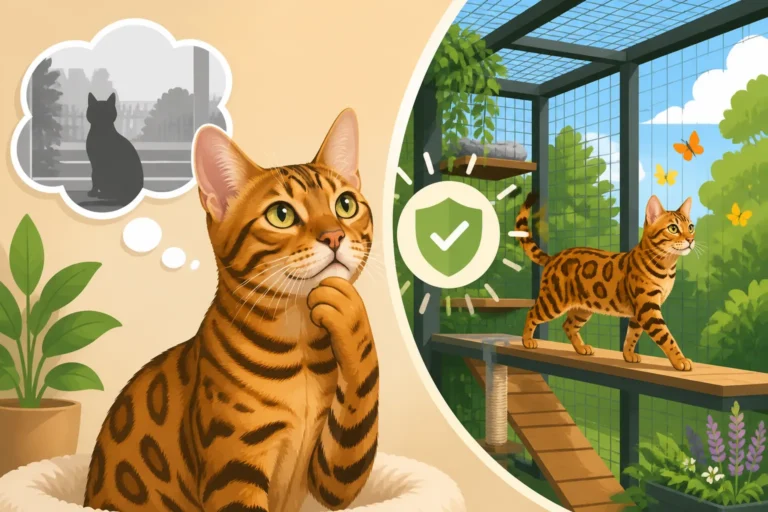
The Bengal's short, dense coat, while beautiful, does mean their skin can be a bit more exposed than that of a cat with a very thick, fluffy coat. This isn't usually a problem for indoor cats, but it's something to be mindful of. For instance, if your Bengal enjoys supervised outdoor time in a Why a Catio Is the Answer to a Bengal Cat, their skin can be more susceptible to sunburn, especially on lighter-colored areas or if they have less dense fur on their ears or nose. Sun exposure can also affect the vibrancy of their coat color, sometimes causing lighter areas to yellow or brown areas to fade slightly over time.
Regularly checking your Bengal's skin when you give them a gentle brush or during petting sessions is a good habit. Look for any dry patches, redness, flakes, or bumps, which could indicate skin irritation, allergies, or other health issues. While their minimal undercoat reduces the chance of matting, it doesn't eliminate the risk of external parasites like fleas or ticks, so routine parasite prevention, often recommended by your vet and available through pet suppliers like Chewy, remains important. Good skin health contributes directly to a beautiful, shimmering pelt, ensuring that The Glitter Gene and What It Does to a Bengal Cat's Coat is always at its best.
Nutritional Impact on Coat Quality
Just like with humans, a cat's diet plays a critical role in the health and appearance of their skin and coat. For a Bengal, whose pelt is such a defining feature, providing optimal nutrition is paramount. A dull, dry, or flaky coat can often be an indicator that something is missing from their diet or that they're not absorbing nutrients properly.
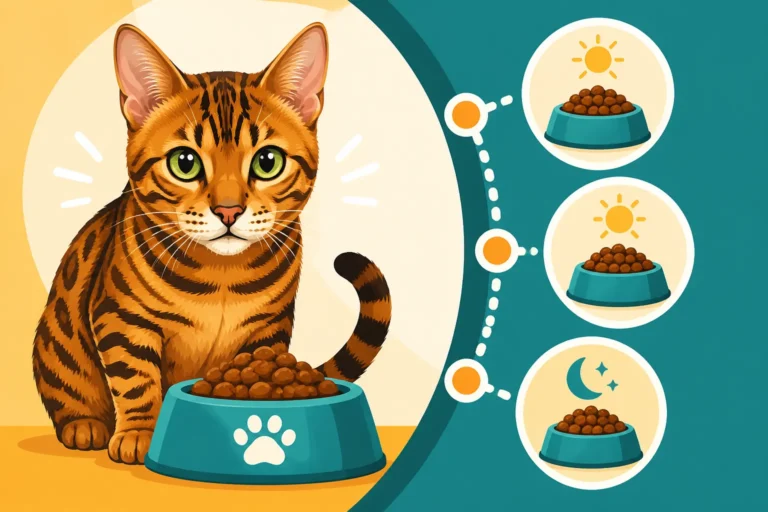
Bengals are active, muscular cats, and their wild ancestry suggests a diet rich in animal protein. High-quality protein sources are essential for healthy hair growth and skin cell turnover. Additionally, adequate levels of essential fatty acids, particularly Omega-3 and Omega-6, are crucial for maintaining skin hydration and the natural luster of their coat. These can be found in high-quality cat foods, often featuring ingredients like salmon oil or flaxseed.
When choosing food, look for options that list meat as the first ingredient and avoid excessive fillers. Some Bengal owners find that a grain-free diet or a diet rich in wet food, which provides more moisture, can contribute to better coat health and overall well-being. This ties into the discussion around Which Protein Percentage Suits a Bengal Cat and Why Wet Food Suits a Bengal Cat's Gut, as appropriate nutrition directly impacts coat quality. Ensuring your Bengal is well-hydrated is also key, as dehydration can quickly lead to dry skin and a lackluster coat. Always provide fresh, clean water, perhaps even a running water fountain, to encourage drinking.
Disclaimer
This article is for general informational purposes only and does not constitute professional advice. Laws, prices and regulations vary by location and change over time. Consult a qualified professional for guidance on your specific situation.