How Easily a Bengal Cat Becomes Overweight
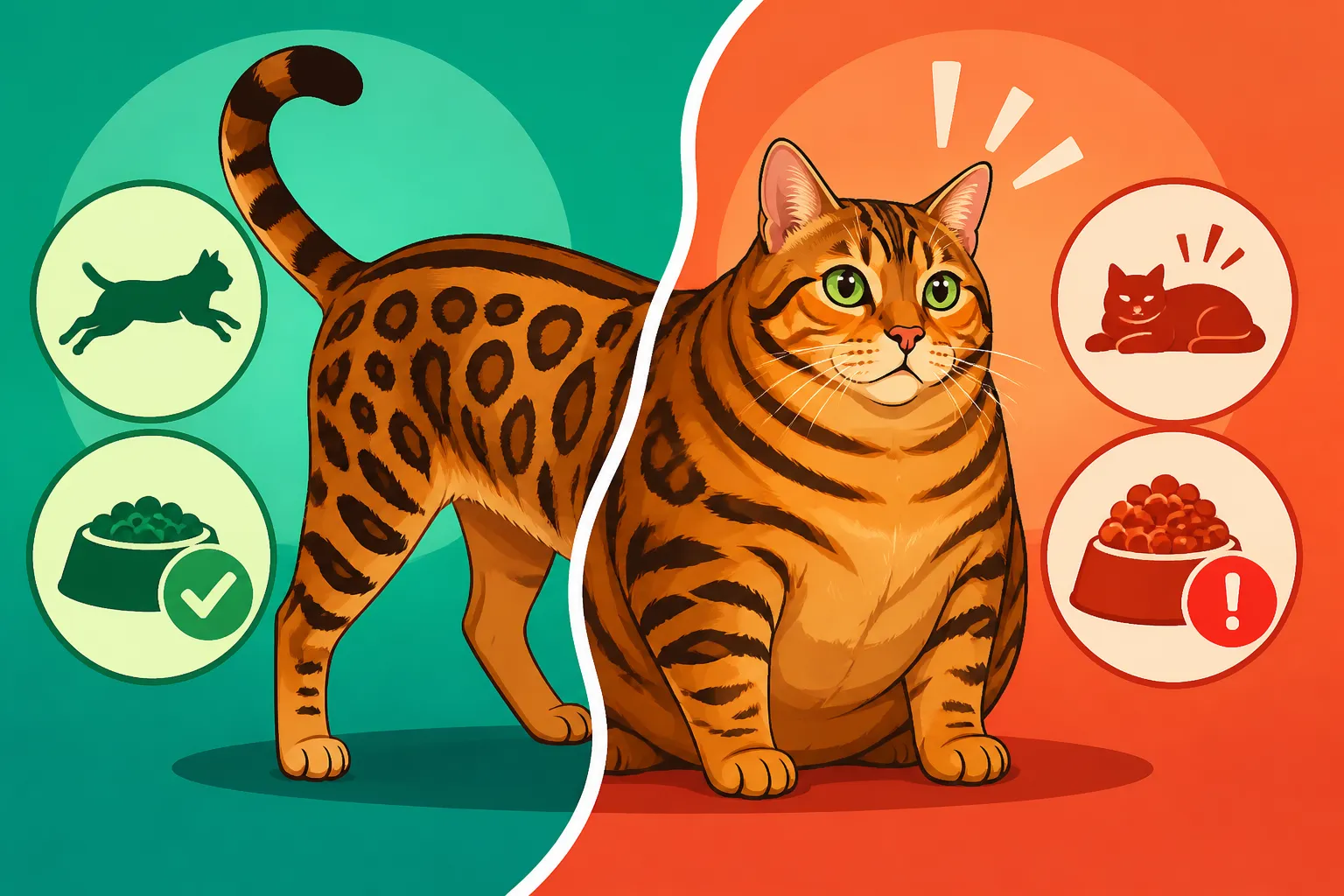
It’s a common misconception, isn’t it? You get a Bengal cat, known for their boundless energy and sleek, wild looks, and you think, "This cat will never get fat!" We tend to believe their incredible activity levels will burn off anything they consume. But the truth is, even the most athletic Bengal can, and often does, start to pack on the pounds if we’re not vigilant. This guide will walk you through why Bengal cats are more susceptible to weight gain than you might think, how to spot it, and practical steps to keep your magnificent feline in prime condition.
The Myth of the "Naturally Lean" Bengal Cat
When you watch a Bengal cat bound through your home, scaling cat trees like a tiny leopard or chasing a feather wand with relentless vigor, it's easy to assume they're immune to weight gain. Their lithe, muscular build and constant motion seem to defy the idea of a pudgy belly. However, this assumption can set owners up for a silent struggle, as those extra ounces can creep on surprisingly quickly, even in these athletic felines. The reality is that a Bengal's metabolism, while efficient, isn't a magical furnace that can incinerate endless calories without consequence.
Activity vs. Calorie Intake: A Delicate Balance
While Bengal cats are undoubtedly active, often needing How Much Exercise a Bengal Cat Needs a Day, their activity levels alone aren't always enough to counteract an imbalance in their diet. Think about it this way: even an Olympic athlete needs to manage their caloric intake. If they eat more than they burn, they gain weight. The same principle applies to our Bengals. We might see them tearing around for an hour or two a day, but what about the other 22 hours? If those active bursts are followed by long stretches of napping or less intense play, and their food bowl is constantly overflowing, the calories can quickly outpace their expenditure. Modern indoor living, even in the most enriched environments, can't always replicate the continuous, high-intensity activity a wild ancestor would engage in for survival. We provide food readily, removing the need for them to hunt and expend significant energy to acquire it.
Consider a scenario where your Bengal has a fantastic play session in the morning, climbing How High a Bengal Cat Can Jump and chasing toys. You feel great, thinking they've had a solid workout. But then, for the rest of the day, they might snooze in a sunbeam, occasionally batting at a static toy. If their breakfast and dinner portions are generous, plus a few treats throughout the day, those calories accumulate. It’s not about them being lazy; it’s about the sheer volume of readily available calories compared to their actual daily energy output, which, while high for a domestic cat, isn't infinite.
The Hidden Calories: Treats and Extra Bites
One of the biggest culprits in an otherwise active Bengal's weight gain is the insidious creep of "hidden calories." These aren't just extra scoops of kibble; they're the little gestures of love that we, as doting pet parents, often dispense without much thought. A few treats here, a lick of cheese there, a bite of chicken from your plate—it all adds up. For a smaller animal like a cat, even a small amount of human food or an extra handful of treats can represent a significant percentage of their daily caloric needs.
Imagine a Bengal who, with their charming chirps and insistent paws, convinces you to give them a few extra crunchy treats every time you walk into the kitchen. Maybe your kids sneak them a bit of their snack. Perhaps you leave a bowl of kibble out all day, and they graze, often just because they're bored or accustomed to constant access. These small, seemingly innocent additions can derail even the most well-intentioned diet plan. A single cat treat might only be a few calories, but three or four times a day, plus a little table scrap, and suddenly you've added an extra meal's worth of calories without even realizing it. This is particularly challenging with Bengals, who are often very vocal and persistent, making them expert manipulators when it comes to begging for food. Their intelligence means they quickly learn that certain behaviors result in tasty rewards.
The Sedentary Slip: When Activity Isn't Enough
Even with a reputation for being perpetually in motion, a Bengal cat can fall into a more sedentary lifestyle than you might expect, especially if their environment isn't continuously stimulating. We often assume that because they can climb to the highest shelf or run on a How Often a Bengal Cat Uses a Cat Wheel, they will do it constantly. However, without intentional engagement from their humans, even the most active cat can become a creature of habit, settling into routines that involve more napping and less dynamic play.
Think about a Bengal in a home with plenty of vertical space but no one actively encouraging them to use it. They might climb occasionally, but without a compelling reason—like a new toy placed strategically or a regular interactive play session—they might not explore their environment to its full potential. A cat wheel is a fantastic tool, but it's not always self-motivating; some Bengals need encouragement to use it regularly. If you work long hours or simply get busy, those daily dedicated play sessions might dwindle, or become less intense. A bored Bengal, just like a bored human, might turn to food for comfort or stimulation, leading to a vicious cycle where less activity and more eating contribute to weight gain. This "sedentary slip" is not about a Bengal suddenly becoming lazy, but rather a gradual reduction in the intensity and duration of their inherent activity due to a lack of consistent, stimulating interaction.
Identifying Weight Gain in Your Bengal Cat
Spotting weight gain in a Bengal can be trickier than with a fluffier, less muscular breed. Their sleek coats and athletic build can hide those extra pounds until they've accumulated significantly. However, being proactive and knowing what to look for can help you intervene before it becomes a serious health issue. It's not just about the number on the scale; it's about understanding their body condition.
Beyond the Scales: Visual and Tactile Cues
While a scale gives you a number, a body condition score is often more useful for assessing a cat's health. You need to use both your eyes and your hands. A healthy Bengal should have a distinct waist, visible from above, and a noticeable abdominal tuck when viewed from the side.
Here’s how to check:
- Rib Check: Gently run your hands along your Bengal's sides. You should be able to easily feel their ribs without pressing hard, like feeling the knuckles on your hand. If you have to press firmly to feel them, or you can't feel them at all, your cat is likely overweight. If the ribs are visibly prominent without touching, they might be underweight, which is a different concern.
- Waistline: Look down at your cat from above. There should be a clear indentation between their rib cage and their hips, creating an hourglass shape. If they look more like a sausage, with no discernible waist, weight gain is present.
- Abdominal Tuck: View your Bengal from the side. Their abdomen should tuck up slightly from their chest to their hind legs, not hang low or be parallel to the ground. A bulging or sagging belly is a strong indicator of excess fat.
These visual and tactile cues are often more reliable than just watching the numbers on the scale, especially if your Bengal's ideal What a Healthy Bengal Cat Weighs fluctuates slightly. Regular checks, perhaps weekly or bi-weekly, can help you catch changes early.
Subtle Signs of a Growing Waistline
Weight gain in a Bengal cat isn't always obvious or sudden. Often, it's a gradual process, and the signs can be subtle before they become pronounced. Being attuned to these minor shifts in behavior and physical appearance can be key to early detection.
- Reduced Agility and Stamina: You might notice your Bengal isn't quite as quick to leap onto that high shelf, or they tire more easily during play. Instead of continuous, high-energy bursts, their play sessions might become shorter, or they might prefer less strenuous activities. Perhaps they used to scale the Which Cat Tree a Bengal Cat Needs in one fluid motion, and now they pause or struggle slightly.
- Changes in Grooming: Overweight cats often struggle to reach certain areas, particularly their lower back and hindquarters. This can lead to a duller coat in those areas, matting (though less common in Bengals due to their short, pelt-like fur), or flaky skin. You might also notice them grooming less frequently overall.
- Difficulty Jumping or Climbing: While Bengals are known for their vertical prowess, extra weight makes every jump harder. You might observe them attempting a jump, hesitating, or even missing it entirely. They might start using furniture as "steps" to reach places they once cleared effortlessly.
- Increased Laziness or Sedentary Behavior: While Bengals are inherently active, an overweight one may simply spend more time sleeping or lounging. They might show less interest in interactive toys or going out on their leash. This can be a tricky sign, as cats naturally slow down with age, but if it's a new behavior in a younger or middle-aged Bengal, it warrants attention. The Age a Bengal Cat Is Considered Senior is typically much later than when you'd see activity dips from weight gain.
- A "Wobbly" Gait: When running or moving quickly, a heavier Bengal might have a slightly less graceful, more lumbering movement, especially evident when they try to put on a burst of speed.
By observing these subtle changes, you can start to form a picture of your cat's health beyond just their feeding habits. These behavioral shifts are often your Bengal's way of telling you they're carrying too much weight, even if their wild looks still make them appear lean.
When to Consult Your Vet: Beyond Self-Assessment
While home checks are invaluable, there comes a point where professional input is not just helpful but essential. If you suspect your Bengal is gaining weight, or if you've been trying to manage it yourself without success, a trip to the vet is crucial. They can provide an objective assessment and rule out any underlying health issues.
Your veterinarian can accurately assess your cat's body condition score, weigh them on a precise scale, and help you determine an ideal target weight. More importantly, weight gain can sometimes be a symptom of other health problems, such as hypothyroidism (though less common in cats), diabetes, or even certain metabolic disorders. Your vet can perform a general health check, and potentially blood tests, to ensure there's nothing else at play contributing to the weight gain.
They can also help you create a tailored weight loss plan, including specific calorie recommendations and advice on appropriate foods. This professional guidance is especially important because a rapid or uncontrolled weight loss can be dangerous for cats, potentially leading to hepatic lipidosis (fatty liver disease), a serious and sometimes fatal condition. Therefore, always consult your vet before making significant changes to your Bengal's diet or exercise regimen. How Often a Bengal Cat Needs a Wellness Exam should be a regular part of your Bengal's life, and these appointments are the perfect time to discuss any weight concerns.
Common Pitfalls Leading to Bengal Cat Weight Gain
It's easy to fall into habits that, while seemingly harmless, can gradually contribute to a Bengal cat's weight gain. Understanding these common pitfalls can help you identify areas where adjustments might be needed in your own home. Nobody wants their beloved pet to be unhealthy, and often, these issues stem from a lack of awareness or simply wanting to spoil our furry companions.
Free Feeding vs. Measured Portions: The Open Buffet Problem
One of the most prevalent habits leading to weight gain in cats, including highly active Bengals, is free feeding. This means leaving a bowl of dry kibble out all day, allowing your cat to graze whenever they please. While it might seem convenient and ensure your cat is never hungry, it’s a recipe for overconsumption.
Bengals, with their clever minds and innate drive for resources, often can't resist a constantly available food source. They might eat out of boredom, habit, or simply because the food is there. It's almost like having a perpetual buffet open in your house – it’s hard for anyone to resist! This constant access makes it impossible to accurately track how much your cat is actually eating, making it difficult to manage their caloric intake. Even if the food itself is a healthy, high-quality option, too much of a good thing quickly becomes a problem. The idea that a cat will self-regulate is largely a myth for many domestic cats, especially those without the natural "work" involved in acquiring food. A measured portion, however, ensures that the calories consumed align with their daily needs, helping to prevent the creeping weight gain that often accompanies free feeding.
The Lure of the Treat Jar: Love in Too Many Bites
We all love to give our pets treats. It's a way to show affection, reinforce good behavior, or just share a moment of connection. However, the treat jar can quickly become a major contributor to a Bengal cat's expanding waistline. The problem isn't the treats themselves, but the quantity and frequency.
Think about how many treats your Bengal gets in a day: one for being cute, one for coming when called, one for tolerating a nail trim, a few more because they begged so adorably. Each one is small, but these calories add up incredibly fast. For a cat, even a few extra treats can be equivalent to a human eating a couple of extra donuts throughout the day. Many commercial treats are also quite calorie-dense and not always nutritionally balanced. It's easy to forget that treats should only make up a tiny percentage (typically no more than 10%) of a cat's daily caloric intake. Moreover, Bengals, being so smart and food-motivated, quickly learn to associate certain actions or sounds (like the rattle of the treat jar) with a reward, leading to persistent begging. This can be particularly frustrating when you're trying to manage their weight but they're constantly demanding more.
Inadequate Exercise & Enrichment: Boredom Eating and Sedentary Habits
A Bengal cat thrives on activity and mental stimulation. If their environment isn't providing enough of both, they can easily become bored, leading to a host of behavioral issues, including overeating. An under-stimulated Bengal might not be running on their wheel or scaling their cat tree, meaning their caloric output decreases, while their intake might stay the same or even increase if they turn to food for comfort or entertainment.
Consider a Bengal who spends most of their day alone while their humans are at work. If they don't have access to interactive toys, a What a Cat Wheel for a Bengal Cat Costs, or regular, dedicated play sessions, they might simply nap more. This lack of engagement not only reduces calorie burn but can also contribute to stress or boredom. Just like humans, some cats will "stress eat" or "boredom eat." You might find them constantly nudging their food bowl, even if they're not truly hungry, simply because there's nothing else stimulating them. Providing ample How Much Enrichment a Bengal Cat Actually Needs is crucial not only for their mental well-being but also for maintaining a healthy weight. This includes not just physical play but also puzzle feeders that make them "work" for their food, mimicking their natural hunting instincts.
Choosing the Wrong Food: Calorie Density and Hidden Fillers
The type of food you offer your Bengal cat plays a huge role in their weight management. Not all cat foods are created equal, and choosing the wrong one can easily lead to weight gain, even if you're carefully measuring portions.
Many conventional dry kibbles, while convenient, can be very calorie-dense and often contain a high percentage of carbohydrates and filler ingredients that are not ideal for a cat's carnivorous physiology. While Bengal cats are four generations removed from a wild ancestor, their bodies are still designed to thrive on a The High Protein Argument for a Bengal Cat. Foods high in carbohydrates can be quickly converted to fat if not immediately burned off.
When selecting food, it's essential to look for high-quality, animal-protein-rich options. Avoid foods with excessive corn, wheat, soy, or other grains as primary ingredients. Wet food can be beneficial as it has a higher moisture content, making it less calorie-dense by volume and helping cats feel fuller. Even if you choose a premium brand, you still need to be mindful of its calorie count. Some "indoor cat" formulas might seem appropriate, but it's important to check the nutritional panel carefully. Comparing different brands, perhaps on sites like Chewy or searching for specific nutritional details on Amazon, can help you make an informed decision. Understanding How Many Calories a Cat as Active as a Bengal Burns is key, and then matching that with appropriate food choices.
Strategies to Help Your Bengal Cat Maintain a Healthy Weight
Once you've identified that your Bengal cat is carrying a bit too much weight, or you want to prevent it from happening, it's time to implement practical, sustainable strategies. This isn't about extreme diets or punishing your cat; it's about making thoughtful adjustments to their routine and diet that promote long-term health and happiness.
The Power of Portion Control: A Measured Approach
This is, arguably, the single most impactful change you can make. Free feeding is out, and measured portions are in. This might feel like a big shift, especially if your Bengal is used to having food available 24/7, but it's vital for weight management.
First, consult your veterinarian to determine the ideal daily caloric intake for your specific Bengal, based on their current weight, ideal weight, age, and activity level. Then, invest in a good quality digital kitchen scale (easily found on Amazon) to accurately measure their food. Measuring by weight is far more precise than using cups, as kibble density can vary greatly. Divide their daily allowance into at least two, preferably three, smaller meals throughout the day. This aligns better with a cat's natural feeding pattern and can help prevent them from feeling ravenous between meals.
For example, if your vet recommends 200 calories a day, and your chosen kibble has 350 calories per cup, you'd calculate the exact weight needed for 200 calories and divide that into two or three meals. Sticking to a consistent feeding schedule also creates a predictable routine, which Bengals often thrive on, and helps you monitor their intake. It might mean a few days of persistent meowing or begging while they adjust, but their health is worth it. For variety in diet, check ingredient lists to find high-quality, protein-rich foods that fit your vet's recommendations.
Smart Snacking & Alternatives: Treats That Don't Add Pounds
You don't have to eliminate treats entirely, but you do need to be smarter about them. The goal is to reduce caloric intake from treats and find alternative ways to show affection or provide enrichment.
- Low-Calorie Options: Opt for single-ingredient, freeze-dried meat treats (chicken, salmon) or small pieces of plain cooked chicken or turkey. These are often much lower in calories and higher in protein than processed commercial treats. You can break larger treats into tiny pieces to make them last longer and provide more rewarding moments with fewer calories.
- Treats as Training Aids: Use treats sparingly and purposefully, perhaps only during specific training sessions or when reinforcing a desired behavior. This makes the treat more valuable and less of a casual handout. Bengals are highly intelligent and can learn many tricks using positive reinforcement, making treat time more of a productive interaction.
- Non-Food Rewards: Many Bengals respond just as well, if not better, to play and affection. Offer a few minutes of intense playtime with their favorite wand toy, a good head scratch, or a cozy lap cuddle as a reward instead of food. This strengthens your bond without adding calories. Remember, What Treats Add to a Bengal Cat's Yearly Bill can be significant, both in cost and calories!
Boosting Activity Levels: More Play, Less Pudge
For a Bengal, exercise isn't just about burning calories; it's about mental stimulation and overall well-being. Increasing their activity levels is paramount for weight management and preventing boredom.
- Dedicated Play Sessions: Aim for at least two to three structured play sessions daily, each lasting 10-15 minutes. Use interactive toys like wand toys, laser pointers (with caution, always end with a tangible toy), or puzzle feeders that make them work for their food. These types of toys tap into their predatory instincts and provide excellent exercise.
- Vertical Space and Enrichment: Ensure your home offers plenty of vertical territory. Tall cat trees, wall-mounted shelves, and cat "superhighways" encourage climbing and exploration. This utilizes their natural athleticism and provides mental stimulation. Remember, How Much Vertical Space a Bengal Cat Needs is often more than you'd think!
- Cat Wheel: If you have a cat wheel, encourage its use daily. Many Bengals take to them naturally, but some may need a little motivation with a laser dot or a trailing toy. Running on a wheel is a fantastic way for them to burn off excess energy in a safe, contained environment. You might be surprised How Long a Bengal Cat Runs on a Wheel once they get going.
- Leash Walking: For Bengals who tolerate it, leash walking can provide novel outdoor experiences and additional exercise. Start slow, get them used to a harness indoors, and then gradually introduce them to safe outdoor spaces.
- Rotate Toys: Prevent boredom by rotating toys regularly. Keep some put away and bring out different ones each week to maintain novelty and interest. This ensures they don't get tired of their current playthings.
Regular Vet Check-ups and Monitoring: Your Partner in Health
Finally, consistent veterinary care is your best ally in managing your Bengal's weight. Regular check-ups allow your vet to monitor their progress, make adjustments to their plan, and catch any potential health issues early.
Schedule annual wellness exams, or more frequently if your Bengal is actively on a weight loss program. During these visits, your vet will weigh your cat and assess their body condition score. This objective feedback is invaluable. Don't be shy about asking questions or expressing concerns about your cat's diet or exercise routine. Your vet can provide guidance on appropriate food brands, recommend specific exercise strategies, or even suggest veterinary nutritionists if your Bengal's weight challenge is particularly stubborn. Remember, managing a Bengal's weight is a partnership between you and your vet, ensuring your unique and energetic companion lives a long, healthy life.
Disclaimer
This article is for general informational purposes only and does not constitute professional advice. Laws, prices and regulations vary by location and change over time. Consult a qualified professional for guidance on your specific situation.