How Much Enrichment a Bengal Cat Actually Needs
Anyone who's ever lived with a Bengal cat knows they aren't your average couch potato feline. They're vibrant, intelligent, and relentlessly active, which is why many new owners quickly realize that keeping a Bengal truly happy and healthy requires a deep understanding of their unique needs. This isn't about tossing a toy mouse their way once a day; it's about providing a stimulating environment that caters to their wild ancestry, and this guide will walk you through exactly how much enrichment a Bengal cat actually needs to thrive.
Understanding the Bengal Cat's Unique Needs
The Bengal cat is a truly remarkable breed, a domestic cat with a recent wild ancestor: the Asian Leopard Cat (ALC). This lineage isn't just a pretty story; it's the fundamental reason why Bengal cats are so different from your typical housecat. Their genetics predispose them to a certain set of behaviors and needs that, if ignored, can lead to frustration for both cat and owner.
Wild Instincts: The Asian Leopard Cat Influence
Imagine having a great-grandparent who was a wild animal, a stealthy hunter perfectly adapted to a challenging environment. That's essentially the Bengal cat's reality. The Asian Leopard Cat (ALC) is known for its agility, intelligence, and a strong drive to hunt and explore. These traits haven't been completely bred out of the Bengal cat, even in later generations. You'll see it in their keen senses, their almost predatory focus during play, and their insatiable curiosity. They don't just "play" with toys; they stalk, pounce, and simulate the hunt. This means that merely having toys lying around isn't enough; the toys need to mimic prey, and the interaction needs to engage their natural hunting sequence: search, stalk, chase, pounce, kill bite.
This deep-seated wildness also influences their water fascination. Unlike most domestic cats who view water with suspicion, many Bengals are utterly charmed by it. They'll play in their water bowls, investigate running faucets, and some will even join you in the shower or bath. This isn't just a quirky habit; it's a direct echo of their ALC ancestors, who often lived near water sources and were quite adept at fishing. Understanding this trait helps you provide appropriate enrichment, like a sturdy water fountain or supervised play in a shallow tub. Ignoring these instincts doesn't make them go away; it often channels them into less desirable behaviors, like trying to turn on your kitchen faucet themselves!
Furthermore, the ALC heritage contributes to their need for exploration and problem-solving. A wild cat constantly evaluates its environment for prey, predators, and new territories. Your Bengal cat carries a version of this drive. They want to know what's behind that closed door, inside that cabinet, or on top of that tall shelf. They are observant problem-solvers, and leaving them in an unstimulating environment is akin to locking a highly intelligent person in an empty room – it's frustrating and can lead to maladaptive behaviors. This is why Why a Bengal Cat's Coat Came From the Asian Leopard Cat is a fascinating read, exploring another direct link to their wild roots.
High Energy Levels: Why They're Not Content with Lounging
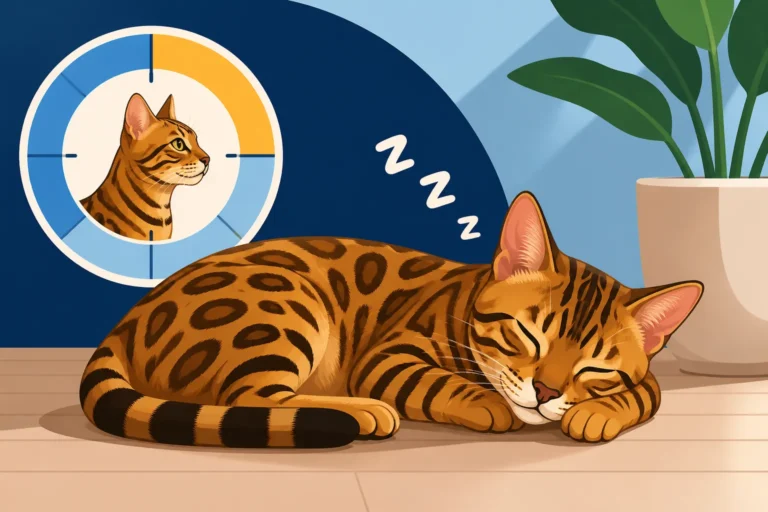
If you're looking for a lap cat that spends most of its day napping, a Bengal is probably not the right fit. These cats are wired for activity, motion, and constant engagement. Their lean, muscular bodies are built for jumping, running, and climbing, and they need ample opportunities to use that impressive athleticism. It's not uncommon for a Bengal to zoom around the house at top speed, scale a cat tree in seconds, and then be ready for another round of play just minutes later. They possess an almost boundless energy that can surprise first-time owners.
This high energy isn't just about burning calories; it's about fulfilling a psychological need. When a Bengal doesn't get enough physical exercise, that pent-up energy has to go somewhere. This often manifests as destructive behaviors, like scratching furniture, knocking things off shelves, or even incessant meowing out of boredom and frustration. Think of it like a very active dog breed that needs daily walks and playtime – a Bengal needs a similar commitment to physical exertion, even if it's all contained within your home. This energy level is a significant factor in The Bengal Cat Is the Most Active Cat You Can Own.
Many Bengal owners report that their cats never seem to truly "tire out" in the way a typical domestic cat might. You might engage in a vigorous play session, and while they might pause to catch their breath, their eyes remain bright and ready for the next challenge. This means that short, infrequent play sessions are simply insufficient. They need consistent, high-intensity activity spread throughout the day to truly feel satisfied and calm. Without it, your home might start to resemble a feline obstacle course, not because they're being "naughty," but because they're desperately trying to create their own stimulation.
Intelligence and Curiosity: Their Need for Mental Stimulation
Beyond their physical prowess, Bengal cats are exceptionally intelligent. They are quick learners, keen observers, and adept problem-solvers. This means that physical exercise alone won't satisfy them; their sharp minds need to be challenged just as much as their agile bodies. A bored Bengal brain is a recipe for trouble, as they will undoubtedly find ways to entertain themselves, which might not always align with your household rules.
Their curiosity is boundless. If there's a closed door, they want to know what's behind it. If there's a cupboard, they'll figure out how to open it. If there's a new bag from the grocery store, it must be thoroughly investigated. This isn't just cute; it's a testament to their cognitive drive. Providing mental challenges helps channel this curiosity in positive ways, preventing them from turning their problem-solving skills to things like opening the refrigerator or dismantling your toilet paper roll. How Clever a Bengal Cat Is delves deeper into their remarkable intelligence.
This intelligence also means they can quickly become habituated to toys or games if they aren't varied. A puzzle feeder that was engaging last week might be solved in seconds this week. A wand toy played the same way every time loses its appeal. Owners need to constantly adapt and innovate, introducing new challenges and rotating old ones to keep their Bengal's mind engaged. This intellectual need is a significant component of their overall enrichment requirements and should never be underestimated.
Physical Enrichment: Keeping Their Bodies Busy
Physical enrichment is the cornerstone of a happy Bengal's life. These cats are athletes in every sense of the word, and denying them opportunities to run, jump, climb, and pounce is a surefire way to create a frustrated and potentially destructive feline companion.
Daily Exercise Requirements: How Much Structured Play Is Needed
Bengal cats aren't content with just a few minutes of casual play. They need substantial, structured exercise every single day to burn off their immense energy and satisfy their predatory instincts. Think in terms of dedicated play sessions, not just incidental activity. Ideally, a Bengal needs at least two to three intense play sessions per day, each lasting anywhere from 15 to 30 minutes, sometimes even longer for younger, more energetic individuals. These sessions should be high-impact, involving toys that mimic prey movement, like feather wands or fishing pole toys.
During these play sessions, it's crucial to engage them fully. This means you, as the owner, need to be an active participant, mimicking prey movements, hiding the "prey," and allowing your Bengal to successfully "catch" it multiple times. Ending a play session without a "kill" can leave a Bengal feeling frustrated, so always let them capture the toy at the end. This fulfills their natural hunting sequence and provides a sense of accomplishment. Without this structured release, they're likely to find their own "prey" – perhaps your feet under the blankets, or small objects around the house. Consider browsing Amazon for durable, engaging wand toys specifically designed for active cats; cheap ones often don't stand a chance against a determined Bengal.
The intensity of these sessions is key. Your Bengal should be panting slightly, showing signs of exertion, before they settle down. If they're just swatting at a toy from a relaxed position, it's not enough. Incorporate jumps, sprints, and chases that force them to use their full athletic capabilities. Consistency is also paramount; sporadic play won't cut it. Just like an athlete needs regular training, your Bengal needs a predictable routine of vigorous exercise to maintain their physical and mental well-being. How Much Exercise a Bengal Cat Needs a Day dives into more specifics.
Vertical Space and Climbing: Why High Places Are Crucial
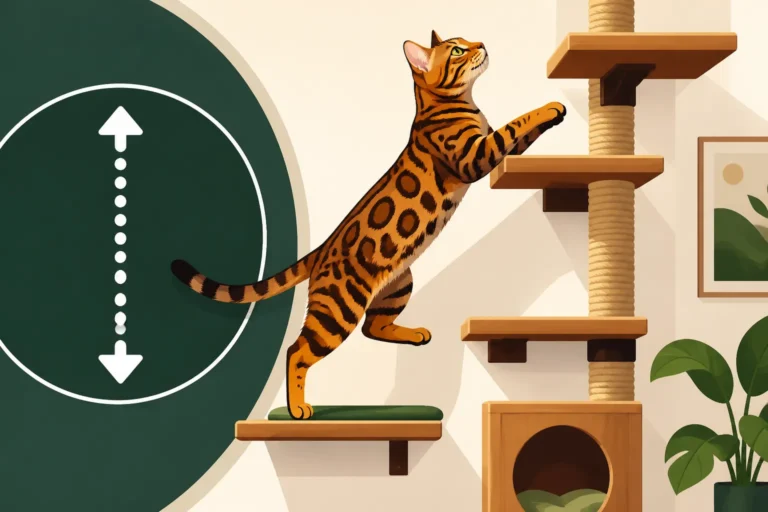
Bengal cats are natural climbers and observers. In the wild, their ancestors would climb trees to gain a vantage point for hunting or to escape predators. This instinct is alive and well in your domestic Bengal. They need vertical space to feel secure, to survey their domain, and to satisfy their innate desire to climb. A home without adequate vertical territory is simply incomplete for a Bengal. This isn't just about one cat tree; it's about creating an entire vertical landscape.
This means investing in sturdy, tall cat trees that can withstand their powerful jumps and enthusiastic climbing. Look for multi-level structures with platforms and cubbies. Even better, consider cat shelves mounted on walls, creating a "cat highway" that allows them to traverse rooms without touching the floor. These shelves don't just provide climbing opportunities; they offer elevated resting spots where your Bengal can feel safe and watch the world go by from a secure height. When selecting cat trees, opt for quality materials. A flimsy, wobbly tree will quickly be ignored or, worse, destroyed by an agile Bengal. Brands found on Amazon often have robust options designed for larger, more active breeds.
Providing vertical space also helps manage inter-cat dynamics if you have multiple felines. It expands their perceived territory, allowing different cats to share a space without constant direct confrontation. A Bengal, being higher up, can exert a subtle dominance without needing to physically challenge another cat, leading to a more harmonious household. Remember, a Bengal will find vertical space one way or another – whether it's your bookshelves, curtains, or kitchen counters – so it's far better to provide approved, safe climbing structures. How High a Bengal Cat Can Jump illustrates just how important this vertical space is.
Interactive Play and Hunting Simulation: Wands, Lasers, and Fetch
Beyond general exercise, interactive play that simulates hunting is vital for a Bengal cat. This isn't just about burning energy; it's about fulfilling their deep-seated predatory instincts in a safe and appropriate way.
Wand toys with feathers, furs, or other dangling attachments are absolute gold for Bengals. The key is to make the toy move like prey: darting, hiding, flying, and then allowing the cat to "catch" it. Vary your technique, making the "prey" skitter across the floor, disappear behind furniture, and then emerge again. This keeps their attention rapt and engages their stalking behaviors. Rotate different wand toys to keep things fresh; a feather wand one day, a crinkly worm the next. Be prepared for these toys to take a beating; Bengals are powerful players and can quickly dismantle less durable items. Which Wand Toy a Bengal Cat Destroys Fastest is a useful read here.
Laser pointers can be a fun way to get your Bengal moving, but they should always be used with caution and followed by a tangible "catch." Ending a laser pointer session without allowing the cat to capture a physical object can be deeply frustrating for them, as it leaves their hunting drive unfulfilled. Always redirect their attention to a physical toy, like a plush mouse, at the end of a laser session, allowing them to pounce and "kill" it.
Many Bengal cats also love to play fetch, much like a dog. This is a fantastic way to engage their bodies and minds. Start with small, lightweight toys that are easy for them to carry, like crinkly balls or small springs. Throw the toy a short distance, and encourage them to bring it back. Positive reinforcement, like praise or a small treat, can help solidify this behavior. Fetch isn't just exercise; it's a bonding activity that taps into their intelligence and desire for interaction. This behavior contributes to How Well a Bengal Cat Fetches.
Mental Enrichment: Challenging Their Brilliant Minds
Physical activity is crucial, but a Bengal cat's keen intellect also demands constant stimulation. Mental enrichment prevents boredom, reduces anxiety, and keeps their clever brains happy and engaged.
Puzzle Feeders and Foraging: Making Mealtime a Game
One of the easiest and most effective ways to provide mental enrichment is by turning mealtime into a game. Instead of simply putting food in a bowl, use puzzle feeders. These devices require your Bengal to use their paws, nose, and problem-solving skills to extract their kibble or treats. This slows down their eating, prevents scarf-and-barf, and provides a significant mental workout. There's a wide range of puzzle feeders available, from simple treat balls to more complex multi-stage puzzles. Start with easier ones and gradually introduce more challenging designs as your Bengal masters them. You can find a good selection on Amazon.
Beyond formal puzzle feeders, you can also encourage natural foraging behavior. Hide small portions of their kibble around the house in various locations – on cat trees, inside empty toilet paper rolls, or tucked into crinkly tunnels. This forces them to "hunt" for their food, engaging their senses and intellect. This mimics how their wild ancestors would search for prey, making mealtime a truly enriching experience. This "work for food" approach taps into their natural instincts and helps prevent boredom between dedicated play sessions. Which Puzzle Feeder Beats a Bengal Cat explores more challenging options.
It's important to rotate puzzle feeders and hiding spots to keep the challenge fresh. If your Bengal solves the same puzzle in the same place every day, it quickly loses its novelty. Introduce new puzzles or create new foraging trails regularly. This constant novelty keeps their minds sharp and prevents them from becoming complacent or bored with their food-seeking activities. This also makes them less likely to try and break into your human food stores, as their foraging needs are being met.
Clicker Training and Tricks: Harnessing Their Intelligence
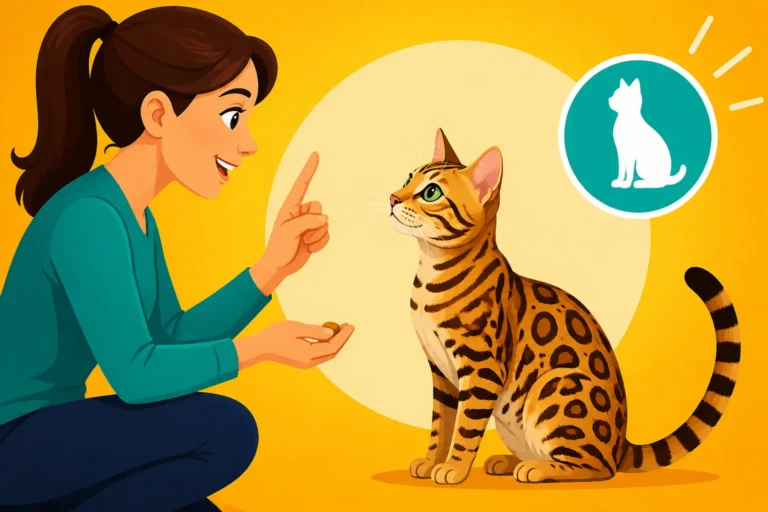
Bengal cats are highly trainable, often surprising people with their ability to learn tricks and commands. Clicker training is an excellent way to tap into their intelligence and provide immense mental stimulation. A clicker marks the exact moment your cat performs the desired behavior, followed immediately by a reward (a high-value treat). This clear communication helps them understand what you want and makes learning incredibly fast and fun for both of you.
You can teach a Bengal a wide array of tricks, from basic commands like "sit," "stay," and "come" to more complex ones like "high five," "spin," or even opening specific doors (though you might regret that last one!). The process of learning not only strengthens your bond but also gives your Bengal a sense of purpose and achievement. It's a fantastic outlet for their active minds and a great way to prevent boredom. Just a few short training sessions a day can make a big difference. How to Teach a Bengal Cat to Sit offers a great starting point.
The beauty of clicker training is that it's infinitely scalable. Once your Bengal masters a few basic tricks, you can combine them, create obstacle courses, or even work on more practical behaviors like going into their carrier on command. This constant learning process keeps their minds engaged and prevents them from getting into mischief out of sheer boredom. It’s also a wonderful way to impress your friends and family with your cat’s undeniable brilliance!
Environmental Exploration: Safe Spaces for Discovery
A Bengal cat thrives on novelty and discovery within their environment. Providing safe opportunities for exploration is crucial for their mental well-being. This doesn't necessarily mean letting them roam free outdoors, but rather creating an indoor environment that is constantly changing and offering new things to investigate.
Simple things like rotating furniture, opening and closing different doors (to safe rooms, of course!), or bringing in new cardboard boxes can provide hours of entertainment. Cardboard boxes are particularly beloved by Bengals; they offer a temporary den, a new climbing structure, and something to shred. Don't underestimate the power of a freshly unpacked delivery box. Another great option is to periodically rearrange their cat trees or add new perches to keep their vertical landscape interesting.
Consider setting up "exploration zones" within your home. These could be temporary spaces with new textures, smells (like catnip or silvervine), or hidden toys. For instance, you might set up a large tunnel system one week, and the next week, replace it with a series of paper bags and crinkly material. The goal is to provide a sense of novelty and discovery that satisfies their innate curiosity without resorting to dangerous outdoor adventures. For more insights on their curious nature, check out How a Bengal Cat Learns From Watching You.
Social Enrichment: The Companionship Aspect
While Bengal cats are often highly independent, they are also deeply social creatures who thrive on interaction. Their social needs are as complex and varied as their physical and mental ones.
Human Interaction: The Importance of Owner Engagement
Bengal cats form incredibly strong bonds with their human companions, and regular, meaningful interaction with you is a form of enrichment they simply cannot do without. This isn't just about sharing a home; it's about being an active participant in their lives. They crave attention, playtime, and often, physical affection on their own terms. Ignoring a Bengal can lead to anxiety, boredom, and attention-seeking behaviors that might not always be pleasant.
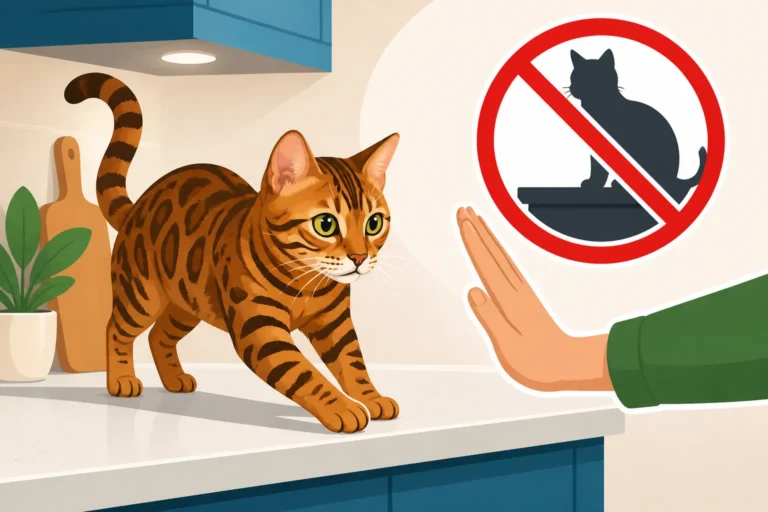
This interaction goes beyond just feeding them. It means engaging in those intense play sessions, having cuddle time (if they're inclined), talking to them, and generally acknowledging their presence. Many Bengals will follow you from room to room, "supervising" your activities or demanding to be involved. They often thrive on a predictable routine that includes dedicated one-on-one time with their favorite person. When you neglect this, you'll often find them becoming more vocal, perhaps Why a Bengal Cat Yowls at You, or trying to get your attention through less desirable actions like jumping on counters or swatting at your things.
For those with busy schedules, it's crucial to consciously carve out this dedicated interaction time. Even 10-15 minutes of focused play or petting several times a day can make a significant difference. It's an investment in their happiness and your peaceful coexistence. Remember, you are their primary source of entertainment, affection, and security, and fulfilling that role is a critical part of owning a Bengal.
Compatibility with Other Pets: When a Second Cat (or Dog) Helps
While human interaction is paramount, some Bengal cats can also benefit immensely from the companionship of another pet, especially if you have a demanding schedule or are frequently out of the house. Another active, playful cat can be a fantastic playmate, helping to burn off energy and provide social interaction when you're unavailable. However, it's not a universal solution, and careful consideration is needed.
If you're considering a second cat, look for one with a similar energy level and temperament. Another Bengal, or a high-energy domestic shorthair, often makes a good match. A very docile or shy cat might be overwhelmed by a Bengal's boisterous play style. Introductions must be slow and gradual to ensure a smooth transition. Done correctly, two compatible cats can enrich each other's lives immeasurably, engaging in wrestling matches, chase games, and mutual grooming. You can learn more about this in Whether a Bengal Cat Accepts a Second Cat.
Some Bengal cats also get along remarkably well with dogs, especially if introduced properly and raised together. Again, temperament is key; a calm, cat-friendly dog can be a wonderful companion. They might even play fetch together or chase each other around the house. However, be mindful of their strong prey drive, especially with smaller pets like hamsters or birds. Never leave a Bengal unsupervised with potential prey animals, as their instincts can override their training.
Alone Time Management: Preventing Boredom When You're Away
Even with other pets, your Bengal will spend time alone, and managing this period to prevent boredom is essential. Long stretches of inactivity and lack of stimulation can lead to destructive behaviors, anxiety, or even depression. The goal is to make their solo hours as enriching as possible.
Before you leave, engage them in a vigorous play session to burn off some energy. This increases the likelihood that they'll nap while you're gone. Provide a variety of puzzle feeders filled with a portion of their daily meal, scattering them around the house to encourage foraging. Leave out interactive toys that they can play with independently, like spring toys, crinkle balls, or automated laser pointers (though use automated lasers sparingly to avoid frustration). Rotating these toys daily can keep things novel.
Consider leaving on a pet-friendly TV channel or classical music, which can provide background stimulation. Make sure they have access to their favorite cat tree or a window perch where they can watch the outside world. If you're going to be gone for an extended period, hiring a trusted pet sitter to come in for playtime and interaction can be invaluable. This ensures they get some dedicated human attention and a break from solitude. How Long a Bengal Cat Can Be Left Alone provides further insight.
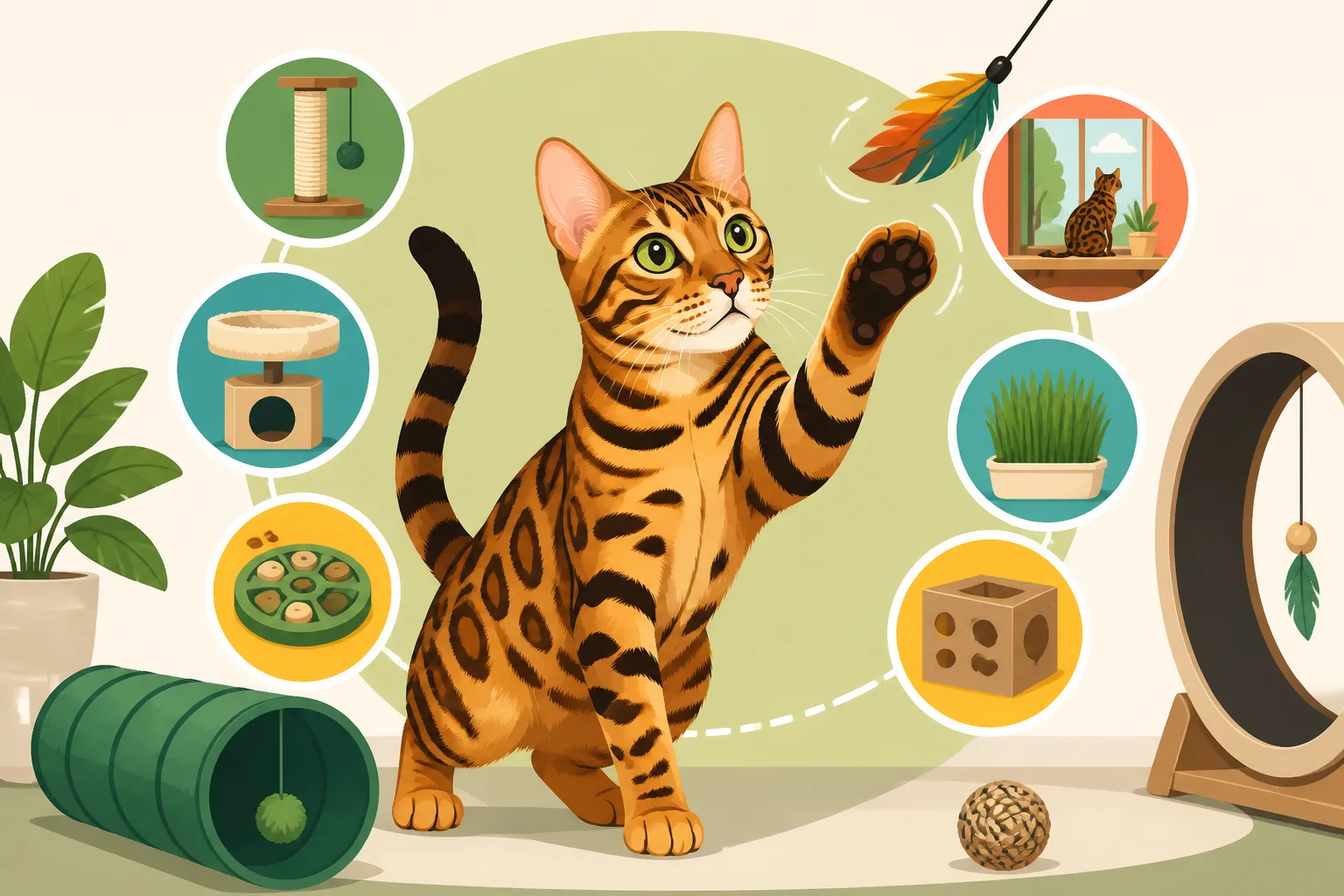
| Enrichment Category | Examples of Activities/Items | Frequency/Duration | Benefits for Bengal Cats |
|---|---|---|---|
| Physical | Wand toys, feather teasers | 2-3 sessions/day, 15-30 mins each | Burns energy, satisfies hunting drive, muscle development |
| Tall cat trees, wall shelves | Constant access | Climbing, vantage points, security, spatial expansion | |
| Cat wheel | 1-2 sessions/day, 10-20 mins each | High-intensity cardio, independent exercise | |
| Leash walks | 2-3 times/week, 20-30 mins each | Outdoor exploration, sensory input | |
| Mental | Puzzle feeders | For all meals, or daily treat sessions | Slows eating, problem-solving, foraging instinct |
| Clicker training, tricks | Daily short sessions, 5-10 mins each | Cognitive challenge, bonding, positive reinforcement | |
| Foraging games (hidden treats) | Daily | Engages senses, mimics wild behavior | |
| Rotating toys, new boxes | Weekly introduction of novelty | Prevents boredom, encourages exploration | |
| Social | Owner interactive play | Daily, multiple sessions | Bonding, attention, direct stimulation |
| Companion pet (if compatible) | Constant interaction | Peer play, reduced loneliness | |
| Cuddle/petting time | Daily, as desired by cat | Affection, emotional security | |
| Environmental | Catio access | Daily, supervised | Safe outdoor exposure, fresh air, sensory variety |
| Window perches | Constant access | Observation, visual stimulation | |
| Water fountain, sink play | Daily | Satisfies water fascination, encourages hydration |
Outdoor Access and Safe Spaces: Catios and Leash Walking
The allure of the outdoors is strong for a Bengal cat, given their wild heritage. However, free-roaming outdoors is incredibly dangerous for them. The solution lies in providing safe, controlled outdoor experiences that satisfy their exploratory nature without exposing them to risks.
The Benefits of a Catio: A Safe Outdoor Adventure
A catio, or cat enclosure, is arguably the single best investment you can make for a Bengal cat. It's a secure, outdoor space that allows your cat to experience fresh air, sunshine, and the sights and sounds of nature without the dangers of predators, traffic, poisons, or getting lost. Catios can range from small window boxes to elaborate multi-level structures with ramps, shelves, and scratching posts.
For a Bengal, a catio provides an essential form of enrichment that simply cannot be replicated indoors. They can feel the breeze, watch birds and squirrels, smell new scents, and bask in the sun – all natural behaviors that contribute significantly to their mental well-being. It allows them to express their wilder instincts in a completely safe environment. If you live in an area where local wildlife is a concern, a fully enclosed, predator-proof catio is non-negotiable. Many owners even incorporate a water source, like a small, secure fountain, to appeal to their Bengal's love for water.
When planning a catio, consider the size and features carefully. A larger catio with plenty of vertical elements will offer more enrichment. Include sturdy shelves for climbing, scratching posts, and perhaps even some cat-safe plants. Access to the catio should ideally be direct from the house, via a cat flap or open window, allowing your Bengal to come and go as they please (during supervised times, of course). Why a Catio Is the Answer to a Bengal Cat goes into much more detail on this topic.
Leash Training for Adventures: Exploring the World Securely
Beyond a catio, leash training is another excellent way to provide safe outdoor enrichment for your Bengal. Many Bengals take readily to a harness and leash, enjoying supervised walks in quiet, safe environments. This allows them to explore new territories, experience different textures under their paws, and engage with the world in a controlled manner.
Start leash training early, ideally when they are kittens. Begin with short sessions indoors, getting them accustomed to wearing a comfortable, escape-proof harness (a vest-style harness is often best for Bengals). Once they're comfortable indoors, gradually introduce them to the outdoors in a quiet, fenced area, or a calm park. Always supervise them closely, and be aware of their surroundings. A Bengal's natural curiosity can lead them to investigate things quickly, so stay alert. Amazon offers a range of harnesses suitable for adventurous cats.
Leash walks are a fantastic way to provide sensory enrichment. The new smells, sounds, and sights are incredibly stimulating for their intelligent minds. It's not about forcing them to walk like a dog; it's about letting them explore at their own pace, sniffing and investigating. This controlled outdoor time can significantly reduce boredom and provide a healthy outlet for their exploratory drive. How to Leash Train a Bengal Cat offers practical advice for getting started.
Why Free Roaming Outdoors is a No-Go: Safety Concerns
While Bengals crave outdoor stimulation, allowing them to free-roam outdoors without supervision is incredibly risky and irresponsible. Their striking appearance, high value, and wild behaviors make them particularly vulnerable to a myriad of dangers.
Firstly, their strong prey drive, a direct link to their ALC heritage, means they are efficient hunters. While this is great for toy mice, it poses a significant threat to local wildlife, including birds, rodents, and small reptiles. Allowing a Bengal to hunt indiscriminately contributes to ecological imbalances and can put them in contact with diseases carried by prey animals.
Secondly, free-roaming Bengals are at high risk of injury or death from traffic, larger predators (coyotes, aggressive dogs), and even cruel humans who might view them with suspicion due to their wild looks. They can also contract serious diseases like FeLV or FIV from other cats, or pick up parasites. Given their value, there's also the very real risk of theft. Many beautiful, unique cats go missing this way.
Finally, their curious and often bold nature can lead them far from home, making it difficult for them to find their way back. Even if microchipped and wearing a collar, the dangers they face when unsupervised are simply too great. A responsible Bengal owner understands that their desire for outdoor adventure must be met through safe, controlled means like catios and leash walks, rather than allowing them to face the unpredictable and often harsh realities of the unsupervised outdoors. How Long a Bengal Cat Would Survive Outdoors highlights these dangers.
Recognizing Signs of Insufficient Enrichment
A Bengal cat that isn't getting enough physical and mental enrichment will often tell you in no uncertain terms. These signs aren't just "naughty" behaviors; they are cries for help, indicating that their needs aren't being met. Understanding these signals is the first step toward addressing the problem.
Destructive Behavior: Chewing, Scratching, Marking
One of the most common indicators of an under-stimulated Bengal is destructive behavior. When their energy and intelligence aren't channeled appropriately, they find their own outlets, often at the expense of your home.
Chewing: A bored Bengal might start chewing on inappropriate items like furniture legs, electrical cords (a significant danger!), plants, or even your belongings. This isn't out of malice, but an attempt to engage their jaws and relieve pent-up energy or frustration. It can also be a sign of anxiety. If you notice this, it's a clear signal to increase playtime, introduce more robust chew toys, and ensure they have plenty of safe, stimulating items to interact with.
Scratching: While all cats scratch to maintain their claws and mark territory, excessive or inappropriate scratching on furniture, carpets, or walls can be a sign of boredom or stress. If your Bengal is ignoring their scratching posts in favor of your sofa, it's often because the posts aren't satisfying their needs – perhaps they're too short, too wobbly, or not made of the right material. Bengals need tall, sturdy scratching posts, ideally sisal-wrapped, that allow them to stretch fully. Providing multiple scratching surfaces in various locations can also help. How to Save a Sofa From a Bengal Cat is essential reading here.
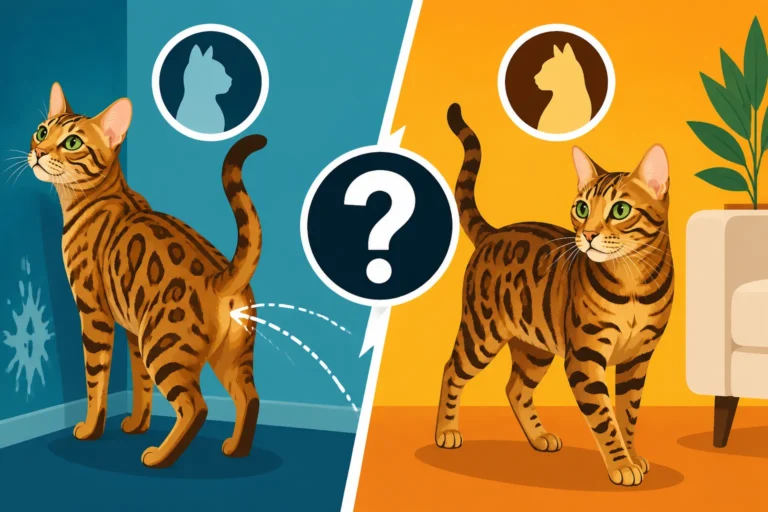
Marking/Urination Outside the Box: While medical issues should always be ruled out first, inappropriate urination or spraying can be a significant behavioral problem linked to stress, anxiety, or a feeling of insecurity, all of which can be exacerbated by insufficient enrichment. If a Bengal feels under-stimulated, overwhelmed, or lacks control over their environment, they might resort to marking to establish their territory and reduce anxiety. This symptom demands immediate attention to their environment and routine.
Behavioral Changes: Aggression, Anxiety, Overgrooming
Beyond physical destruction, a lack of enrichment can manifest in more subtle but equally concerning behavioral changes.
Aggression: An under-stimulated Bengal can become overly aggressive during play (e.g., attacking hands and feet), or even display uncharacteristic aggression towards other pets or people. This isn't typically aggression born of malice, but rather misdirected predatory energy or frustration. If they don't have enough appropriate outlets for their hunting instincts, those instincts can spill over into interactions with their human family. Increased interactive play, providing "kill" opportunities, and ensuring they have plenty of mental challenges can help redirect this behavior.
Anxiety and Stress: Bengals are sensitive creatures, and chronic boredom or lack of stimulation can lead to significant anxiety. Signs of anxiety might include excessive vocalization (beyond their normal chatty nature), hiding more than usual, restlessness, or destructive behaviors. They might also become clingy or, paradoxically, more withdrawn. A lack of structure and engagement can make them feel insecure and stressed, affecting their overall demeanor and happiness.
Overgrooming or Pica: Stress and anxiety can also manifest as compulsive behaviors like overgrooming (licking themselves excessively to the point of creating bald spots or skin irritation) or pica (eating non-food items). These are self-soothing behaviors, and while a vet should rule out medical causes, psychological stress from an unfulfilling environment is a common trigger. Addressing the root cause by significantly increasing enrichment and providing a more stimulating, predictable environment is crucial for alleviating these issues.
Health Implications: Stress-Related Physical Issues
It's not just about behavior; chronic stress and lack of activity can have real physical consequences for a Bengal cat.
Obesity: While Bengals are known for their high energy, a lack of consistent, vigorous exercise can still lead to weight gain, especially if their diet isn't managed. An overweight Bengal is at higher risk for a host of health problems, including diabetes, arthritis, and heart disease. Proper enrichment ensures they burn calories and maintain a healthy weight, which is also discussed in How Easily a Bengal Cat Becomes Overweight.
Weakened Immune System: Chronic stress, whether from boredom, anxiety, or an unfulfilling environment, can take a toll on a cat's immune system, making them more susceptible to illness. Just like humans, stressed cats are less resilient to pathogens and environmental challenges. A well-enriched cat is generally a healthier cat, both mentally and physically.
Digestive Issues: While Bengal cats are prone to sensitive stomachs (as highlighted in Why a Bengal Cat's Gut Is So Sensitive), stress and anxiety can exacerbate these issues, leading to chronic diarrhea or other digestive upset. When their minds are unsettled, their bodies often follow suit. Providing a stimulating, predictable, and enriching environment can contribute to better overall gut health and reduce stress-related digestive flare-ups.
Creating a Comprehensive Enrichment Plan
Developing an effective enrichment plan for your Bengal cat isn't a one-size-fits-all endeavor. It requires careful observation, consistent effort, and a willingness to adapt. The goal is to integrate various types of stimulation into their daily lives to keep them happy, healthy, and engaged.
Assessing Your Bengal's Needs: Tailoring the Approach
The first step in creating a comprehensive enrichment plan is to truly observe your individual Bengal cat. While they share common breed traits, each cat has a unique personality, preferences, and energy level.
Observe their preferences: What kind of toys do they gravitate towards? Do they prefer chasing feathers, pouncing on crinkly balls, or solving puzzle feeders? Do they love climbing or exploring every nook and cranny? Do they enjoy supervised outdoor time on a leash, or are they content in a catio? Pay attention to their reactions. If they quickly lose interest in a game, try a different approach. Some Bengals are obsessed with water; others prefer to observe it from a distance.
Evaluate their energy levels: Is your Bengal a non-stop dynamo, or do they have periods of calm? Younger Bengals and F2/F3 generations often have higher energy demands than older or later-generation Bengals. Adjust the intensity and duration of play sessions accordingly. An older Bengal might still need mental stimulation but may require less strenuous physical activity, as discussed in What Changes in a Bengal Cat After Ten.
Consider your lifestyle: Be realistic about how much time you can dedicate to direct interaction. If you work long hours, you'll need to rely more heavily on self-play toys, puzzle feeders, and potentially a catio or a compatible companion pet. There's no shame in acknowledging your limitations, as long as you plan proactively to meet your Bengal's needs. The key is finding a balance that works for both of you.
Rotating Toys and Activities: Keeping Things Fresh
Bengals are incredibly intelligent, and novelty is a powerful motivator for them. If they see the same toys in the same spots every single day, they will quickly become bored. The secret to sustained engagement is rotation and variety.
Toy Rotation System: Divide your Bengal's toys into several groups. Only leave one or two groups out at a time. Every few days or once a week, swap them out for a different group. This makes the "old" toys feel new and exciting again when they reappear. This system ensures that their environment is constantly changing, engaging their curiosity and preventing habituation. Don't forget the power of simple items like cardboard boxes, paper bags, or even a crinkly piece of paper – these can be fantastic temporary "toys."
Varying Play Sessions: Don't always play the same way with the same wand toy. Change your technique, hide the toy in different places, or introduce new challenges. One day might be a high-flying feather chase, the next a low-to-the-ground "mouse hunt" under a rug. This keeps them guessing and fully engaged. If you have a cat wheel, vary when and how long you encourage them to use it, as outlined in How Often a Bengal Cat Uses a Cat Wheel.
New Experiences: Periodically introduce entirely new activities or sensory experiences. This could be a new puzzle feeder, a new scent (like catnip spray on a scratcher), a safe walk in a new outdoor area (if leash trained), or even just a new box to explore. Think of it as providing "mini-adventures" within their safe environment. This constant stream of novelty is crucial for their sharp, curious minds.
Integrating Enrichment into Daily Routine: Making It Habitual
For enrichment to be truly effective, it needs to be consistently integrated into your Bengal's daily routine, not just something you do occasionally. Predictability, even with varied activities, provides a sense of security and reduces anxiety.
Morning & Evening Play: Schedule dedicated, high-intensity play sessions in the morning and evening. These times often align with a cat's natural crepuscular (dawn and dusk) hunting instincts. A good play session before you leave for work can help them settle for a nap, and another in the evening can help burn off any residual energy before bedtime. This structured play time is vital, and you'll find How Much a Bengal Cat Calms Down With Age can offer some perspective on how their needs might shift over time.
Mealtime Engagement: Make every meal an opportunity for mental stimulation using puzzle feeders or foraging games. This turns eating into an activity, not just a passive consumption of food. It also slows down their eating, which can be beneficial for digestion.
Environmental Setup: Ensure your home is always set up to be enriching, even when you're not directly interacting with your cat. This means accessible cat trees, wall shelves, window perches, and a selection of appropriate solo-play toys. If you have a catio, make sure it's available for supervised access regularly.
Consistent Interaction: Even outside of dedicated play, offer consistent, positive interaction throughout the day. A quick pet, a cheerful word, or a moment of eye contact acknowledges their presence and reinforces your bond. It's about living with them, not just alongside them.
Disclaimer
This article is for general informational purposes only and does not constitute professional advice. Laws, prices and regulations vary by location and change over time. Consult a qualified professional for guidance on your specific situation.